Patients with advanced gastroenteropancreatic neuroendocrine tumors (GEP-NETs) face a difficult treatment journey. These rare cancers arise in hormone-producing cells of the gastrointestinal tract and pancreas. They affect roughly 18,000 people diagnosed annually in the United States, with a prevalence of fewer than 200,000 patients. A Lutetium-177 (Lu177)-based radiopharmaceutical therapy is approved for adults with somatostatin receptor-positive (SSTR+) GEP-NETs, but most patients eventually progress, and few effective options remain. That unmet need is the backdrop for a major announcement from Bristol Myers Squibb.
On October 12, 2026, Bristol Myers Squibb (NYSE: BMY) reported positive topline results from the planned interim analysis of the Phase 3 ACTION-1 trial (NCT05477576). The study was conducted by RayzeBio, Inc., a Bristol Myers Squibb company. ACTION-1 met its primary endpoint with a statistically significant and clinically meaningful improvement in progression-free survival (PFS) by blinded independent central review. The trial evaluated RYZ101 (225Ac-DOTATATE) versus investigator's choice of standard of care, which included high-dose or high-frequency long-acting somatostatin analogues, everolimus, or sunitinib. The patient population was adults with SSTR-positive GEP-NETs who had progressed following Lu177-based therapy.
RYZ101 is an investigational targeted radiopharmaceutical therapy composed of DOTATATE bound to Actinium-225 (225Ac), a highly potent alpha-emitting radioisotope. 225Ac emits a high-energy, short-range alpha particle that can cause double-stranded DNA damage in cancer cells. This mechanism may result in a higher chance of cancer cell death while causing less damage to surrounding healthy tissue. Bristol Myers Squibb added RYZ101 and the RayzeBio platform through its approximately $4.1 billion acquisition of RayzeBio, a clinical-stage radiopharmaceutical company.
The topline result represents the first Phase 3 results for an alpha-isotope based targeted radiopharmaceutical therapy (RPT) using 225Ac in any indication, according to the company. The FDA granted RYZ101 Orphan Drug Designation for the treatment of GEP-NETs in August 2026. Safety results were consistent with the known RYZ101 safety profile. Bristol Myers Squibb said it plans to discuss the data with regulators, and detailed results are expected at a future medical meeting. Patients will continue treatment and be followed for overall survival.
Key Facts
Business Wire reported on October 12, 2026 that the planned interim analysis met its primary endpoint with a statistically significant and clinically meaningful improvement in PFS by blinded independent central review. The release quoted Amreen Husain, MD, chief medical officer of RayzeBio, who called the improvement a defining moment for RYZ101 and for the patients the program was built around. She also said these are the first results from a Phase 3 trial of an alpha-isotope based targeted RPT (225Ac) in any indication, and that the company is moving with urgency to bring the data to the FDA.
Reuters reported on October 12, 2026 that RYZ101 significantly delayed disease progression in patients with rare, advanced gastrointestinal and pancreatic tumors that had progressed after earlier treatment. Reuters noted that shares of the drugmaker were up nearly 2%. The therapy uses the radioactive isotope actinium-225. Reuters added that GEP-NETs are rare cancers that arise in hormone-producing cells of the gastrointestinal tract and pancreas.
Tradingpedia reported on October 12, 2026 that Bristol-Myers Squibb climbed 5.7% in pre-market trading, with shares touching $62.50, after two positive Phase 3 readouts released the same morning. The first was ACTION-1. The second was the ALOFT-IPF Phase 3 trial of admilparant, a potential first-in-class oral LPA1 receptor antagonist, which met its primary endpoint in approximately 1,255 adults with idiopathic pulmonary fibrosis. The 60 mg twice-daily dose produced a statistically significant improvement in absolute change in forced vital capacity from baseline to Week 52 versus placebo, with a favorable safety profile and low discontinuation rates.
BioSpace reported on October 12, 2026 that GEP-NETs have an estimated incidence of approximately 18,000 patients diagnosed annually in the United States and a prevalence of fewer than 200,000 patients. The release also explained that RYZ101 had previously been studied in a Phase 1b/3 dosimetry substudy, published in the Journal of Nuclear Medicine in June 2026, which demonstrated the feasibility of image-based dosimetry of 225Ac using SPECT/CT imaging of its daughter isotopes. Simron Singh, MD, principal investigator of ACTION-1 at Sunnybrook Health Sciences Centre, University of Toronto, said that until now there has been no randomized Phase 3 evidence to guide treatment. Bristol Myers Squibb did not disclose detailed data from the study, saying results would be presented at a future medical meeting.
Analysis
What this really means is that Bristol Myers Squibb has secured the first late-stage validation of an alpha-emitting radiopharmaceutical platform, a milestone that could reshape the competitive landscape. The result is proof that 225Ac-based targeted therapy can deliver a statistically significant and clinically meaningful PFS benefit in a randomized Phase 3 setting. Until now, the field's commercial success has been dominated by beta-emitting lutetium-177 therapies, most notably from Novartis. ACTION-1 suggests that alpha emitters, which deliver higher energy over a shorter range, can potentially improve efficacy while sparing healthy tissue.
Reuters noted that major drugmakers, including AstraZeneca and Eli Lilly, have invested heavily in next-generation radiopharmaceutical therapies. Wall Street is keenly focused on whether RYZ101 and similar therapies can build on the success of Novartis' radiopharmaceutical drugs. RBC Capital Markets analysts said the results validate Bristol Myers' radiopharmaceutical platform and may boost confidence in rival programs. Cantor Fitzgerald analyst Carter Gould was more cautious, saying RYZ101 is likely to be only a modest commercial driver given that newer lead-212 alpha-emitting therapies are advancing into earlier lines of treatment. The bigger picture here is that the radiopharma field is moving quickly, and RYZ101's first-mover advantage may be challenged by next-generation isotopes and earlier lines of therapy.
The dual Phase 3 wins on the same morning also matter for Bristol Myers Squibb's broader pipeline. Tradingpedia reported that the ALOFT-IPF win for admilparant came after a liver safety signal, including one patient death, had unsettled the market in late September and early October. A positive readout there, alongside ACTION-1, helped drive the pre-market rally. J.P. Morgan maintained a Buy rating, and Wall Street's stance was Moderate Buy ahead of BMS's third-quarter 2026 earnings on October 29. The fact that the broader market was muted, with the S&P 500 essentially flat, the Dow up just 0.1% and the Nasdaq down 0.2%, underscores that the rally was company-specific.
Still, the absence of detailed data leaves important questions unanswered. Bristol Myers Squibb did not disclose detailed data, saying results would be presented at a future medical meeting. The magnitude of PFS benefit, the hazard ratio, and the duration of response are not yet public. Safety was described as consistent with the known profile, but long-term tolerability remains a key consideration. For physicians and patients, the practical question is how RYZ101 compares not only to standard of care but also to emerging alternatives, including lead-212 therapies and combinations. The trial will continue to follow patients for overall survival, which will be critical for regulatory and payer decisions.
Why It Matters
For patients with SSTR-positive GEP-NETs who have progressed after Lu177-based therapy, there are few effective treatment options. The ACTION-1 result offers the first randomized Phase 3 evidence to guide treatment in this setting. Simron Singh, MD, principal investigator of ACTION-1 at Sunnybrook Health Sciences Centre, University of Toronto, said that until now there has been no randomized Phase 3 evidence to guide it. A new option that improves PFS could change clinical practice.
The result also matters for the broader radiopharmaceutical sector. The FDA's Orphan Drug Designation for RYZ101 in August 2026 provides regulatory incentives, and a positive Phase 3 readout could accelerate the path to approval. Bristol Myers Squibb said it plans to engage with the FDA regarding a regulatory submission. If approved, RYZ101 would be the first actinium-225-based targeted therapy for GEP-NETs, and it would validate the RayzeBio acquisition, which cost approximately $4.1 billion.
Beyond GEP-NETs, RYZ101 is also being studied in early-stage trials in metastatic breast cancer, according to Reuters. The dosimetry substudy published in the Journal of Nuclear Medicine in June 2026 demonstrated the feasibility of image-based dosimetry of 225Ac using SPECT/CT imaging of its daughter isotopes. If dosimetry can be used to personalize dosing, it may improve the therapeutic index of alpha emitters, making them safer and more effective. This is a key differentiator for RayzeBio's approach.
Next Up
Bristol Myers Squibb said it plans to discuss the data with regulators, and detailed results are expected at a future medical meeting. Patients currently enrolled in ACTION-1 will continue to receive care consistent with the study protocol and will be followed for overall survival. The company also plans to present the data at a future medical meeting, which will provide the first full look at the magnitude of PFS benefit and safety details.
Investors will next focus on Bristol Myers Squibb's third-quarter 2026 earnings on October 29, as well as any regulatory updates on RYZ101. Meanwhile, the radiopharmaceutical competitive landscape continues to evolve, with AstraZeneca, Eli Lilly, and Novartis all active in the space. The first Phase 3 win for an alpha-emitting targeted therapy sets a high bar, and the next wave of data, including from lead-212 programs, will determine whether RYZ101 can maintain its early lead.
Related Articles

A FAST Discovery: Pulsar PSR J0435+3233 Found in Rare Evolving Triple Star System
Astronomers say the millisecond pulsar PSR J0435+3233 shares its system with a helium white dwarf and a Sun-like star that has not yet finished evolving.

Jonathan the 194 year old tortoise carries 287 gene variants linked to longevity
A genomic and epigenetic study of the world's oldest land animal found 287 variants in DNA repair and cancer suppression pathways plus unusually stable mitochondrial gene switches.
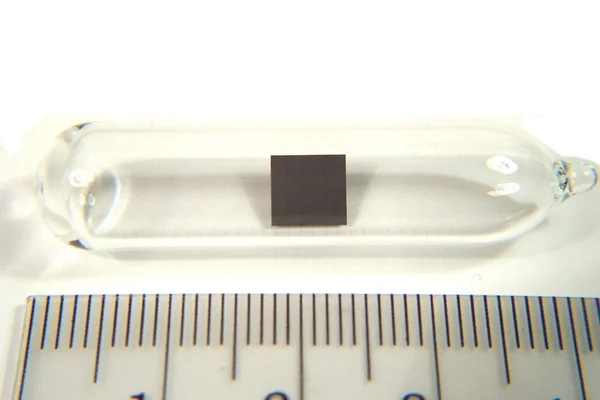
Vienna and Beijing Teams Build First Operating Thorium 229 Nuclear Clocks
Two independent research groups in Vienna and Beijing have reported the first operating nuclear clocks, using thorium-229 nuclei in calcium fluoride crystals and lasers to count time.
Comments (0)
Log in or sign up to leave a comment.
No comments yet. Be the first to share your thoughts.