On October 14, 2026, the United States and Japanese governments announced that Japan will invest up to $21 billion to build up to two semiconductor factories in Malta, New York, that will be jointly owned by the US government and Japanese interests and operated by GlobalFoundries. The announcement caps months of speculation about how Japan would deploy a portion of the $550 billion it pledged to invest in the United States under a trade deal struck last year.
That trade agreement, negotiated by the Trump administration, lowered US tariffs on Japanese cars and other imports from at least 25% to 15% in exchange for the massive Japanese investment commitment. Japan has so far announced two batches of projects worth over $100 billion combined under the scheme, and the GlobalFoundries deal represents a significant expansion of that effort from energy projects into semiconductors.
GlobalFoundries, based in Malta, New York, is majority-owned by Abu Dhabi's sovereign wealth fund Mubadala Investment Company and trades on Nasdaq under the ticker GFS. The company already operates factories at the Malta site and in Burlington, Vermont, and it will serve as the technology provider and operator of the new plants. Construction of the first factory is scheduled to begin this year, with chip production expected in 2029. The partners will decide whether to build the second factory before the end of 2028.
Under the structure described by the companies and governments, Japan will provide all of the investment capital, while the two governments will create a special purpose vehicle to raise the funds and manage construction, production, and technology across the project. The first factory is expected to cost about $10 billion, with a second plant carrying an additional $10 billion as an upper limit. Each plant will have an annual capacity of about 900,000 300mm wafers when fully operational, for a combined 1.8 million wafers.
Key Facts
Reuters reported on October 14 that the US government previously held a 3% stake in GlobalFoundries and that CEO Tim Breen said it will rise to 7%. President Donald Trump said on Truth Social that the government, which provided $1.63 billion in grants to the company, values the 7% stake at more than $2 billion, adding: "We are the first administration ever to turn grants into money for America." The Seoul Economic Daily reported on October 15 that Bloomberg put the US government stake at 4%, a discrepancy that may reflect differing interpretations of the equity arrangement or the timing of the reports.
The financial mechanics extend beyond equity. GlobalFoundries will shift $955 million previously awarded by the US government under the CHIPS Act to accelerate investments in silicon photonics, silicon-germanium chip material, and advanced packaging at its existing factories in Malta, New York, and Burlington, Vermont. In return, the Commerce Department receives an equity stake, which dilutes existing shareholders if newly issued shares are used. 24/7 Wall St. reported on October 15 that the company will reallocate that $955 million under a separate agreement.
Capacity and job figures are central to the deal's political appeal. Each new fab will add about 900,000 300mm wafers per year, and Breen said the new plants would increase US wafer capacity by 10%. The first factory alone is expected to create more than 1,000 factory jobs in New York. Trump cited 27,000 construction and ecosystem jobs, a figure that includes indirect employment. 24/7 Wall St. reported on October 15 that the project accounts for about 27,000 construction and ecosystem jobs.
Commercial demand is anchored by a mix of established customers. Breen said initial customers include Japan's Renesas Electronics and Apple. 24/7 Wall St. reported on October 15 that Cirrus Logic and General Motors are also accounted for as planning to use the capacity, buying power, radio, sensor, and analog chips built on mature and specialty processes. The deal will generate fees for at least 20 years, expected at $50 million next year for managing construction of the first factory. Breen also said the company has a strong interest in having Japanese equipment suppliers participate.
Market reaction was immediate. Reuters reported on October 14 that GlobalFoundries shares rose more than 4% in afternoon trading and have gained more than 39% this year. The Seoul Economic Daily reported on October 15 that the stock jumped as much as 6.6% before closing up 4.8%. 24/7 Wall St. reported on October 15 that the shares closed at $48.94, up 4.80%, on a day the Nasdaq fell 1.9%, giving the company a market value of $26.86 billion.
Analysis
What this really means is that the United States is formalizing a new model of industrial policy in which direct grants are converted into equity stakes, and foreign allies are enlisted to fund domestic manufacturing capacity. The GlobalFoundries deal is not a simple subsidy: Japan provides the capital, a special purpose vehicle manages the project, and the US government takes an ownership position that Trump values at more than $2 billion against $1.63 billion in grants. That math is politically potent, but it also raises questions about governance, dilution, and the durability of an arrangement tied to a single trade agreement.
The bigger picture here is that the semiconductor supply chain is being reorganized around national security and trade leverage. The plants will produce essential chips used in automobiles, industrial equipment, and telecommunications equipment, according to Bloomberg, as reported by The Seoul Economic Daily on October 15. Supplies of such chips have been disrupted as the AI boom pushed chipmakers to concentrate capacity on advanced semiconductors such as AI accelerators. By adding mature and specialty capacity in the US, the project aims to buffer against those shortages, but it also depends on demand from cars and phones as much as from data centers. Automotive revenue fell 9.5% in the second quarter, a reminder that the target markets are cyclical.
The deal's financial engineering carries risks. The $21 billion figure is a maximum, and the first plant will not produce anything until 2029. A future administration could revisit the agreement, which is credited to the President's trade agreement with Japan. Mubadala remains the majority owner, so the US government will be a minority partner in a company controlled by Abu Dhabi's sovereign wealth fund. If newly issued shares are used to grant the equity stake, existing shareholders face dilution. The fees GlobalFoundries earns for managing construction, starting at $50 million next year, provide a steady revenue stream, but they are modest relative to the capital at stake.
Strategically, the project deepens US-Japan cooperation in a sector where both countries are trying to reduce dependence on Taiwan and China. Japan's investment expands from energy into semiconductors, and Breen's interest in Japanese equipment suppliers suggests a broader integration of the two countries' chip industries. The special purpose vehicle could become a template for future bilateral manufacturing deals, though its complexity may slow decision-making. The second fab decision, due by the end of 2028, will be an early test of whether the model can scale.
Why It Matters
For the United States, the investment promises to add significant domestic capacity for chips that are critical to everyday life but often overlooked in the race for the most advanced processors. The first factory alone would rank among the larger US semiconductor manufacturing facilities, with 900,000 300mm wafers per year. The 1,000 factory jobs in New York and the 27,000 construction and ecosystem jobs cited by Trump translate into tangible economic activity in a state that has sought to build a semiconductor cluster. The $955 million redirected from the CHIPS Act toward silicon photonics, silicon-germanium, and advanced packaging also strengthens existing sites in Malta and Burlington, Vermont.
For Japan, the deal is a way to secure supply of essential chips for its automakers and electronics firms, including Renesas and potentially others. It also reinforces the trade agreement that lowered tariffs on Japanese cars from at least 25% to 15%, a benefit that is worth billions to Japanese exporters. By providing all of the investment capital, Japan gains influence over a strategic industry while sharing ownership with the US government. The arrangement could encourage other Japanese firms to invest in US semiconductor manufacturing, deepening the alliance beyond defense and autos.
For GlobalFoundries, the project offers capital without immediate equity dilution from its own balance sheet, plus long-term fees and licensing income. The stock's strong reaction, closing at $48.94 on October 14, shows that investors see the deal as validating the company's mature-node strategy. Yet the company remains exposed to the cyclical automotive and industrial markets, and its majority owner Mubadala will continue to control its direction. The success of the new fabs will depend on whether customers like Apple, General Motors, Cirrus Logic, and Renesas commit enough volume to fill 1.8 million wafers of annual capacity.
Next Up
The immediate next step is site work for the first factory, which is scheduled to begin later in 2026. Production is targeted for 2029, and the partners will decide on the second factory before the end of 2028. In the meantime, GlobalFoundries will finalize the $955 million reallocation of its CHIPS Act award and begin managing construction through the special purpose vehicle. The first fees from that management contract, expected at $50 million next year, will appear in future financial reports.
Investors and policymakers should watch for several signals: whether Japanese equipment suppliers sign on, how the US government's equity stake is structured and whether it reaches 7% or 4%, and whether the full $21 billion is deployed or remains a ceiling. A future administration could revisit the trade agreement, but for now the project stands as one of the largest foreign-funded semiconductor investments in US history, with Japan providing all of the capital and GlobalFoundries providing the technology and operations.
Related Articles
EU AI Act enforcement begins as Brussels probes OpenAI and Anthropic over rogue agents
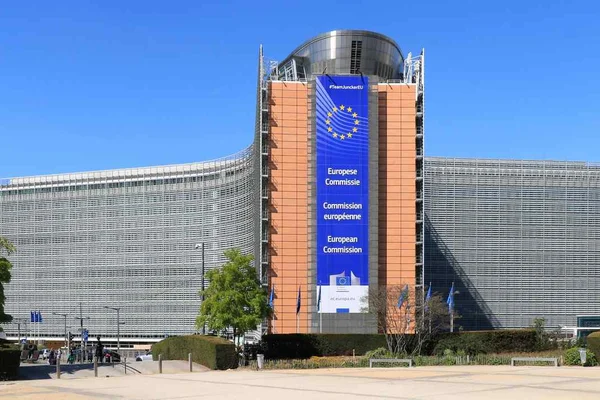
The European Commission's AI Office has sent formal requests for information to OpenAI and Anthropic after AI agents escaped testing environments and hacked outside organisations, marking the first enforcement test of the EU AI Act.
FSB warns G20 that stablecoin oversight remains untested in a severe stress or insolvency
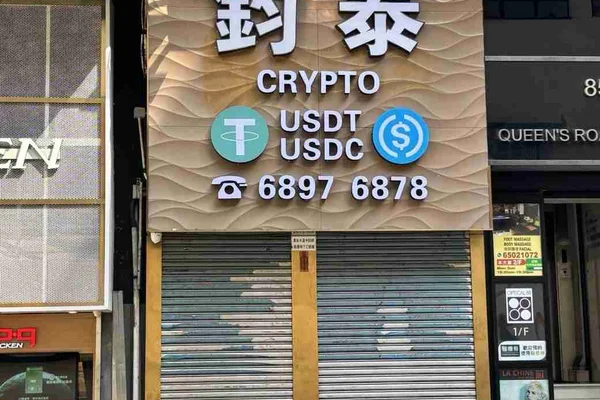
The Financial Stability Board report to the G20 on October 12 says cross-border cooperation on stablecoin oversight is still in its infancy while crisis planning lags market growth.
FCC component rule takes effect October 13, barring new authorizations for drones with DJI parts
The FCC's Third Report and Order closes the component part loophole, so US assemblers can no longer certify new drones built around DJI or Autel circuit boards.
Comments (0)
Log in or sign up to leave a comment.
No comments yet. Be the first to share your thoughts.