The memory market has become the most visible bottleneck in the AI boom, and a batch of data published around Sep 1 shows just how far the squeeze has gone. Samsung Electronics has reportedly allocated about 70% of its memory production capacity to long-term agreements that run through 2031, with customers including NVIDIA, Microsoft and Google, according to TrendForce and Seoul Economic Daily on Sep 1, while spot prices for high-bandwidth memory run several times above contract levels. The numbers paint a picture of a market that has shifted from open competition to a system of advance lock-up, where the biggest buyers secure supply years ahead and everyone else pays the spot market's premium. It is a structural change with consequences that reach far beyond data centers, into the price of laptops, phones and even budget smartphones.
Memory is a strange industry to watch because the product is invisible to most people but its price is now affecting nearly everything. DRAM and NAND prices have climbed for months, driven by AI demand absorbing production capacity that used to go to commodity chips. What makes the current moment unusual is the combination of record prices with falling volumes, which is the signature of a genuine shortage rather than a demand surge, and the increasingly common practice of locking capacity into multi-year deals that leave less supply for everyone else.
Key Facts
TrendForce reported on Sep 1 that Samsung has reportedly allocated about 70% of its memory production capacity to long-term agreements through 2031, with major customers including NVIDIA, Microsoft and Google, and that the tight spot market has created a striking gap with contract prices. A 36GB HBM3E product reportedly costs about $2,100 on the spot market, roughly four to five times its long-term agreement price, while 16-layer HBM4 products being prepared for mass production are priced at around $3,500 on the spot market.
The Korea International Trade Association said on Aug 31 that South Korean DRAM export volume fell 13.2% from about 681.79 million units in May to 591.74 million in July, while export value climbed 18.5% from $11.43 billion to $13.55 billion and the average unit price surged 36.6% from $16.76 to $22.90, as Seoul Economic Daily reported on Sep 1. The same data shows the average export price per HBM unit stood at $76.13 as of the end of July, up 9.5% from the previous month and the first time it topped $70, as HBM4 shipments ramp up. Conventional DRAM export prices also jumped 24.3% to $22.9 per unit.
The shortage is cascading into commodity memory. TrendForce raised its forecast for third-quarter PC DRAM contract price increases to 18% to 23%, up from an earlier 15% to 20%, and Seoul Economic Daily reported on Aug 31 that the average contract price for commodity PC DRAM (DDR4 8Gb 1Gx8) rose 4.17% month over month to $25 in August, roughly 8.6 times its June 2016 level of $2.9, another record high. The research firm also noted that NVIDIA increased its long-term purchase commitments from $119 billion in fiscal Q1 2027 to $279 billion in fiscal Q2, with the company saying the latest commitments are primarily related to memory procurement, as reported by TrendForce on Sep 1.
Analysis
What this really means is that the memory market has stopped behaving like a commodity market and started behaving like a contracted utility, and that change is the most important force in the hardware economy right now. When 70% of Samsung's memory capacity is locked into long-term agreements through 2031, the spot market becomes a residual market where prices are set by scarcity, and buyers who cannot sign multi-year deals pay a premium that has nothing to do with the cost of production. The 4 to 5 times gap between HBM spot and contract prices is not a sign of speculation, it is the price of certainty in a market where certainty is the scarce resource.
The bigger picture here is about who wins and who loses in a locked-up supply chain. The winners are the hyperscalers and the big chip buyers, NVIDIA, Microsoft, Google, Amazon, who have the balance sheets and the negotiating power to sign long-term agreements and lock in supply. The losers are everyone else: PC makers, phone makers, server OEMs and ultimately consumers, who pay the spot market price or see products get more expensive. Seoul Economic Daily reported on Sep 1 that laptop shipments are projected to fall 10.5% this year, even as memory prices climb, which is the clearest evidence that the shortage is now hurting demand in the consumer market. Budget smartphones are particularly exposed, because memory has become the most expensive single component in many low-cost devices.
The export data tells the story of how extreme the dislocation has become. A 13.2% drop in DRAM export volume with an 18.5% rise in export value means Korea is shipping fewer chips and earning more for them, a combination that is almost impossible in a normal commodity market. The 36.6% jump in average unit price in two months is the kind of move that normally takes years. These are not demand signals, they are scarcity signals, and they are being driven by the same force from every direction: AI data centers want every bit of high-bandwidth memory that can be produced, HBM consumes far more wafers than conventional DRAM, and the shift to newer HBM generations lowers yield, so producers cannot simply add capacity fast enough to keep up.
Why It Matters
For consumers, the memory shortage is about to show up in prices across the electronics aisle. The initial web search roundups and ABC News reported on Sep 1 that Samsung has already hiked prices on its phones and tablets, making devices with higher storage up to $115 more expensive, and that Microsoft, Google and Apple have raised prices on several phones, computers and tablets over the past few months. Memory has reportedly surpassed the processor as the largest cost component in phone bills of materials, which means the shortage is no longer a data-center story, it is a story about how much your next laptop or phone costs.
For the semiconductor industry, the long-term agreements change the competitive landscape. Samsung's move to lock 70% of capacity through 2031 commits its largest customers to its memory products for years, which is a defensive measure against the possibility that new capacity or new competitors erode its position. SK hynix, which has been the dominant HBM supplier to NVIDIA, is seeing its premium being reassessed as Samsung improves HBM4 yields, with Seoul Economic Daily reporting on Sep 1 that Samsung's share of HBM4 shipments rose to about 35% in the second quarter from about 5% in the first quarter. For investors and analysts, the takeaway is that memory pricing is now set more by contract negotiation than by market forces, and that the companies with the biggest committed order books, and the smallest residual exposure to the spot market, are the ones best insulated from the volatility.
Next Up
In the coming weeks, watch for the third-quarter contract price negotiations to confirm whether the 18% to 23% PC DRAM increase holds, and for any signals on how far producers can push prices before consumer demand breaks. The longer-term question is whether the long-term agreement system becomes the permanent structure of the memory market, and whether new entrants or new production capacity in the United States, Japan or elsewhere can meaningfully loosen the lock on supply. For buyers, the near-term takeaway is that memory prices are likely to keep climbing into 2027, and that the window for signing favorable long-term deals is probably closing, not opening.
Related Articles
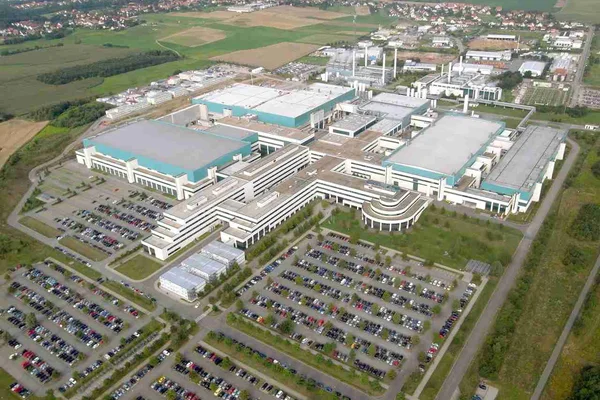
GlobalFoundries to Build Two 300mm Fabs in New York Backed by Japan's $21 Billion
Japan will supply as much as $21 billion for two 300mm plants at GlobalFoundries' Malta campus, with Apple and Renesas named as initial customers and Commerce taking equity.
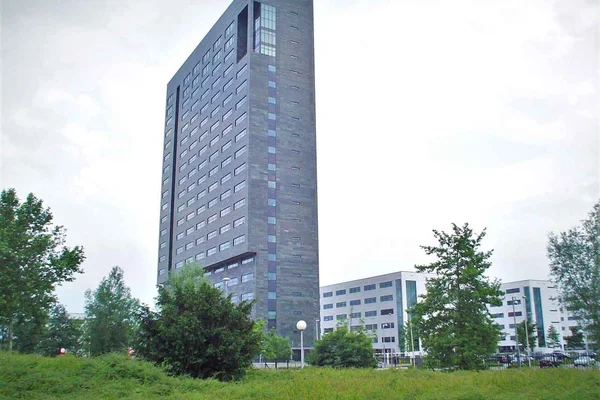
ASML posts record Q3 2026 results and raises outlook as AI demand outruns supply
The Dutch lithography giant beat profit expectations and lifted its 2026 sales guidance, saying customers now want tools for 2029 and 2030 and planned capacity will fall short.
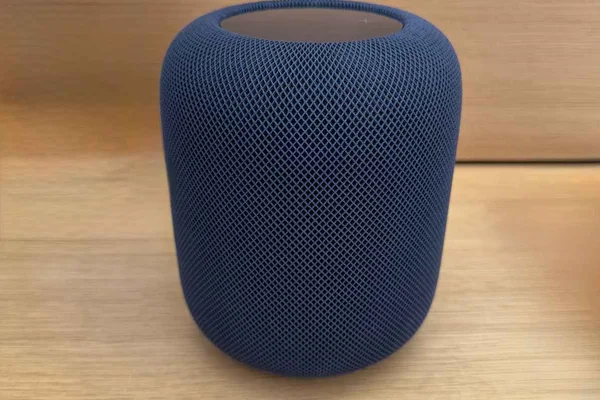
Apple launches HomeView smart home display at $299 with new Apple TV 4K and HomePod mini 2
Apple's October 13 event introduced a 7 inch smart display, a refreshed streaming box with an A19 chip, and a faster HomePod mini, with prices starting at $149.
Comments (0)
Log in or sign up to leave a comment.
No comments yet. Be the first to share your thoughts.