ASML Holding NV, the Dutch company that supplies lithography equipment to the world's chipmakers, reported its third quarter results for 2026 on October 14 from its headquarters in Veldhoven, the Netherlands. The company describes itself as the leading supplier of lithography hardware, software and services to the semiconductor industry, a business that employs more than 45,500 people and trades on both Euronext Amsterdam and the NASDAQ under the ticker ASML. Its machines sit at the very start of the most advanced chip production lines in the world.
That position matters because ASML is the only company on the planet that produces extreme ultraviolet (EUV) lithography systems, the tools required to print the smallest features on leading edge logic and memory chips. Customers including TSMC, which manufactures chips for Nvidia, Samsung Electronics, Intel, SK Hynix and Micron all depend on those machines. A newcomer, TeraFab, has also entered the conversation as a potential buyer, though ASML executives said the company is still assessing how large that opportunity will be.
The wider context for the quarter was a running debate among investors about whether the artificial intelligence investment boom was losing momentum. Concerns about a peak in AI related capital spending had weighed on semiconductor equipment makers earlier in the year. Reuters reported on October 14, 2026 that ASML shares had risen almost 70 percent so far this year, and the company is Europe's largest firm by market valuation at some EUR 586 billion.
Against that backdrop, the numbers ASML delivered were expected to function as a test of whether demand for AI infrastructure was still accelerating. The answer from management was unambiguous: customers are not only buying for the next two years, they are asking about 2029 and 2030.
Key Facts
ASML reported record third quarter total net sales of EUR 11.662 billion, up from EUR 9.326 billion in the second quarter of 2026, with a gross margin of 57.5 percent and gross profit of EUR 6.700 billion. Net income came in at EUR 4.960 billion, and basic earnings per share were EUR 12.95. The company sold 113 new lithography systems and 8 used systems during the quarter.
CNBC reported on October 14, 2026 that the profit beat expectations, with net profit of EUR 4.96 billion against a EUR 4.1 billion consensus estimate, while net sales of EUR 11.66 billion came in marginally below a EUR 11.72 billion expectation. Installed Base Management sales, the revenue ASML earns from upgrading and servicing machines already in the field, reached EUR 3.289 billion, roughly EUR 400 million above guidance, driven mostly by productivity upgrades across EUV and DUV systems.
Segment detail from the earnings call showed net system sales of EUR 8.4 billion, split between EUR 4.1 billion from EUV systems, including one High NA EUV system sale, and EUR 4.3 billion from non EUV systems. Logic accounted for 54 percent of net system sales and memory for 46 percent. MarketBeat reported on October 14, 2026 that net income included roughly EUR 500 million from an increase in the valuation of ASML's initial investment in Mistral AI.
Guidance was raised. ASML guided fourth quarter 2026 total net sales to EUR 14.2 billion to EUR 15.2 billion with a gross margin around 57 percent, and lifted its full year 2026 outlook to EUR 44 billion to EUR 45 billion, up from a previous lower bound of EUR 43 billion. The company ended the quarter with EUR 12.735 billion in cash and short term investments and free cash flow of EUR 11.4 billion, and it repurchased about EUR 4.1 billion of shares. An interim dividend of EUR 1.88 per share is payable on November 4, 2026.
The forward looking commentary was the most striking element. CEO Christophe Fouquet said customers continue to increase their short and medium term equipment demand forecasts, driven primarily by their views on the size and duration of AI related investments, and that some customers are expressing an interest in placing orders for 2029 and even 2030. As a result, ASML now expects that supply as currently planned for 2027 and 2028 will not fully meet customer demand.
Analysis
Reuters reported on October 14, 2026 that ASML's customers were already looking to place orders for its advanced chipmaking tools for 2029 and 2030, a disclosure that eased concerns the AI investment boom was losing momentum. Fouquet told Reuters there was a lot of order intake for 2028, but also strong interest to place orders for 2029 and sometimes even 2030. That language is unusual for a capital equipment maker, because it pushes the visibility window far beyond the typical planning horizon for fab construction.
The supply side is where the tension sits. In July, ASML said it would increase capacity by 30 percent in 2027 and another 30 percent in 2028. On this call, Fouquet said it was clear that would not be enough, and CFO Roger Dassen said current plans for 2027 and 2028 would not fully meet demand and the company is exploring expansion above the previously considered 2028 growth level. ASML is also upgrading existing tools, selling higher throughput versions, and increasing prices starting in 2027, with the full effect visible from 2028.
What this really means is that the constraint on AI chip supply is no longer only about foundry construction or memory capacity, it is about the availability of the lithography tools that every advanced fab needs before it can install anything else. ASML expects to produce roughly 65 low NA EUV systems in 2026, up nearly 50 percent from 44 shipped in 2025, and even that steep increase is being outpaced by demand signals. For the full year, ASML expects EUV sales to rise more than 45 percent, non EUV system sales to rise about 20 percent, and installed base management sales to rise about 50 percent. Memory net system sales are expected to climb about 75 percent on customer capacity expansion and growing EUV adoption on advanced DRAM nodes, while logic net system sales grow about 10 percent.
The bigger picture here is that the memory cycle has become an equally important driver alongside logic. Memory accounted for 46 percent of net system sales in the quarter, and the projected 75 percent growth in memory system sales reflects how aggressively DRAM makers are moving to EUV for advanced nodes. When both logic and memory customers are expanding at once, and both are asking about tools three to four years out, the traditional boom and bust rhythm of the equipment industry looks different.
Why It Matters
For the broader technology industry, ASML's order book functions as a leading indicator. Every leading edge processor, accelerator and high bandwidth memory stack begins with a lithography step, so the length of ASML's demand visibility shapes how much AI compute the world can build in the late 2020s. If supply for 2027 and 2028 falls short of demand, the shortfall propagates to TSMC, Samsung, Intel, SK Hynix and Micron, and eventually to the cloud operators and model developers buying accelerators.
The customer mix adds another layer. CNBC reported on October 14, 2026 that ASML expects China to account for about 20 percent of total sales, while during the quarter Samsung and TSMC committed to using ASML's High NA EUV machines. High NA adoption is a meaningful signal because those tools are the most expensive and most complex products ASML makes, and commitments from two of the largest foundry and memory players validate the next generation platform.
Gordon Kerr of KBRA said ASML's results showed demand for chips remains strong and infrastructure spending is likely to continue well into 2027, a view echoed by the share price reaction. Reuters noted that ASML shares were up 2 percent on the day. The valuation context, Europe's largest company at some EUR 586 billion, means the stock is already priced for substantial growth, and the raised outlook plus the 2029 and 2030 commentary is what sustains that premium.
Next Up
Attention now turns to the fourth quarter, which ASML guided to EUR 14.2 billion to EUR 15.2 billion in total net sales, a range whose upper end sits ahead of the EUR 14.2 billion consensus. Full year 2026 sales of EUR 44 billion to EUR 45 billion would represent about 36 percent year over year growth. The interim dividend of EUR 1.88 per share is payable on November 4, 2026, and the company continues to buy back stock after repurchasing about EUR 4.1 billion in the third quarter.
On capacity, the key question is how far ASML will push beyond its previously communicated plans. ASML broke ground last month on a major Eindhoven expansion, with a first phase due in 2029, and management is investigating ways to raise 2028 capacity above the 30 percent increase already outlined. Dassen also pointed to tool upgrades, higher throughput versions and price increases starting in 2027 as additional levers. The size of the TeraFab opportunity remains an open item, with ASML still evaluating the scale of that potential customer.
Related Articles
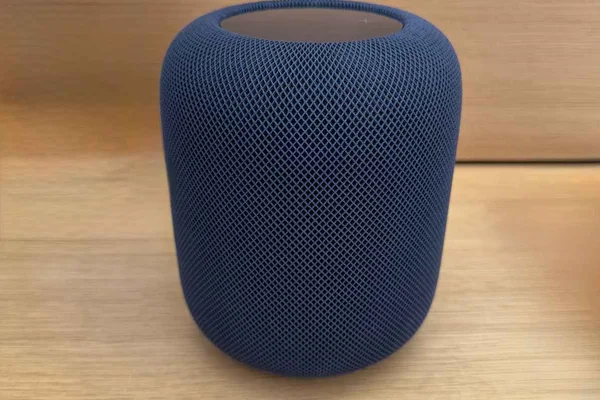
Apple launches HomeView smart home display at $299 with new Apple TV 4K and HomePod mini 2
Apple's October 13 event introduced a 7 inch smart display, a refreshed streaming box with an A19 chip, and a faster HomePod mini, with prices starting at $149.
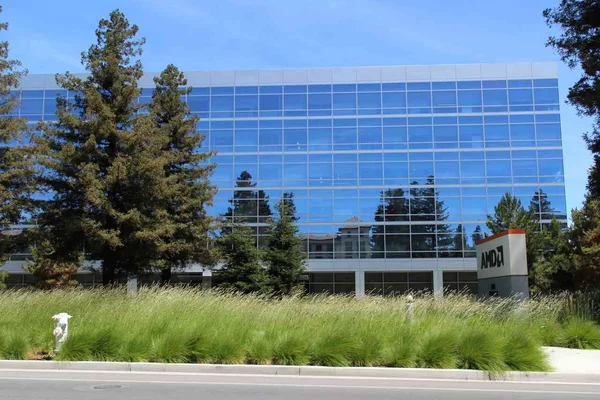
AMD unveils Helion, a 21 inch open rack design for agentic AI with 32,768 EPYC cores
The new Helion blueprint supports a CPU heavy rack with 128 EPYC Venice processors or a mixed rack pairing EPYC nodes with Instinct MI350P GPUs, shipping from November 2026.
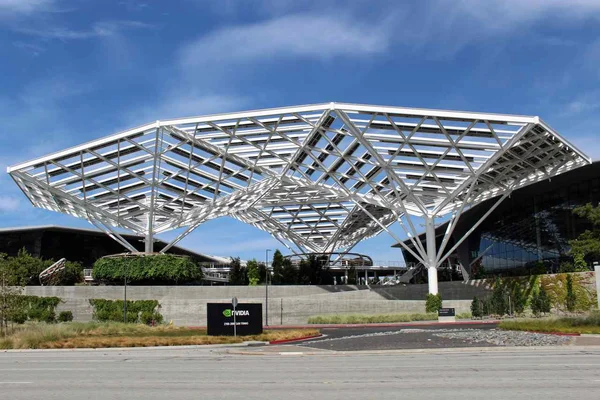
Nvidia reportedly ends RTX 5090 output as GB202 silicon goes to RTX Pro cards
Reports from multiple hardware outlets say Nvidia has stopped sending GB202 chips to its GeForce RTX 5090, a move that would leave the RTX 5080 as the fastest consumer card.
Comments (0)
Log in or sign up to leave a comment.
No comments yet. Be the first to share your thoughts.