Pakistan is closing in on a milestone that few countries have reached: sending one of its own citizens to a space station in orbit. Two military pilots, Muhammad Zeeshan Ali of the Pakistan Air Force and Khurram Daud of the Pakistan Navy, are in the final stage of training at the China Astronaut Research and Training Center in Beijing, and one of them will fly to China's Tiangong space station. The selection will make Pakistan the first foreign nation to place an astronaut aboard the Chinese outpost.
The mission has been in preparation for years. Reuters reported on September 28, 2026 that the two pilots are memorising Mandarin, spinning in centrifuge drills and learning to eat, sleep and repair equipment while weightless, as a decision nears on which one will become the first foreign astronaut aboard Tiangong. The report, by Saad Sayeed and Ariba Shahid, was datelined Karachi and drew on interviews with Pakistani space officials.
The two men were named in April 2026, but the project itself was conceived in 2019, according to Amer Gilani, who oversees human spaceflight cooperation at Pakistan's Space and Upper Atmosphere Research Commission, known as SUPARCO. The flight is expected to be Shenzhou-24, launching from Jiuquan in China on a Long March 2F rocket, with the astronaut serving as a payload specialist for about one week.
That is short by the standards of professional spaceflight. Chinese crews typically rotate through Tiangong on roughly six-month tours. For Pakistan, however, the visit is the culmination of a partnership with Beijing that stretches across satellites, navigation and lunar exploration, and it carries significance far beyond the number of days spent in orbit.
Key Facts
SUPARCO says the final call will come in mid-to-late October 2026. Reuters reported on September 28, 2026 that Gilani expects the astronaut selection decision in that window. Whoever is chosen will not return to Pakistan before launch, Gilani told Reuters. The astronaut will set off into space directly from training in China and return home only after a recovery period. The flight will use a Chinese-built spacecraft, launch from a Chinese site, rely on Chinese instructors and use Mandarin in orbit.
The two candidates emerged from a competitive process. SpikeToday reported on September 29, 2026 that China's space agency announced the pair on April 22, 2026, as the first foreign astronauts chosen to train for its station. The announcement followed a Pakistan-China agreement signed in Islamabad in February 2025. Tech Times reported on September 28, 2026 that Zeeshan Ali and Khurram Daud emerged in February 2026 and formally entered training on April 24, 2026, a date chosen to coincide with China Space Day.
The numbers behind the selection are striking. The two pilots beat roughly 20 finalists culled from an initial Pakistani pool of pilots and scientists, Reuters reported on September 28, 2026. Candidates were screened for medical fitness, psychological resilience and a tolerance for g-forces that few scientists possess. SUPARCO's director of artificial intelligence, Uzair Ansari, told Reuters that "You cannot easily find scientists who are familiar with traveling and facing high-level g-forces."
The scientific payload is also substantial. Chinese institutes selected four biotechnology experiments from more than 300 proposals submitted by Pakistani universities in Karachi, Lahore and Islamabad, following a year-long campaign. The experiments focus on food security and climate change. As a payload specialist, the Pakistani astronaut will be responsible for running those experiments rather than flying the spacecraft.
Tiangong itself consists of three modules, Tianhe, Wentian and Mengtian. SpikeToday reported on September 29, 2026 that the station weighs about 77 tonnes and has hosted more than 180 experiments, producing over 500 research papers and 150 patents. Tech Times reported on September 28, 2026 that the station orbits at 340 to 450 km above Earth at an inclination of 41.5 degrees, has operated continuously since 2022 and has hosted seven Chinese crews from Shenzhou-12 onward.
Analysis
The bigger picture here is that China is using crewed spaceflight as an instrument of diplomacy at exactly the moment the International Space Station is heading toward retirement. Tech Times reported on September 28, 2026 that the ISS is scheduled for decommissioning around 2030, leaving China as the sole crewed destination in orbit. Beijing has spent years building the alternative, and Pakistan is the first country invited to use it.
What this really means is that the Shenzhou-24 flight is less about a single week in orbit than about a template. China announced the pair in April 2026, trained them in Beijing, will launch them from Jiuquan and will return them to Pakistan after recovery. Every step runs through Chinese facilities and Chinese instruction. For partner countries without independent launch vehicles or crewed spacecraft, that is the only available path to orbit, and China is now the one offering it.
The choice of fighter pilots over scientists is also a deliberate signal. SUPARCO's Uzair Ansari told Reuters that scientists with high g-force tolerance are hard to find, so the agency drew from military aviators instead. The result is an astronaut corps that looks like a military exchange programme, with the Pakistan Air Force and Pakistan Navy each supplying a candidate. That structure mirrors the early days of human spaceflight in the United States and the Soviet Union, when test pilots led the way.
Pakistan's gains are real but narrow. It gets a payload specialist seat, four experiments and a national first. It does not get a launch vehicle, a spacecraft or a long-duration crew rotation. Gilani told Reuters that there is "no official commitment or discussion" about sending a Pakistani astronaut to the moon under the same partnership. What comes next, he said, will depend on how "our maiden mission" turns out.
Why It Matters
The flight matters most for what it says about the global map of human spaceflight. Only Russia, the United States and China have launched their own crewed spacecraft. Citizens of about 50 countries have flown in space since Yuri Gagarin in 1961, but most of those flights were arranged through the United States or Russia. China's invitation to Pakistan is the first time it will transport a foreign astronaut, and it opens a new channel that bypasses the older providers.
For Pakistan, the payoff is scientific and symbolic at once. The four biotechnology experiments touch on food security and climate change, two areas where Pakistani universities submitted more than 300 proposals. The astronaut will run those experiments in orbit, which gives Pakistani researchers a path to microgravity data they could not otherwise obtain. The symbolic value is harder to quantify, but a first astronaut tends to reshape public expectations about what a country can do.
For China, the mission is a demonstration. Tiangong has hosted seven Chinese crews and more than 180 experiments, but it has never carried a foreign national. Bringing a Pakistani pilot aboard validates the station as an international platform at a time when the ISS is winding down. It also ties the space programme more tightly to the Belt and Road Initiative, the broader infrastructure and cooperation framework that already includes Chinese-launched Pakistani satellites and a joint satellite-navigation system.
Next Up
The decision is expected in mid-to-late October 2026, and the launch is listed for October 2026 with an October-November window, aboard Shenzhou-24 from Jiuquan. Once the pick is made, the chosen pilot will continue training in China rather than return home, then launch and spend about a week aboard Tiangong before returning to Pakistan following a recovery period. China has not said publicly which of the two will fly.
Longer term, the partnership has more on the manifest. A Pakistani-built rover is due to fly on China's Chang'e 8 lunar mission around 2028, extending the relationship beyond low Earth orbit. Whether a Pakistani astronaut ever goes farther than Tiangong is, for now, an open question. Gilani told Reuters there is no official commitment or discussion on a lunar crewed mission, and that the next steps depend on the outcome of the first flight.
Related Articles
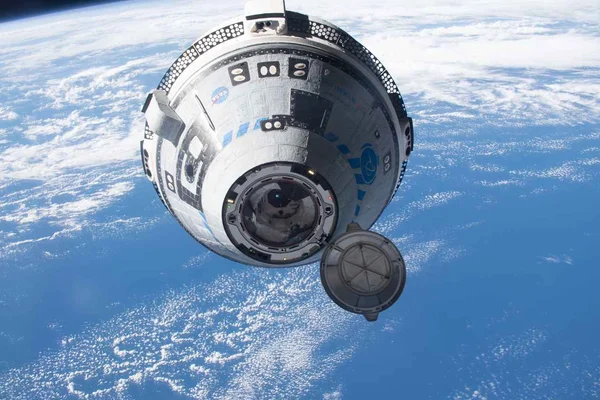
NASA Taps Woody Hoburg to Lead Starliner Crew Flight as Boeing Capsule Heads for December Test
NASA will fly an uncrewed Starliner as early as December 2026 and has named astronaut Woody Hoburg to command the first operational crew mission no sooner than mid 2028.
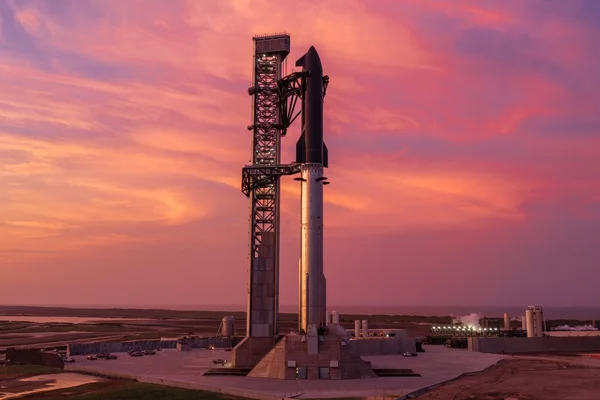
SpaceX Starship reaches Earth orbit for first time and deploys 26 Starlink V3 satellites
On September 28, 2026, SpaceX's Starship reached orbit for the first time on Flight 14, deploying 26 Starlink V3 satellites and marking a major step toward NASA's Artemis moon missions.
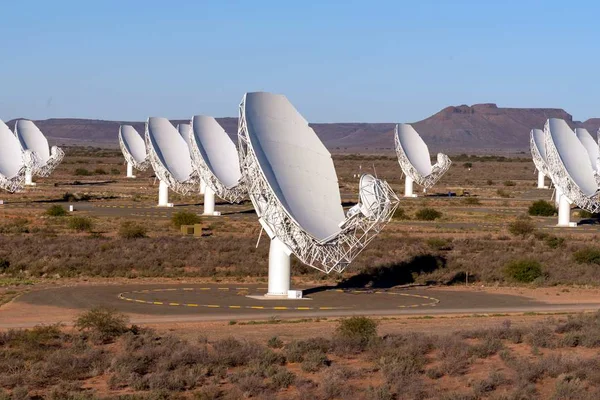
Astronomers Detect First Direct Radio Signal from Exoplanet Beta Pictoris b
A Harvard-led team using South Africa's MeerKAT array has detected auroral radio bursts from Beta Pictoris b, marking the first direct measurement of an exoplanet's magnetic field at 1,250 gauss.
Comments (0)
Log in or sign up to leave a comment.
No comments yet. Be the first to share your thoughts.