OpenAI on August 27 open-sourced the Codex Harness, the orchestration framework behind its Codex coding agent, under the Apache-2.0 license. The full toolchain was published to the openai/codex repository on GitHub, giving developers the same components OpenAI uses to run bounded, long-running agent workloads in production.
What Was Released
The release includes three main components. The codex exec CLI runs bounded agent workflows such as scripts, CI tasks, and batch processing, returning structured results. Official SDKs for TypeScript and Python let developers control the task lifecycle including start, pause, resume, and streaming. A codex app-server engine connects applications to a local Codex process over JSON-RPC, enabling persistent conversation state, real-time streaming events, human-in-the-loop approvals, and embedding of agents into business applications.
Why It Matters
The harness is the engineering layer that turns a frontier model into a reliable coding agent. OpenAI reported that harness optimizations, including retaining reasoning chains and compressing context, lifted GPT-5.6 Sol's score on the ARC-AGI-3 benchmark from 13.3% to 38.3% while reducing output tokens by about six times. Open-sourcing the framework is part of a broader pattern of agent infrastructure going public, following similar moves by Anthropic and others, as the developer-tooling market shifts from model access to agent reliability and observability.
Industry Context
The release lands in a week of heavy agent tooling activity. GitHub rolled out its Global Model Policy for Copilot Business and Enterprise, and Microsoft's Copilot Cowork reached general availability with multi-model support. By giving developers the harness rather than just an API, OpenAI is betting that the orchestration layer, not the model, becomes the durable moat in the AI coding market.
Related Articles
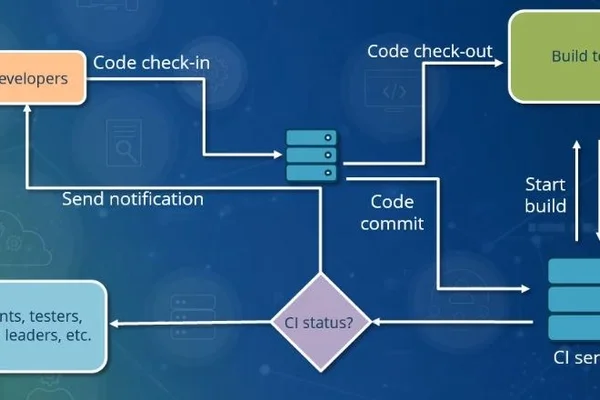
GitLab patches maximum severity CVSS 10.0 flaw in CI/CD regex compiler
The emergency update, tracked as CVE-2026-97229 and rated 10.0, fixes an integer overflow in the CI/CD regular expression compiler that Rapid7 reproduced on an unpatched server image.
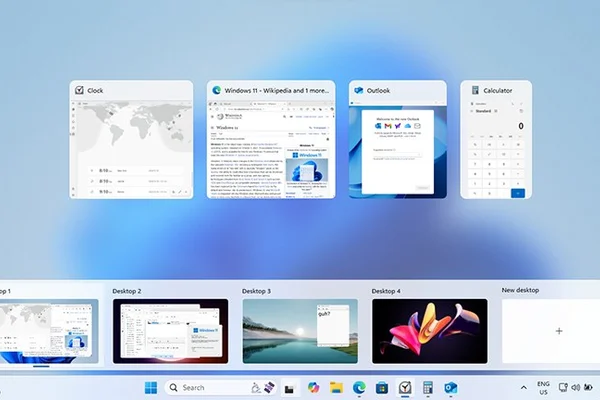
Microsoft Ends Windows 11 24H2 Support as Final Patch Arrives on October 13
Microsoft's last cumulative update for Windows 11 version 24H2 on consumer editions landed on October 13, 2026, nudging unmanaged PCs toward 25H2 or 26H2 while business fleets keep a year of grace.
Cloudflare Acquires Deno to Merge celld Into workerd and Simplify Self Hosting Workers
Cloudflare will absorb the entire Deno team and fold its celld runtime into workerd, a move aimed at letting companies self-host the Workers programming model on their own servers.
Comments (0)
Log in or sign up to leave a comment.
No comments yet. Be the first to share your thoughts.