NASA's Jet Propulsion Laboratory successfully executed a delicate power-management maneuver on Voyager 2 on August 4, 2026 — informally dubbed the "Big Bang" — that will keep the 49-year-old spacecraft's three remaining science instruments operating for at least another year, ScienceDaily and JPL confirm. The probe is now 16.31 billion miles from Earth, and its radio signal takes roughly 24 hours and 19 minutes to arrive one-way.
What the 'Big Bang' Is
Voyager 2 loses roughly four watts of available power every year as its radioisotope thermal generators decay. The "Big Bang" maneuver involves shutting down a non-critical heater and re-routing residual power to the plasma-wave instrument, the magnetometer, and the cosmic-ray subsystem — the three remaining experiments still returning science from interstellar space. The trade-off is that the probe's high-voltage subsystem will experience a stress event unprecedented in nearly half a century of operation, and engineers prepared contingency scripts for every plausible failure mode.
The Stakes
Voyager 2 crossed into interstellar space in November 2018 and is the only human-made object that has visited all four gas giants — Jupiter, Saturn, Uranus and Neptune. Its twin Voyager 1 crossed the heliopause in 2012. JPL's power budget had been projected to fall below the minimum needed for the science instruments by mid-2027 without intervention; the "Big Bang" buys engineers until at least 2028. "We found another year of science hiding inside hardware that was built before the first Space Shuttle flew," said JPL Voyager project manager Susan Dodd.
What Comes Next
Voyager 1, still operational at 15.8 billion miles, is expected to face the same power challenge within two years. Engineers are already modeling a similar maneuver for it, with lessons learned from Voyager 2's "Big Bang" baked into the procedure. Both spacecraft carry gold-plated Golden Records —messages from humanity to any intelligent life that might find them — and are expected to remain physically intact long after their instruments go silent.
Related Articles

Animals may have evolved 200 million years earlier than fossils suggest, Oxford led study says
A University of Oxford led team argues in Science Advances that animals originated 800 to 700 million years ago by testing microfossils from Mongolia and recalibrating molecular clocks.
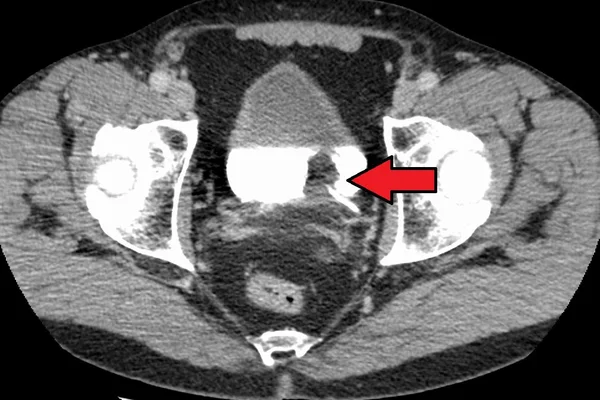
Stanford urine RNA test detects 95 percent of localized bladder cancers and predicts BCG response
A new urine cell-free RNA liquid biopsy called uRARE-seq identified 95 percent of localized bladder cancers in a 683-sample study and predicted which patients would benefit from BCG immunotherapy.
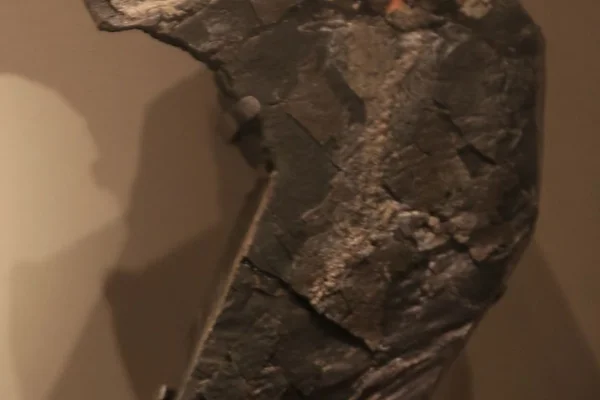
Fossil Called World's Oldest Reptile Is Reclassified as Aquatic Amphibian
Synchrotron X-ray scans of the 345 million year old Westlothiana lizziae fossil reveal internal gills and a fish-like mouth, forcing a reclassification as an aquatic stem tetrapod, not the earliest reptile.
Comments (0)
Log in or sign up to leave a comment.
No comments yet. Be the first to share your thoughts.