NASA Administrator Bill Nelson confirmed on Wednesday that the Artemis II crewed lunar flyby mission has been slipped from September 2026 to no earlier than April 2027, citing the need to complete a full review of the Orion heat-shield performance data from the uncrewed Artemis I mission. The delay does not affect the Artemis III surface-landing target at this time, the agency said.
What Triggered the Slip
The decision follows the Artemis I review board's finding that the Orion heat shield experienced a larger-than-expected amount of char loss during re-entry, along with an unexpected liberation of gas from the underlying Avcoat material. The board concluded that the underlying design is sound, but recommended 11 changes to the heat-shield manufacturing process, the re-entry trajectory, and the post-flight recovery procedure. NASA has now decided to implement all 11 before the crewed mission, which pushes the launch date by eight months.
「We are not going to fly a crew on a heat shield that we don't fully understand. The schedule slip is a cost of being a careful agency,」 Nelson said in a press conference at NASA Headquarters.
What the Crew Will Do With the Extra Time
The four-person crew — Reid Wiseman, Victor Glover, Christina Koch, and Jeremy Hansen — will now spend an additional eight months in training, with a focus on the modified re-entry profile, additional rendezvous and proximity-operations simulations with the Human Landing System, and a series of integrated simulations with the European Service Module. ESA, which provides the service module, has indicated it can support the extended training schedule without additional funding.
Knock-On Effects
The slip does not move the Artemis III surface-landing target, which remains no earlier than mid-2028. However, the gap between Artemis II and Artemis III is now longer, and NASA will need to weigh whether to add an additional uncrewed test of the Human Landing System in the interim. SpaceX's Starship, which is the Artemis III lander, has now completed three successful V3 flights and the first orbital refueling demonstration.
Related Articles
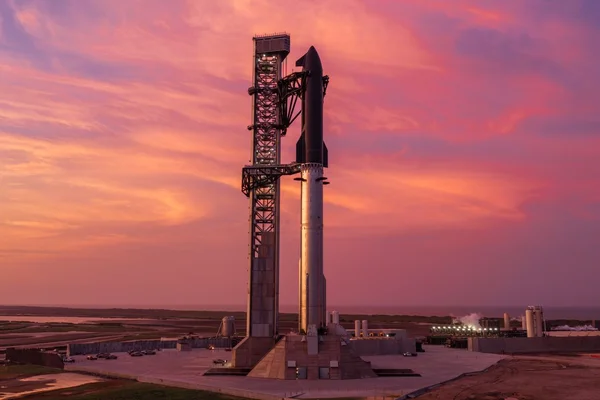
SpaceX Starship Flight 14 Eyes First Orbit With 20 Starlink V3 Satellites
Federal air traffic planners have reserved a two hour window on September 18, 2026 for a Starship mission that would fly about 20 Starlink V3 satellites and, per SpaceX's finance chief, bring in revenue.
Rocket Lab protests NASA's $700 million Mars orbiter award to Blue Origin
Rocket Lab filed a GAO protest on September 11, 2026, challenging NASA's $700 million Mars Telecommunications Network award to Blue Origin over eligibility and review concerns.

ESA Awards The Exploration Company 760 Million Euro Contract for Nyx Cargo Capsule to ISS
The European Space Agency has selected The Exploration Company to fly a reusable Nyx cargo capsule to the International Space Station under a contract worth up to 760 million euros.
Comments (0)
Log in or sign up to leave a comment.
No comments yet. Be the first to share your thoughts.