NASA's newest flagship observatory has crossed a threshold that only a handful of space telescopes ever reach. On September 15, 2026, the agency announced that the Nancy Grace Roman Space Telescope had successfully activated its Wide Field Instrument, an infrared camera built around 18 detectors with a combined 300 megapixels of imaging area, and that the instrument had captured its first photons of starlight. In the same announcement, the mission team reported that it had completed the first full systems checkout of Roman's Coronagraph Instrument from the Coronagraph Commanding Center at Caltech/IPAC in Pasadena, California.
Roman launched on August 30, 2026, from NASA's Kennedy Space Center in Florida aboard a SpaceX Falcon Heavy. It is now cruising nearly one million miles toward the second Earth-Sun Lagrange point, known as L2, where it will slip into a quasi-halo orbit. Activating the primary camera is the first real test of whether hardware built by NASA's Goddard Space Flight Center, BAE Systems and Teledyne performs as designed in the vacuum of space, far from any repair crew.
The $4.3 billion mission rests on a demanding combination: the sharpness of the Hubble Space Telescope with a field of view roughly 100 times larger. Roman's instruments see near-infrared light, the part of the spectrum where the expansion of the universe stretches distant galaxies and where the glow of ancient cosmic structures is most visible. Astronomers intend to use that combination to map galactic clusters and the filaments of matter and dark matter, and to tighten constraints on dark energy.
For the instrument team, the milestone is also a relief. Building a camera with 18 detectors that must operate at cryogenic temperatures, then proving it works after a rocket ride, is a multiyear exercise in patience and precision.
Key Facts
NASA Science reported on September 15 that the Wide Field Instrument is operational in space after capturing its first starlight, and that the Coronagraph Instrument passed its first full systems checkout. Before activation, the team let the instrument rest for 10 days at minus 85 F (minus 65 C) to decontaminate. On the morning of September 11, engineers switched off the heater and let the WFI cool to minus 225 F (minus 143 C), then activated Roman's 18 infrared detectors, which together have a sensing area about the size of a laptop screen. The detectors then chilled further to about minus 300 F (minus 183 C). Roman collects infrared light that warm objects emit strongly, so it must eliminate other heat sources, including its own detectors and heaters.
The first test image shows a sea of out-of-focus stars as donut-like features. That was expected because the detector array was still stowed in the position it held for launch. 'After years of effort to build and test the instrument on the ground, we now have confirmation that it is operational in space. This is a huge milestone for the team at Goddard, our industry teams at BAE Systems, Inc. and Teledyne, and our science centers,' said Josh Schlieder, the Wide Field Instrument scientist at NASA's Goddard Space Flight Center in Greenbelt, Maryland. Starlust reported on September 16 that NASA said the 300-megapixel camera captured its first photons from a sea of stars and is in perfect health. Each WFI image will capture a patch of sky bigger than the apparent size of a full Moon, at Hubble-like sharpness.
The coronagraph checkout, run from Caltech/IPAC in Pasadena, confirmed communication with all of the instrument's software, thermal control, mechanisms, cameras and avionics. Its shaped pupil masks are each about the size of a U.S. quarter. Eric Cady, an optical engineer leading commissioning for the Roman Coronagraph at NASA's Jet Propulsion Laboratory, said the detectors would stay warm for 30 days of decontamination to bake off water and trace chemicals.
Ars Technica reported on September 14 that NASA confirmed the observatory has fuel for at least 22 years of science, roughly double the expectation baked into its design. Engineers had planned a five-year primary mission plus a five-year extension, a 10-year fuel budget. 'As a result of exquisite planning by our orbital dynamics team, brilliant execution by the operations team, and a precise launch from SpaceX, Roman has fuel for at least 22 years of potential science operations,' said Jamie Dunn of NASA's Goddard Space Flight Center.
NASA Science reported on September 14 that the first mid-course correction and other fuel savings are expected to more than double the mission's potential operational lifetime. The first burn, executed August 31, was performed with more than 99 percent accuracy and used less than 10 percent of the budgeted fuel, about 40 pounds (18 kilograms) of hydrazine, down from a preflight allocation of 441 pounds (200 kilograms). Extra fuel loaded at launch could enable roughly four more years of operations because Roman launched lighter than planned. The team budgeted with a conservative maximum weight of 21,605 pounds (9,800 kilograms), well above the observatory's actual weight of 17,760 pounds (8,056 kilograms). Alison Rao, the Roman propulsion lead at NASA Goddard, said propellant budgets are based on a set maximum value so the mission will not come up short, and that because Roman came in under that figure, the tanks could be filled to capacity rather than only to the 10-year requirement.
Analysis
What this really means is that Roman has cleared the riskiest gate on the payload side of its commissioning. A camera is not proven by the fact that it launched. It is proven when 18 detectors, cooled to roughly minus 300 F (minus 183 C), return readable data. The donut-shaped stars in the first image are not a defect but a signature: the optics have not yet been commanded to focus, so each point of light spreads into a ring. That pattern confirms photons are reaching the array and being converted into a signal, which lets the team move from survival questions to performance questions.
The fuel picture adds a second, less visible kind of margin. Missions are usually budgeted around conservative maximums, and Roman came in lighter than the worst case its planners assumed. It launched at 17,760 pounds (8,056 kilograms) against a budgeted maximum of 21,605 pounds (9,800 kilograms), and its first burn on August 31 used about 40 pounds (18 kilograms) of hydrazine against an allocation of 441 pounds (200 kilograms). The result, at least 22 years of potential science operations instead of a 10-year design life, is not simply a longer mission. It is a different mission, because time is the one resource that survey astronomy cannot buy any other way.
The two instruments matter for different reasons. The Wide Field Instrument is the survey engine, with 100 times Hubble's field of view at comparable sharpness, and it will produce the bulk of Roman's science. The Coronagraph Instrument occupies a narrower niche. Its checkout, confirming communication with every software, thermal control, mechanism, camera and avionics subsystem, shows that a second, highly specialized payload survived launch. Coronagraphs are built to suppress the glare of a star so fainter surrounding light can be studied, and Roman's shaped pupil masks, each about the size of a U.S. quarter, are the small components carrying that job.
The bigger picture here is that NASA has confirmation on both halves of a two-instrument observatory while the spacecraft is still months from its final orbit. Few flagship missions reach that point without a significant anomaly. The open question is no longer whether Roman works, but whether its pointing, data pipeline and survey strategy can deliver the volume of images the hardware promises.
Why It Matters
Roman's value is measured in sky coverage. It would take Hubble a century to observe what Roman will see in a month, according to Ars Technica, a comparison that captures how much survey speed changes the kinds of questions astronomers can ask. Mapping galactic clusters and the filaments of matter and dark matter, and studying dark energy, all depend on statistics gathered over enormous areas rather than on deep looks at single targets.
Roman is also the first NASA observatory designed for in-space refueling, a design choice that matters more now that the mission has demonstrated it can conserve propellant. If refueling is ever demonstrated on orbit, the 22-year projection could become a floor rather than a ceiling, and the telescope could keep surveying long after its original planners expected it to go quiet.
The coronagraph milestone matters for a related reason: it keeps a second path to science open on the same spacecraft. A mission that carries two working instruments after launch has more ways to succeed, and the commissioning team now has evidence for both.
Next Up
The immediate task is to activate the Wide Field Instrument's fine-guidance system so that Roman can lock onto targets. A second, very small burn is planned for later in September. Orbital insertion at L2 comes approximately 100 days after launch, around early December, after which the spacecraft will need only periodic station-keeping burns roughly every 28 days. The coronagraph detectors will stay warm for 30 days of decontamination, and NASA expects to release Roman's first science images by early 2027.
Until those images arrive, each remaining checkout narrows the gap between a spacecraft that launched cleanly and an observatory that delivers on the survey astronomy it was built to perform.
Related Articles
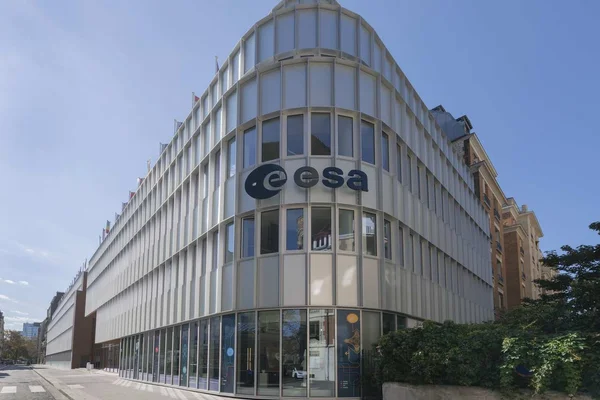
Europe launches FLEX and Copernicus Sentinel 3C on single Vega C rocket
The European Space Agency and Avio launched the FLEX Earth Explorer and Copernicus Sentinel-3C on a single Vega C rocket from French Guiana, with both satellites confirmed in orbit after separate deployments.
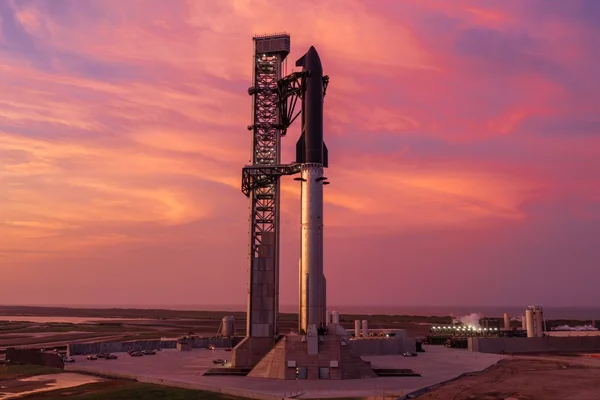
SpaceX launches 700th Falcon rocket and completes SES broadband constellation
The September 13, 2026 mission from Cape Canaveral delivered the final three O3b mPOWER satellites, finishing a 13 spacecraft medium Earth orbit network for SES and marking a reusable rocket milestone for SpaceX.
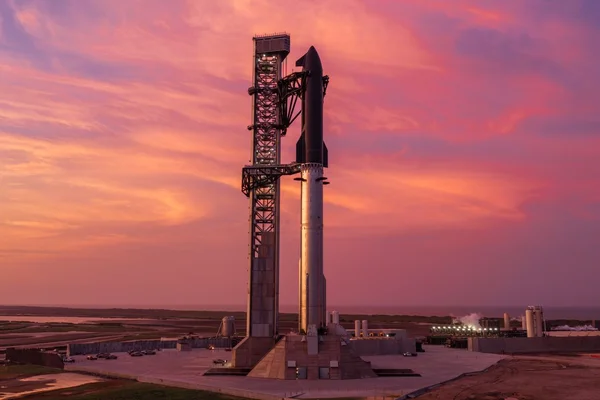
SpaceX Starship Flight 14 Eyes First Orbit With 20 Starlink V3 Satellites
Federal air traffic planners have reserved a two hour window on September 18, 2026 for a Starship mission that would fly about 20 Starlink V3 satellites and, per SpaceX's finance chief, bring in revenue.
Comments (0)
Log in or sign up to leave a comment.
No comments yet. Be the first to share your thoughts.