For most of the past decade, NASA has bought rides to the Moon one mission at a time. Under its Commercial Lunar Payload Services program, the agency has paid private companies through individual task orders, matching a specific payload to a specific lander and a specific launch. On November 7, 2026, at the MAX POWER aerospace expo at Kennedy Space Center in Florida, the agency moved to replace that piecemeal approach with something closer to an industrial supply chain for a permanent lunar base.
The centerpiece is CLPS 2, a 10-year, multiple-award, indefinite-delivery/indefinite-quantity master contract with a combined maximum value of $10 billion. NASA selected eight companies to compete for work under it: Blue Origin, Firefly Aerospace, Intuitive Machines, ispace-U.S., Lockheed Martin Space, Northrop Grumman Space Systems, SpaceX and Voyager Technologies. The number of vendors matters less than the structure. Each company holds a seat at the table, but none holds a guaranteed mission, and every delivery must still be won through a separate task order.
Alongside the new framework, NASA raised the ceiling of the current CLPS 1.0 contract from $2.6 billion to $4.2 billion to cover Phase One Moon Base objectives. It also pushed forward PROMISE, short for Polar Rover for Observation, Mapping, and In-Situ Exploration, a six-wheeled nuclear-powered robot intended to land at the lunar south pole. Blue Origin received a $94 million base contract plus a $140 million performance-based option to deliver the rover on its Blue Moon Mark 1 lander, with NASA targeting a late-2028 launch and an 18-month surface mission.
A third strand covered transportation. NASA awarded six VADR task orders worth approximately $1.3 billion combined to Arrow Science and Technology, Blue Origin and Impulse Space under a 10-year, $5 billion IDIQ. Under a separate contract, SpaceX will launch Starlink-like communications satellites aboard Starship in 2028. Read together, the package is less a single award than a sequence: cargo landers, surface infrastructure, a rover, and the communications layer that would tie a base together.
Key Facts
NASA announced on November 7, 2026, through release 26-095, that it had selected eight companies for the next phase of Commercial Lunar Payload Services under the new CLPS 2 contract, and framed the awards as an expansion of the agency's Moon Base program rather than a single procurement. "We are building the Moon Base mission by mission," Administrator Jared Isaacman said in the release. The wording is a useful guide to how the agency now intends to spend: small, separable task orders that can be reordered, paused or expanded as hardware and budgets allow, instead of one large contract that succeeds or fails as a unit.
Space.com reported on November 7, 2026, that the $10 billion is a combined ceiling across 10 years, not money already committed to missions. Isaacman told the outlet that the current CLPS arrangement is all or nothing, which he said works at one or two missions a year but not at the cadence a base requires. The distinction matters for anyone reading the headline number as a signed check. NASA must still issue individual task orders, and the eight vendors must still win them.
Fox Business reported on November 7, 2026, that the PROMISE rover will be built by NASA's Jet Propulsion Laboratory, a Caltech division, using spare flight components and engineering test models left over from the Curiosity and Perseverance Mars rovers, an approach the agency says reduces development costs. The six-wheeled vehicle carries a drill able to extract regolith from about 3 feet (1 meter) below the surface, along with spectrometers, temperature and radiation sensors, cameras and NASA's High Performance Spaceflight Computing computer.
Firefly Aerospace announced on November 7, 2026, that it had been onboarded as a CLPS 2 vendor, citing its Blue Ghost Mission 1, which landed on the Moon and completed all mission objectives in March 2025. The Cedar Park, Texas, company said it has since won four additional missions under CLPS 1 plus a contract to deliver NASA's MoonFall mission, and that it is ramping production of Blue Ghost landers and Elytra orbiters in an expanded cleanroom able to accommodate up to 12 spacecraft. CEO Jason Kim said Blue Ghost Mission 1 proved the company can deliver on the Moon.
Analysis
What this really means is that NASA has stopped buying Moon missions and started buying Moon capacity. A traditional contract asks one company to deliver one thing by one date. A multiple-award IDIQ creates a standing pool of qualified suppliers and then issues task orders against it, which lets the agency shift money toward vendors that are performing and away from those that are not. Isaacman's complaint about the existing arrangement being all or nothing is the clearest explanation of the design: at one or two missions a year, a binary award is tolerable; at the cadence a base demands, it is a bottleneck.
The schedule explains the urgency. Space.com reported on November 7, 2026, that NASA is pushing ahead with plans for a Moon base for astronauts by 2032, with Phase One running through 2029, Phase Two to 2032, and the base becoming operational in Phase Three. That timeline is aggressive for a program whose heaviest elements, including a nuclear power source and a lander capable of delivering a rover to the south pole, are still in development. The $10 billion ceiling is best read as headroom for that schedule rather than as a forecast of spending.
The PROMISE approach carries real engineering logic. Building from spare flight components and engineering test models of the Curiosity and Perseverance rovers gives JPL a head start on structures, mobility and avionics that have already been qualified for Mars. The drill reaching about 1 meter below the surface, the spectrometers and the radiation and temperature sensors are aimed at the central scientific question of the south pole: whether volatiles, including water ice, are present in usable concentrations in permanently shadowed regions. Nuclear power is what allows the rover to work through lunar night, when solar-powered designs must shut down.
There is a commercial judgement embedded here too. Eight seats in a 10-year pool is a deliberate attempt to keep more than one or two suppliers alive, and Firefly's account of an expanded cleanroom able to hold up to 12 spacecraft suggests that at least one vendor is already investing against that expectation. The risk is that a ceiling is not an appropriation. If budgets tighten, NASA can issue fewer task orders, and vendors that staffed up for a lunar base could find themselves carrying the fixed costs of a market that arrived later than promised.
Why It Matters
The strategic payoff is concentrated at the south pole. Permanently shadowed regions there are thought to hold ice, and ice is the difference between a research outpost and a refueling station. A rover that can survive lunar night and sample a meter down would give planners the ground truth they need before committing astronauts and hardware to a specific site. Isaacman said that when astronauts return to the Moon, they will arrive with the first elements of the Moon Base already waiting for them on the surface.
The industrial effect may outlast any single mission. A standing pool of eight vendors, a $1.3 billion transportation tranche and a communications layer launching in 2028 together create repeat demand for landers, orbiters, power systems and surface equipment. That is the difference between a demonstration program and a market, and it is why the structure of CLPS 2 matters more than the headline figure.
For scientists, the value lies in access. The CLPS 1.0 ceiling increase to $4.2 billion, extended through November 2028 with a five-year option to November 2033, keeps the existing pipeline funded while the new pool ramps up. Instruments that might have waited years for a ride now have two parallel routes to the surface, one through the legacy contract and one through CLPS 2.
Next Up
The next milestone is procedural rather than dramatic: the first CLPS 2 task order competitions. The six VADR orders already awarded will launch on New Glenn, Falcon 9 and Terran R and cover cargo transfers, CAPSTONE 2 navigation tests and MoonFall drone scouting, giving the agency early data on which vendors can hit schedule.
The mission to watch is PROMISE. A late-2028 launch on Blue Origin's Blue Moon Mark 1 lander would put a nuclear-powered, six-wheeled rover at the south pole for an 18-month campaign, the first sustained surface operation of its kind. If it flies on time, it will validate both the rover-by-reuse strategy and the idea that commercial landers can carry high-value science, two propositions on which the 2032 base depends.
Related Articles
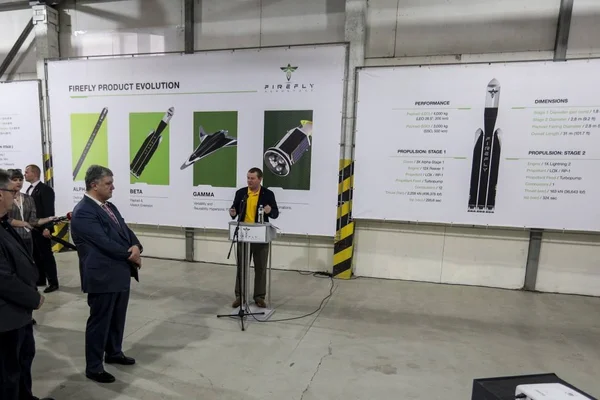
AST SpaceMobile Taps Firefly Engines for 20 Ton Blacklift Rocket in $1.3 Billion Deal
AST SpaceMobile will build a 20 ton reusable rocket named Blacklift for a late 2028 debut, powered by 36 Firefly Aerospace engines under a deal worth more than $1.3 billion.
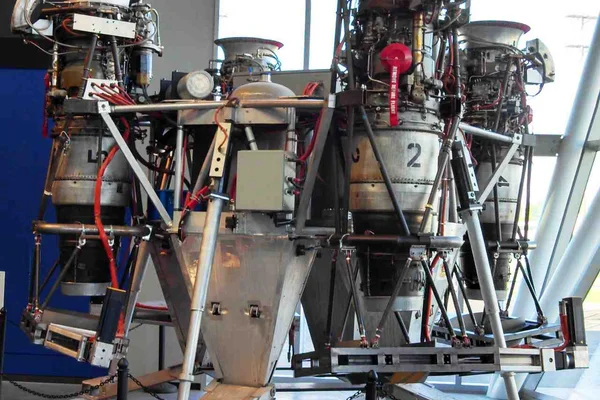
Blue Origin Delays New Glenn to January 2027 and Unveils Northstar Engine and GS3 Stage
The company's flagship rocket will stay grounded into early 2027 while it rebuilds its Florida pad, and its new hardware bets on cheaper propulsion and deeper orbits.
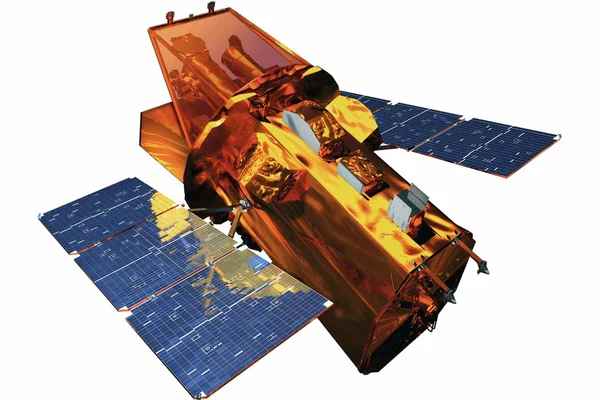
NASA Swift Observatory Burns Up Over Indonesia After Failed 30 Million Dollar Rescue Bid
The 3,200 pound telescope fell silent over North Sumatra after a 30 million dollar robotic tug failed to lift it, ending a 22 year run of gamma-ray discoveries.
Comments (0)
Log in or sign up to leave a comment.
No comments yet. Be the first to share your thoughts.