NASA's Nancy Grace Roman Space Telescope launched at 7:26 a.m. EDT on Sunday, August 30, aboard a SpaceX Falcon Heavy rocket from Launch Complex 39A at the Kennedy Space Center in Florida. The observatory separated from the rocket's upper stage 31 minutes after liftoff and is now on a roughly 100-day journey to the Sun-Earth Lagrange point 2, about a million miles from Earth.
A Wide-Field Flagship
Roman pairs a large field of view with crisp infrared vision, capturing views more than 100 times wider than NASA's Hubble Space Telescope. The $4.3 billion flagship is designed to survey the universe about 1,000 times faster than Hubble, probing dark matter, dark energy, and worlds beyond our solar system. Its Wide Field Instrument will send roughly 1.4 terabytes of compressed data to Earth each day.
The Exoplanet Census
Astronomers expect Roman's surveys to detect about 100,000 exoplanets, roughly 40 times the number currently known, and to map 20 billion stars in the Milky Way along with 2 billion galaxies. Its coronagraph, the first active starlight-blocking instrument used in space, could image planets about 100 million times fainter than their stars, a step toward studying potentially habitable worlds.
What Happens Next
Ground controllers at NASA's Goddard Space Flight Center began receiving telemetry seven minutes after launch, and the Falcon Heavy's two side boosters returned to Cape Canaveral for refurbishment. Commissioning will unfold over the three-month journey, and NASA expects the first images to be released in early 2027. Roman is the fourth primary mission NASA has launched on a Falcon Heavy, following Psyche and Europa Clipper.
Related Articles
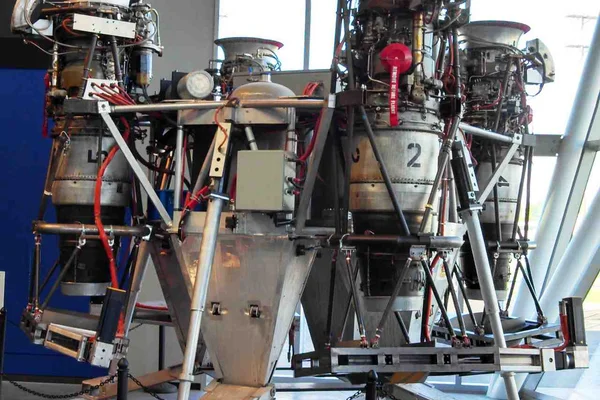
Space startups raise record $20.8 billion in Q3 2026 as infrastructure bets surge
Seraphim's report shows space startups drew $20.8 billion in the third quarter, a record that was nearly three times the prior quarter and still an all-time high even without Blue Origin's $10 billion round.
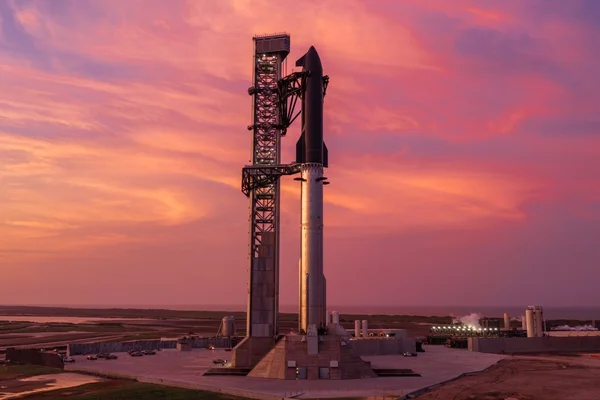
SpaceX launches 35th cargo mission to ISS with final solar arrays and 6,300 pounds of supplies
The Falcon 9 booster B1096 flew for the eighth time and Dragon C211 for the fourth, delivering science experiments and the last iROSA pair to the orbiting laboratory.
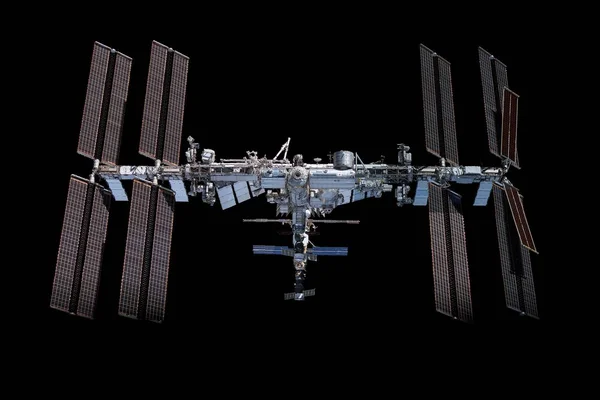
NASA opens final bidding for private space stations to replace the ISS
NASA's October 9 request for proposals asks companies to design, certify and operate private low Earth orbit destinations, with bids due December 8 and awards expected in spring 2027.
Comments (0)
Log in or sign up to leave a comment.
No comments yet. Be the first to share your thoughts.