Microsoft released its October 2026 Patch Tuesday on October 13, and the numbers that followed are unlike anything the software industry has seen from one vendor in a single month. SecurityWeek reported on October 13, 2026 that the updates resolve 1,413 CVEs. Zero Day Initiative's Dustin Childs wrote on October 13, 2026 that his own count reached 1,415 new CVEs, which he described as the first four digit monthly volume his organization has ever seen from Microsoft. Infosecurity Magazine reported on October 14, 2026 that it counted 1,411 fixes, an all time high that beat the records Microsoft set in July and September of this year. The gaps between 1,411, 1,413 and 1,415 come from how each tracker counts overlapping advisories and shared components, not from any dispute about scale. The comparison that matters is simpler: Microsoft fixed more vulnerabilities in October 2026 alone than it fixed in the whole of 2025.
The release also carries a live threat. CVE-2026-96951 is a Windows Shell security feature bypass with a CVSS score of 8.8 out of 10, and Microsoft confirms that it is being exploited in the wild. The flaw lets an attacker evade Mark of the Web, or MotW, the Windows mechanism that tags files downloaded from the internet so that Defender SmartScreen and Office Protected View can restrict automatic execution. Microsoft said an attacker could send a specially crafted file by email or instant message and would need to convince a user to open it. With MotW bypassed, the warnings that normally stop someone from launching an untrusted file never appear. The U.S. Cybersecurity and Infrastructure Security Agency added the bug to its Known Exploited Vulnerabilities catalog on Tuesday and ordered federal agencies to address it by October 16.
Two other flaws were publicly disclosed before fixes shipped. CVE-2026-108398, a .NET framework security feature bypass with a CVSS score of 8.8, lets an authenticated low privileged attacker evade Windows Defender Application Control enforcement through an untrusted assembly search path. CVE-2026-92707 is a denial of service flaw in the MessagePack-CSharp component used by Visual Studio and .NET. Microsoft credited researchers at Fujitsu, Anthropic and an independent expert with reporting the exploited Windows Shell issue.
Volume is the story that shapes everything else. Microsoft has warned customers since July to expect a deluge, pointing in part to a multi model agentic scanning harness known as MDASH that uses AI to hunt for vulnerabilities across its product lines. Cybernews reported on October 14, 2026 that Microsoft, with AI's help, identified more flaws in one month than were reported in the entire previous year. SecurityWeek reported that October's release pushed the number of bugs Microsoft has fixed in 2026 past 4,000, and Cybernews put the 2025 total at 1,273. September's release fixed 999 CVEs, while October 2025 delivered about 180, a year over year jump of roughly eight times.
Key Facts
The release covers an unusually wide surface. Of the fixed flaws, 1,102 affect Windows, 134 are in Office, 61 are in developer tools and 36 are in SharePoint Server, while Exchange Server, SQL Server, Azure and Defender also received patches. Zero Day Initiative lists the Linux kernel, Skype for Business, Microsoft Lync, SQL Server and Dynamics among the affected products, a reminder that the monthly release is not confined to the Windows desktop.
Severity leans heavily toward the top of the scale. Infosecurity Magazine counted 70 vulnerabilities rated Critical, 57 of them remote code execution flaws. Cybernews counted 78 critical bugs, 65 enabling remote code execution, along with 11 elevation of privilege flaws and 2 spoofing issues, and noted that 1,329 vulnerabilities are marked important. Among the most notable is CVE-2026-70242, a Reading Pane remote code execution bug in Outlook rated 9.8.
Microsoft introduced a prioritization aid alongside the fixes. It calls them risk cohorts and describes them as a starting point, not a final decision. Zero Day Initiative's Childs reports Microsoft saying that the cohorts are an exploratory way to help customers organize their own analysis, that they are not official Microsoft vulnerability categories, that they do not change update guidance and that they do not replace the assessment of individual CVEs. Childs compares the concept to the older security bulletin grouping and welcomes it as a way to make a sprawling release more manageable. Windows 10 remains covered because Microsoft extended its Extended Security Updates program by an additional year in June.
The month was heavy outside Redmond as well. Zero Day Initiative counted 11 Adobe bulletins addressing 174 unique CVEs across Adobe Dimension, Commerce, Substance 3D Sampler, ColdFusion, Photoshop, FrameMaker, Experience Manager, Substance 3D Stager, Content Credentials SDK, Bridge and Substance 3D Designer. Childs flags ColdFusion bulletin APSB26-144 as the most urgent despite a Priority 2 rating, because it combines a CVSS 10 bug with 10 Critical CVEs covering unrestricted file upload, code injection, server side request forgery and incorrect authorization, which he calls a classic pre authentication remote code execution profile on an internet facing server product. Experience Manager bulletin APSB26-152 and Commerce bulletin APSB26-153 also carry CVSS 10.0 criticals. None of the other Adobe bugs were publicly known or under active attack at release.
Analysis
What this really means is that the bottleneck in vulnerability management has moved. Finding flaws was the hard part for two decades, and AI assisted discovery, including Microsoft's MDASH harness, has made that step dramatically more productive. The scarce resource is no longer the patch. It is the human attention required to test, stage and deploy 1,413 fixes across Windows, Office, SharePoint, Exchange, SQL Server, Azure and developer tooling without breaking production systems.
The bigger picture here is that raw CVE counts have become a poor proxy for risk, and vendors know it. A month with 1,413 fixes and one exploited zero day is not 1,413 equally urgent problems. Microsoft's risk cohorts are an admission that customers cannot process the list as delivered, and the return of grouping under a new name serves the same purpose it always did, narrowing a four digit flood to a short list worth attention this week. Microsoft's own caveat, that the cohorts are exploratory and only a starting point, shows the company is not yet ready to declare a curated subset the security answer.
The exploited Windows Shell flaw shows why volume is not the whole measure. CVE-2026-96951 requires no authentication and no existing privileges, only a victim who opens a file, and it defeats Mark of the Web, the tagging layer behind SmartScreen and Office Protected View that many defenders treat as a baseline control. Action1's Jack Bicer told Infosecurity Magazine that attackers can distribute crafted files through phishing emails, instant messages or malicious websites and need only user interaction, which makes the bug a usable initial access route that suppresses the warnings users have been trained to respect.
Patching at this scale also collides with human limits. Socura research published this week found that 22 percent of UK CISOs have called in sick or booked holiday time to avoid Patch Tuesday, a figure that is anecdotal but revealing. When every month sets a record, routine maintenance competes for the same hours as incident response and architecture work, and deferral becomes a rational short term choice with long term risk.
Why It Matters
Deadlines make the urgency concrete. CISA added CVE-2026-96951 to its Known Exploited Vulnerabilities catalog and set October 16 as the federal remediation date, which confirms the bug is exploited in the wild rather than theoretical. Organizations outside government should treat that date as their own, because a Mark of the Web bypass weakens a default defense that slows phishing delivery, and patching is the only reliable remedy once a bypass is public.
Scale changes capacity planning. A single month that patches more flaws than all of 2025, with the 2026 total already past 4,000, raises the cost of testing and change management for every IT team. Internet facing products in this release include SharePoint, Exchange and SQL Server, where a missed update can become an attacker's entry point, and patch fatigue is exactly the condition attackers count on.
For Microsoft the record cuts both ways. It shows that AI driven discovery works and that the company can fix what it finds, but it also sets an expectation of enormous monthly releases that customers must absorb. How risk cohorts are received over the next few cycles will indicate whether AI makes patching manageable or merely faster.
Next Up
November's Patch Tuesday will show whether October was a spike or the new normal. With AI scanning in production and large amounts of legacy code still to review, Microsoft has signaled that heavy releases will continue, and the next CVE counts are likely to stay far above 2025 levels. The open question is whether risk cohorts evolve from an exploratory feature into the primary way administrators build their monthly priority list, and whether rivals facing the same AI driven discovery treadmill follow with grouping schemes of their own.
Related Articles

Airtable cuts a large portion of its pre-acquisition team two months after Bending Spoons takeover
Alessandro Savarese told staff on October 12, 2026 that most of Airtable's inherited workforce would leave within days, weeks after Bending Spoons closed its $1.285 billion purchase.
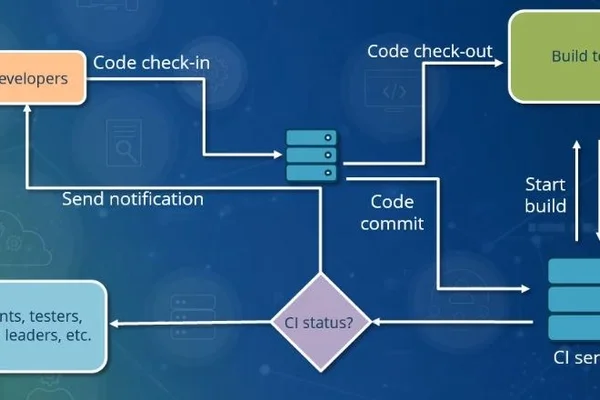
GitLab patches maximum severity CVSS 10.0 flaw in CI/CD regex compiler
The emergency update, tracked as CVE-2026-97229 and rated 10.0, fixes an integer overflow in the CI/CD regular expression compiler that Rapid7 reproduced on an unpatched server image.
Microsoft Ends Windows 11 24H2 Support as Final Patch Arrives on October 13
Microsoft's last cumulative update for Windows 11 version 24H2 on consumer editions landed on October 13, 2026, nudging unmanaged PCs toward 25H2 or 26H2 while business fleets keep a year of grace.
Comments (0)
Log in or sign up to leave a comment.
No comments yet. Be the first to share your thoughts.