Bending Spoons S.p.A., the Milan-based software holding company listed on Nasdaq under the ticker BSP, completed its all-cash purchase of Airtable in early September 2026, roughly a month after announcing the deal. Business Wire reported on August 4, 2026 that the transaction valued Airtable at an enterprise value of $1.285 billion, which together with the company's net cash and cash equivalents implied an equity value of approximately $2.25 billion. The deal was Bending Spoons' first acquisition since its own Nasdaq listing on July 1, 2026, and it followed earlier 2026 purchases of AOL in January and Eventbrite in March.
Airtable arrived in the portfolio with a substantial customer base. Co-founder and chief executive Howie Liu said at the time of the announcement that more than 500,000 organizations, including 80 percent of the Fortune 100, rely on the platform. Luca Ferrari, Bending Spoons' chief executive and co-founder, framed the purchase as a long-term commitment, saying the buyer was committed to investing in Airtable for the long run. Legal counsel for Airtable on the transaction was Latham & Watkins LLP, with AXOM Partners LLC acting as financial advisor.
About five weeks after the deal closed, Airtable's new product leadership set out a different operating model. On October 12, 2026, Alessandro Savarese, who joined Airtable to lead product development following the acquisition, published a note on Bending Spoons' investor newsroom confirming that the company is parting ways with a large portion of the pre-acquisition team. Those employees, the note said, would be leaving by the end of that week with substantial separation packages.
The note was explicit that the decision was not a verdict on performance. Savarese wrote that the move was not taken lightly and does not reflect on the team's excellent work. He also said Bending Spoons has embedded some of its most experienced engineers, product managers and designers into Airtable. Tech Times reported on October 13, 2026 that the company has not disclosed how many employees will lose their jobs, and that the precise number affected remains undisclosed, with no percentage or department-level breakdown provided.
Key Facts
The scope of the reduction has been described in directional terms rather than exact figures. Business Insider reported on October 12, 2026 that the language and the timing of the departures were confirmed, and The Verge reported on October 13, 2026 that the same wording stood. Bending Spoons told Business Insider it could not share how many people were impacted. San Francisco Business Times reported on October 13, 2026 that pre-acquisition staffing stood near 800 people and that the cut affects much of that workforce, figures that should be read as context rather than an official layoff tally.
Customer-facing commitments were ring-fenced in the announcement. The note states that for customers nothing changes regarding plan, price or service offering, and that the customer-facing organization has not been impacted. KuCoin News, citing Huoxing Finance, reported on October 13, 2026 that Airtable remains focused on integrating teams, data, workflows and AI agents through 2027, with no changes to pricing or customer operations, and that the company said the move is not performance related.
Three investment areas were named. The first is continuous improvement of the core product. A small group called the Speedy Squad shipped more than 30 improvements in the three weeks before the announcement, including increased automation limits, new add and delete record actions for automations, and more granular editing permissions for list views. That group is now folded into a Core team led by Akshar (AP) Patel, a long-time Airtable employee. The second area is AI that works with you, meaning agents and automations operating side by side with people. The third is centralized, account-level control, covering AI credit visibility, data lineage, and agent permissions and audit logs.
Tech Times reported on October 13, 2026 that the AI roadmap includes Omni, Airtable's built-in AI assistant, Airtable Canvas for building custom apps on company data, and expanded Model Context Protocol support so external AI tools can connect to the platform. The company also created Performance and Infrastructure teams, with mandates that include improving load times, expanding European Union data residency, and raising record, field and sync limits.
Analysis
What this really means is that the Airtable deal is being run as a portfolio integration rather than a growth-at-all-costs expansion. Bending Spoons has a repeated playbook: buy established software brands, install its own operating talent, reduce the cost structure, and lean on automation to serve the same customers with fewer people. The Airtable note reads as a textbook instance of that pattern. The buyer's own engineers, product managers and designers are being embedded, while a large portion of the inherited team departs within days of the announcement. Nothing in the public record says AI is the direct cause of the cuts, and the company's stated rationale is a leaner structure and faster-moving teams.
The bigger picture here is that the deal math creates the pressure. At an enterprise value of $1.285 billion, and an implied equity value of roughly $2.25 billion when net cash is included, Bending Spoons paid a price that assumes durable margins. Airtable's customer base of more than 500,000 organizations, including 80 percent of the Fortune 100, is exactly the kind of installed base a consolidator wants: sticky, subscription-based and expensive to replace. Protecting price and service for those accounts, while cutting internal headcount, is the fastest visible path to the margin profile that justifies the purchase.
There is a real tension in the strategy. The three investment areas depend on shipping velocity: a faster core, working AI agents, and account-level governance. Savarese's note tries to answer that concern by pointing to the Speedy Squad's 30 plus improvements in three weeks and by placing the group under a long-tenured internal leader rather than an outside operator. That suggests some institutional memory is being deliberately retained, even as the broader pre-acquisition team is let go. Whether a much smaller organisation can sustain that cadence across a platform used by hundreds of thousands of organisations is the open question, and the company has given no headcount figure against which to judge it.
It is also worth separating what is disclosed from what is inferred. The affected number is undisclosed, and the near 800 pre-acquisition headcount figure comes from local business press rather than from the buyer. Treating the two as one official statistic would be a mistake. What is on the record is the announcement date of October 12, 2026, the end-of-week departure timeline, the separation packages, and the statement that customers see no change.
Why It Matters
For Airtable's customers, the practical near-term answer is stability. Pricing, plans and service levels are stated as unchanged, and the customer-facing organisation was not part of the cut. Enterprise buyers who have built critical workflows on the platform will read that as a commitment, but they will also watch the next release cycles closely, because a thinner product organisation is where roadmap slippage usually shows up first.
For the wider software labour market, the episode is a data point in a pattern. Challenger, Gray & Christmas data cited in coverage showed technology leading United States announced job cuts in September 2026, with technology accounting for 10,799 announced cuts in the month and 165,925 year to date, or 29 percent of all announced cuts in 2026. In the same mid-October window, Lightspeed Commerce confirmed to BetaKit on October 13, 2026 that organisational changes touched 250 roles. Acquisitions are increasingly followed by integration cuts rather than expansion, and a leaner structure plus a bigger role for AI is becoming the standard vocabulary for those decisions.
For Bending Spoons itself, the stakes are reputational as much as financial. It is a newly listed company on Nasdaq, and this was its first acquisition since listing. How it handles the Airtable integration, including separation terms and the pace of product delivery through 2027, will shape how founders and employees of its next targets judge a sale to the company.
Next Up
The immediate milestone is the completion of departures by the end of the week of October 12, 2026, with no headcount figure expected from the company. After that, attention shifts to execution: the Core team under Akshar (AP) Patel, the Performance and Infrastructure teams, expanded European Union data residency, higher record, field and sync limits, and the AI roadmap built around Omni, Airtable Canvas, expanded Model Context Protocol support, and agent permissions and audit logs.
The longer window is spelled out in the company's own framing, which targets integration of teams, data, workflows and AI agents through 2027. If prices, plans and service levels hold and the shipping cadence continues, the integration will look like the playbook working. If the release pace slows or enterprise terms change, the October 12 note will be read very differently in hindsight.
Related Articles
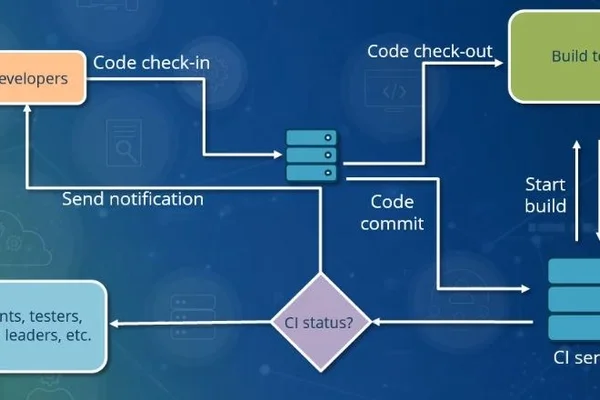
GitLab patches maximum severity CVSS 10.0 flaw in CI/CD regex compiler
The emergency update, tracked as CVE-2026-97229 and rated 10.0, fixes an integer overflow in the CI/CD regular expression compiler that Rapid7 reproduced on an unpatched server image.
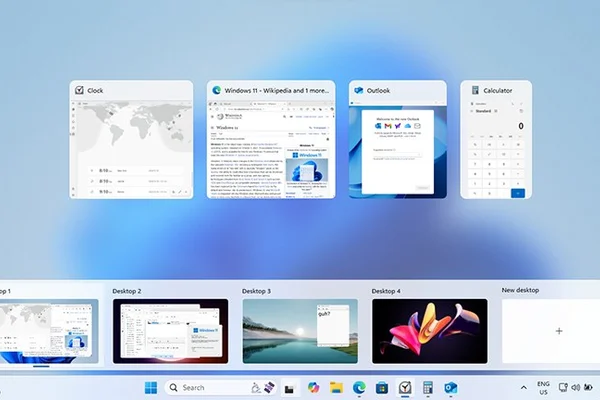
Microsoft Ends Windows 11 24H2 Support as Final Patch Arrives on October 13
Microsoft's last cumulative update for Windows 11 version 24H2 on consumer editions landed on October 13, 2026, nudging unmanaged PCs toward 25H2 or 26H2 while business fleets keep a year of grace.
Cloudflare Acquires Deno to Merge celld Into workerd and Simplify Self Hosting Workers
Cloudflare will absorb the entire Deno team and fold its celld runtime into workerd, a move aimed at letting companies self-host the Workers programming model on their own servers.
Comments (0)
Log in or sign up to leave a comment.
No comments yet. Be the first to share your thoughts.