Malaysia declared a state of emergency in the Serian Division of Sarawak on September 3 after smoke from Indonesian forest fires pushed the local Air Pollutant Index into the hazardous range, and the order has since cascaded into the largest school closure in the region in years. Al Jazeera reported on September 5 that 647 schools in Serian will remain shut from Monday until at least the end of next week, while government offices, private businesses, plantations, construction sites and quarries in the division have been ordered closed, with only essential services continuing to operate.
The emergency is the sharpest escalation yet of Southeast Asia's recurring transboundary haze crisis, in which fires set to clear land in Indonesia send a toxic cloud across the region. The smoke originates in the Indonesian side of Borneo, particularly Kalimantan, and on the island of Sumatra, and it has spread far beyond Sarawak, forcing Brunei and Singapore to issue daily air-quality advisories for the first time since 2023 and prompting the Philippines to suspend classes in Metro Manila and more than a dozen provinces.
The scale of the response reflects how quickly the situation deteriorated. The emergency declaration, issued by Prime Minister Anwar Ibrahim's office with the consent of Malaysia's King Sultan Ibrahim, was initially confined to Serian, and the chairman of the Sarawak Disaster Management Committee, Douglas Uggah Embas, has stressed repeatedly that the emergency applies only to that division. But the haze is a regional problem, and the closures and cloud-seeding operations now under way in Sarawak are a preview of what neighboring states may need if the fires are not brought under control.
Key Facts
The trigger was air quality, not rainfall. Al Jazeera reported on September 5 that the Air Pollutant Index in Serian reached hazardous levels, the threshold that activates Malaysia's emergency protocols. Once the index crosses into that range, the government's standard playbook calls for closing schools and non-essential workplaces, which is exactly what the emergency order put into effect across the division.
The numbers behind the closure are stark. The order shutters 647 schools in Serian, a figure that dwarfs the localized suspensions Malaysia has used in past haze years, and the closures run from Monday until at least the end of next week. The disaster management committee, chaired by Douglas Uggah Embas, said on September 5 that the measure is meant to protect children from air that is officially classified as dangerous to breathe.
Malaysia is attacking the smoke from the air as well as from the ground. A three-day cloud-seeding operation was launched on Thursday, September 3, the same day the emergency was declared, and it has been extended to run until at least Monday as authorities try to induce rain to wash particulates out of the atmosphere. Al Jazeera reported on September 5 that the seeding flights are part of a broader response that includes distributing masks and monitoring air quality across the affected areas.
The regional footprint is wide. Al Jazeera reported on September 5 that the fires are concentrated in Indonesia's Kalimantan region and on Sumatra island, and that the resulting haze has reached Sabah and Peninsular Malaysia within the country, plus Brunei, Singapore and the Philippines beyond it. Singapore's National Environment Agency resumed daily haze advisories on Friday evening for the first time since 2023, and Philippine President Ferdinand Marcos Jr. suspended classes in Metro Manila and more than a dozen provinces as the smoke drifted across the South China Sea.
Analysis
What this really means is that Southeast Asia's haze crisis has returned to its pre-pandemic severity, and the region's political will to solve it has not kept pace. The 2023 date attached to Singapore's last daily advisories is a useful marker: the region enjoyed a few relatively clean years, but the underlying driver, fire-based land clearing in Indonesia, was never eliminated, only paused. A dry spell linked to the developing El Niño has now recreated the conditions that produced the record-breaking haze of 2015, and the emergency in Sarawak is the first loud warning that 2026 could be another catastrophic season.
The bigger picture here is that this is a climate story disguised as an air-quality story. The same seasonal dryness that is amplifying the fires is itself a symptom of a warming climate, and the peatlands beneath Kalimantan and Sumatra, which release enormous stores of carbon when they burn, turn the haze into a feedback loop: fires emit carbon, carbon warms the climate, warming dries the region, and dryness makes the next fire season worse. Every hectare of peat that burns this year is a double loss, immediate human suffering from the smoke and a long-term addition to the greenhouse gases driving the conditions that made the fires possible.
The emergency response, while necessary, is also a measure of how little progress has been made on prevention. Cloud seeding and school closures protect people in the short term, but they do nothing to stop the fires, which are set deliberately by companies and smallholders clearing land cheaply. Indonesia has tried moratoriums on peatland clearing and enforcement crackdowns, yet the fires keep returning because the economic incentive to burn is stronger than the penalty for doing it, and because the smoke crosses borders while the profits stay local.
The pattern repeats because the costs and the benefits are split between different countries. The economic gain from fire-based land clearing accrues inside Indonesia, to the plantation companies and smallholders who convert forest to farmland cheaply, while most of the health and economic costs of the smoke fall on Malaysia, Singapore and the Philippines, which have no say in Indonesian land-use policy. That mismatch is why every haze season ends the same way, with emergency declarations and diplomatic complaints rather than prevention, and it is why the burden of this year's crisis will fall heaviest on the communities and schoolchildren who cannot relocate to cleaner air while the governments argue over who is responsible for stopping the burning.
Why It Matters
For the people of Serian Division, the emergency means weeks of closed schools, shuttered businesses and air that is dangerous to breathe, with the most vulnerable, children and the elderly, bearing the worst of it. For the wider region, the return of daily advisories in Singapore and class suspensions in the Philippines is a reminder that no country in Southeast Asia can insulate itself from its neighbors' land-use decisions, and the economic cost, in lost workdays, canceled flights, tourism declines and health spending, will run into the billions if the season continues as it has started.
For Indonesia, the international pressure will intensify as the smoke spreads, and the government will face familiar accusations that it is not doing enough to stop the burning. The political stakes are real: haze crises have triggered diplomatic friction between Indonesia and its neighbors before, and the transboundary nature of the pollution makes it a test of ASEAN's ability to manage shared environmental problems. For climate observers, the fires are a live demonstration of how land-use emissions undermine the region's climate commitments, and they will be watching to see whether this season forces real enforcement of peatland protections or merely more temporary palliatives.
Next Up
The immediate question is whether the cloud-seeding campaign and the seasonal monsoon can bring enough rain to knock the haze down before it spreads further. Watch for the Air Pollutant Index readings in Serian and Kuching over the coming week, since a sustained drop would allow the 647 closed schools to reopen and the emergency to be lifted. The diplomatic front matters just as much: Indonesia's response to Malaysia's complaints, and any offer of cross-border cooperation on firefighting, will signal whether this season will be managed jointly or whether the blame game that followed past haze crises is about to repeat.
Related Articles
UNEP Emissions Gap Report 2026 says 1.5C overshoot is unavoidable and 18% cuts by 2030 are the only way back
UNEP's latest assessment finds that breaching the Paris temperature goal can no longer be avoided, and that steep near term cuts plus large scale carbon removal offer the only route back.
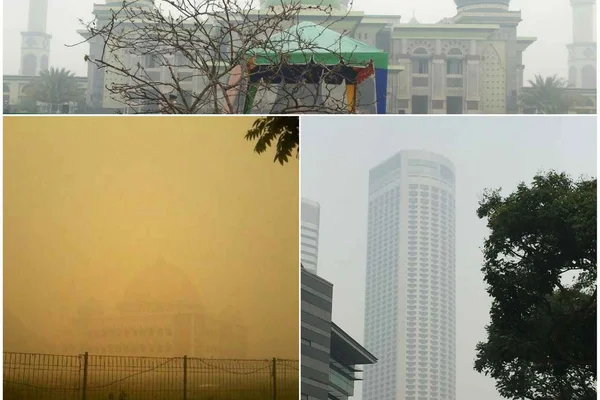
Indonesia haze crisis: 1.9 million hectares burned as Jakarta protests demand disaster status
Satellite data shows 1,916,588 hectares burned across Indonesia this year while the Health Ministry counts 283,270 respiratory infections and protesters in five cities demand national disaster status.
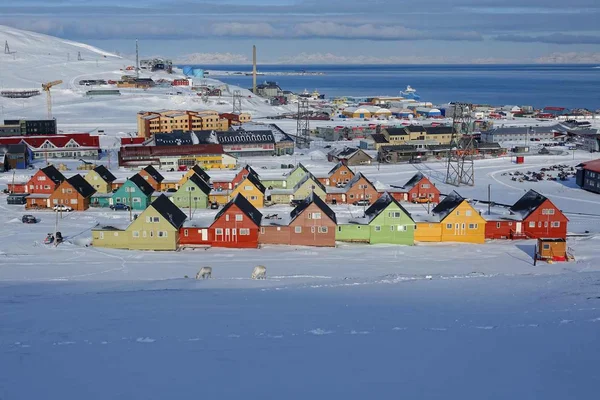
Longyearbyen tap water banned as thawing permafrost leaches heavy metals into reservoir
Norway's Arctic town of Longyearbyen has kept a full-population advisory against drinking tap water since September 2025, and a SINTEF study on permafrost thaw is not due until 2027.
Comments (0)
Log in or sign up to leave a comment.
No comments yet. Be the first to share your thoughts.