Germany's Isar Aerospace reached orbit on September 5, 2026, when its Spectrum rocket lifted off from Andøya Spaceport in Norway at 21:12 BST and deployed six CubeSats plus a technology-proving experiment, marking the first successful orbital launch by a privately funded European company and the first orbital launch ever conducted from continental Europe. The European Space Agency reported on September 5 that the flight, named Onward and Upward, clears the first milestone of the European Launcher Challenge, a program designed to push new European rockets from design to orbit by no later than 2027.
The achievement ends a long drought for European access to space. For years, Europe has relied on the Guiana Space Centre in French Guiana for its institutional launches, on Russia's Soyuz rockets for medium-class payloads and on American providers such as SpaceX for much of its commercial and government business. A private German company launching from Arctic Norway does not replace any of those capabilities overnight, but it gives the continent something it has not had since the early days of the space age: an independent, commercially operated path to orbit on European soil.
The mission also redeems a painful beginning. Isar's first Spectrum test flight in 2025 failed about 30 seconds after liftoff from the same pad, when the vehicle crashed back to the ground and exploded. The company spent the next year and a half analyzing the failure, rebuilding the vehicle and preparing a second attempt, and the September 5 success is a vindication of that decision to fly again quickly rather than retreat into endless ground testing.
Key Facts
The rocket that reached orbit is the Spectrum, a two-stage vehicle that stands 28 meters tall with a 2-meter diameter and is powered by ten engines across its two stages. ESA reported on September 5 that Spectrum is designed to carry payloads of up to 1,000 kilograms to low Earth orbit, positioning it in the small-launcher segment that has become the most crowded and most contested part of the commercial space market.
The payload reflected the mission's dual purpose as both a qualification flight and a commercial delivery. European Spaceflight, reporting on September 6, confirmed that Spectrum carried six commercial and educational CubeSats plus an in-flight technology experiment, with payload partners drawn from Germany, Norway, Austria, Slovenia and Bulgaria. Several of the satellites came through the German space agency DLR's first Microlauncher Competition, which was created specifically to give small German payloads a ride on German-built rockets.
The institutional backing matters as much as the hardware. ESA is co-funding Isar's development under its Boost! program, and the September 5 flight satisfies the first milestone of the European Launcher Challenge, which requires a new European entrant to reach orbit no later than 2027. DLR, for its part, reported on September 6 that the mission validates the agency's strategy of seeding a domestic launch industry through competitions and anchor payloads rather than building rockets itself.
The launch site is part of the story. Andøya Spaceport sits above the Arctic Circle on an island off the coast of Norway, a location that offers unrestricted polar and sun-synchronous orbits without overflying populated areas. Isar chose it partly for that geometry and partly because it provides a European alternative to the equatorial launch site in French Guiana, which remains ESA's primary facility but is not suited to every mission profile and is far from the company's Munich headquarters.
Analysis
What this really means is that the European launcher market has a new kind of player, and the old rules no longer apply. Isar is not ArianeGroup, the continent's traditional launcher champion with its government-backed Ariane 6 and the institutional payloads that come with it. Isar is a venture-backed startup that had to win its customers one at a time, and the fact that it reached orbit on its second attempt, roughly 18 months after its first rocket exploded, says more about the maturity of commercial launch engineering than about any single technical breakthrough.
The bigger picture here is that the small-launcher model, which many dismissed as a bubble after a string of failures across Europe and the United States, has finally produced a sustained success story on the continent. The economics of small rockets are brutal: they compete against ride-share pricing from much larger vehicles, and they need high launch rates to become profitable. Isar's answer has been to treat the launcher as a product to be manufactured in volume, with a factory near Munich and a production line designed for repeatability rather than one-off engineering, and the September 5 success gives that manufacturing thesis its first flight-proven data point.
The timing is also strategic. Europe is rearming its space posture after a decade in which it watched American, Chinese and increasingly Indian launch providers capture the global market, and defense payloads have become a growing share of the demand for sovereign launch. A European company that can launch from European soil, without asking permission from a partner nation or paying a foreign provider, is now a strategic asset in a way it was not when Isar was founded. The fact that Isar reached orbit in the same year that Europe is debating how to guarantee its own access to space will not be lost on policymakers.
Why It Matters
For European satellite operators, Isar's success means a genuine alternative for small payloads that today have few affordable options. Universities, startups and government agencies that want to fly a CubeSat or a small satellite currently wait months for a ride-share slot or pay premium prices for a dedicated small launch, and a reliable European provider shortens both the queue and the distance between a payload and its ride. The DLR competition payloads on this flight are the first proof that the pipeline works.
For the broader European space industry, the launch establishes a competitive counterweight to the continent's institutional monopoly. Ariane 6 and the smaller Vega-C serve ESA and its member states well, but they are expensive to operate and their schedules are driven by institutional needs. A commercial entrant that can price for the market and fly on demand introduces the kind of competitive pressure that has driven down costs in the American market, and European launch customers will be the beneficiaries even if they never book a Spectrum themselves.
For Isar itself, the flight transforms the company from a promising startup into a proven operator. The remaining challenge is cadence: the company has said it intends to reach a much higher launch rate, and every subsequent flight will be judged against the reliability record it is now building. The European Launcher Challenge milestone, met with two years to spare, gives Isar breathing room, but the real test of the company, and of the European small-launch sector it now leads, is whether it can turn this first success into the dependable, frequent service that the market actually needs.
Next Up
The immediate milestone is the next Spectrum flight, which will test whether the company can reproduce the September 5 success reliably and begin building the cadence its business model requires. Watch for Isar to announce its commercial launch manifest and pricing in the coming months, and for the first defense-related payloads, which European governments are increasingly eager to place on sovereign launchers. The second launch site Isar has discussed outside Europe, and the expansion of its Munich factory, will signal whether the company intends to scale from a proof of concept into a genuine launch service, and the rest of the European small-launch industry will be watching closely to see how the new front-runner handles the transition.
Related Articles
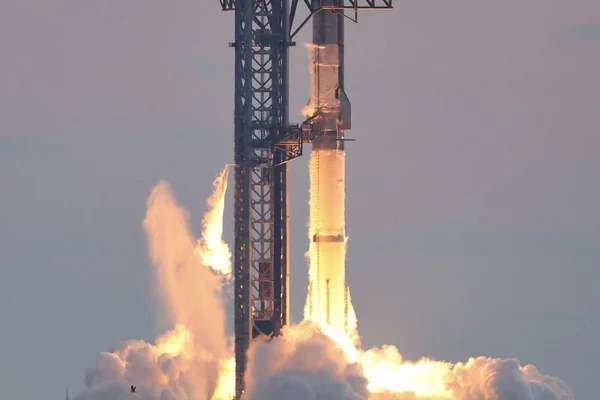
SpaceX to Attempt First Double Starship Tower Catch on Flight 15
Elon Musk says Flight 15 in November will try to recover both Super Heavy and the Ship upper stage, a first for an orbital rocket and a test of SpaceX's reusability strategy.
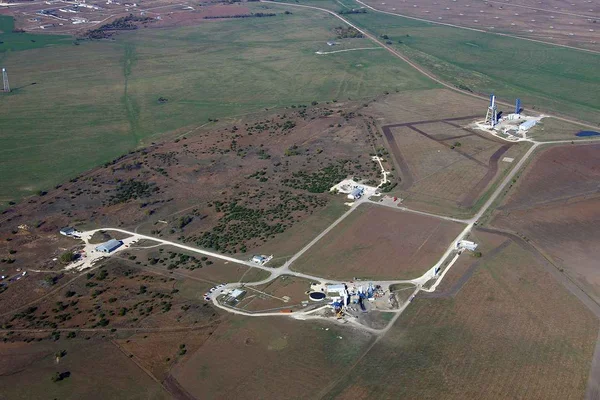
SpaceX flies second Starfall capsule on Bandwagon 5 with 32 payloads
The Falcon 9 mission carried 32 payloads, including Varda's W-7 pharmaceutical capsule and SpaceX's reusable cargo demonstrator, as orbital return services move closer to routine use.
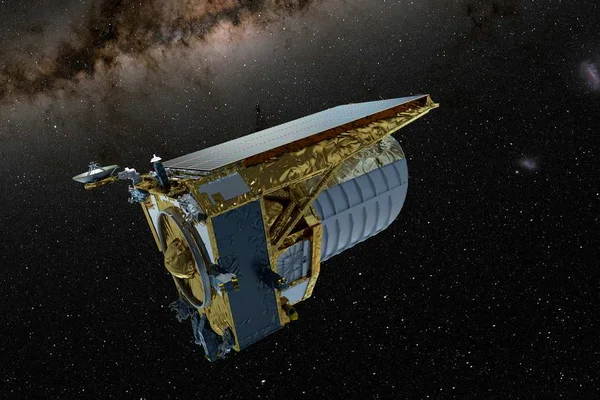
ESA's Euclid Telescope Finds Its First Unknown Comet Beyond the Orbit of Jupiter
A PhD student's motion detection software flagged the streak in survey frames, and ground observatories confirmed the object as a comet on October 8, 2026.
Comments (0)
Log in or sign up to leave a comment.
No comments yet. Be the first to share your thoughts.