The National Science Foundation's Daniel K. Inouye Solar Telescope has captured the most detailed images of the Sun's surface ever recorded, revealing tiny whirlpool-like vortices that scientists have chased for decades. The findings, published August 5 in Nature under the title "Ubiquitous Kelvin-Helmholtz instabilities driving plasma mixing on the Sun," were announced by the National Solar Observatory the same day.
What the Images Show
The new images resolve the photosphere — the Sun's visible surface — at higher resolution than ever before, showing fine cellular structures and the swirling plasma waves now identified as Kelvin-Helmholtz instabilities. CBS News called the pictures the most detailed images ever taken of the Sun's surface and a major step forward, while BBC said viewers can see the Sun like never before.
The Hidden Process
Kelvin-Helmholtz instabilities form where adjacent layers of fluid move at different speeds — think ocean waves whipped by wind. On the Sun, the observations show these vortices driving plasma mixing across the photosphere, a process researchers say may help explain one of solar physics' oldest puzzles: why the corona is millions of degrees hotter than the surface below it.
Why It Matters
Understanding how energy flows and dissipates on the Sun underpins space weather forecasting, which protects satellites, power grids and astronauts. TechSpot reported the images reveal tiny plasma whirlpools scientists have chased for decades, and the Nature paper gives modelers the first direct observational constraints on mixing in the photosphere.
Related Articles
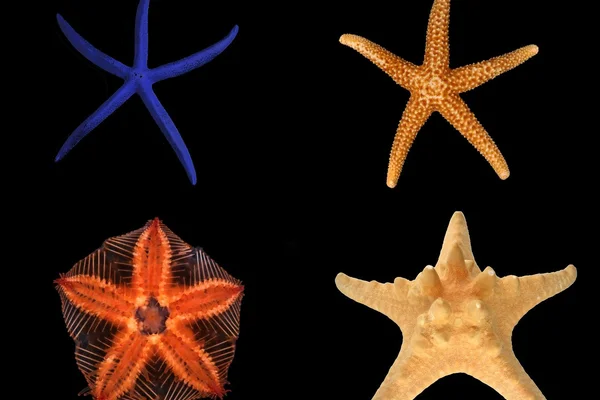
518 million year old Chinese fossil rewrites the origin story of starfish
Researchers led by Northwest University and Cambridge describe four 518 million year old Yujingia glutenotunica specimens from Yunnan that place the ambulacrarian ancestor as a tentacle feeder.

VIPR Discovery Rewrites CRISPR Origin Story With Ancient Viral DNA Targeting System
Two Science papers from Jennifer Doudna's lab describe VIPR, a virus-borne gene-targeting system that predates CRISPR and reads DNA with a gapped skip-one code.

Rare inherited EGFR mutation raises lung cancer risk 25-fold, study finds
Carriers of an inherited EGFR variant face 25 times the lung cancer risk of noncarriers, and more than 60 times the risk if they have never smoked, a Science study reports.
Comments (0)
Log in or sign up to leave a comment.
No comments yet. Be the first to share your thoughts.