Figure AI CEO Brett Adcock has released video of the company's Figure 03 robot climbing a short ladder autonomously, describing the demonstration as completed without remote control or scripted sequences using the robot's Helix AI system. Ladder climbing is considered one of the more demanding mobility challenges for humanoid robots because it requires continuous balance adjustment, precise coordination between arms and legs simultaneously, and accurate spatial understanding of the surrounding structure.
What Changed in Helix
The demonstration follows a recent update to Figure's Helix System 0 AI model. The previous version relied on proprioception — the robot's internal awareness of its own body position and movement. The upgraded model adds input from onboard stereo cameras, allowing the robot to build a three-dimensional view of its surroundings while simultaneously tracking its own posture in real time. Figure says the AI was trained end-to-end using reinforcement learning in simulated environments with randomized terrain, and that the learned behaviors transfer directly to physical robots without additional calibration — the same methodology driving improvements at Boston Dynamics, Google DeepMind and 1X Technologies.
The Manufacturing Math
The ladder demonstration arrives as Figure is scaling production significantly. The company recently disclosed it has increased Figure 03 production from one robot per day to one per hour and has delivered more than 350 units. Adcock told the My First Million podcast this month that Figure has now built its 1,000th engineering validation test robot for the Figure 03 generation, comparing the manufacturing process to consumer electronics rather than automotive assembly because every component can be held and manipulated by human hands. Adcock also said that Adcock's robots are already operating at human speeds and generating a return on investment for enterprise clients, citing the recent unedited 200-hour autonomous sorting marathon — at a pace of 2.9 seconds per package — as proof.
Boston Dynamics Goes Two-Shift
On a different front, Hyundai-owned Boston Dynamics will begin training and data operations for its humanoid robot Atlas this month under a two-shift system — day and night — similar to that of an actual automobile factory. The Robot Training Center and Robot Meta-Plant Application Center (RMAC) in Savannah, Georgia, scheduled to begin operations this month, will operate on a 2:30 p.m. to 11:00 p.m. second shift in addition to the day shift. The system is interpreted as Boston Dynamics running RMAC's robot training data production line as close to a real automobile factory as possible, with the aim of securing data that mirrors real-world conditions.
The 30,000-Robot Plan
Hyundai Motor Group plans to establish an annual production capacity of 30,000 robots by 2028 and deploy Atlas for parts-sequencing tasks at Hyundai Motor Group Metaplant America (HMGMA) in Georgia that same year. Furthermore, by 2030, the group aims to expand Atlas's scope to include parts assembly. Hyundai previously mentioned to institutional investors in May that it could secure demand for more than 25,000 Atlas units at Hyundai Motor and Kia production sites alone. An automotive industry official said: "If Atlas establishes itself as a mass-produced product with an annual output of tens of thousands of units, it will become a key driver for boosting the company's valuation during a future IPO."
What to Watch Through Year-End
Three checkpoints follow. Figure's next published Figure 03 success-rate data — specifically on ladder climbing and stair negotiation with payload — will test whether the unedited marathon was a one-off or a sustainable capability. Boston Dynamics' first published metrics on RMAC data throughput per shift will quantify how much real-world simulation data the operation is producing toward the 2028 HMGMA deployment. And the FCC's revised Covered List — which in late July added foreign-produced power inverters and advanced robotic devices — will determine whether Boston Dynamics, Tesla's Optimus and Figure face new import-licensing friction from Chinese humanoid makers.
Related Articles
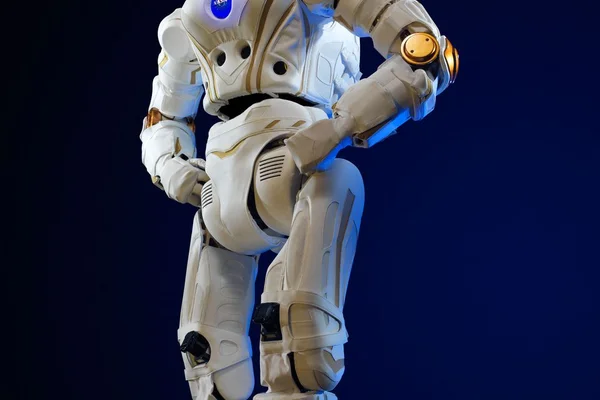
California Regulator Orders REK to Halt Unsanctioned Human Versus Humanoid Cage Fights
California's regulator says REK's September 18 human versus humanoid bout was unsanctioned, prompting a cease-and-desist and questions about old rules for new machines.
Ultra raises $62M to scale warehouse robots and deepen Physical Intelligence partnership
Brooklyn robotics startup Ultra closed a $50 million Series A led by Framework Ventures plus a $12 million seed round, and will run Pi's robot-brain model on its warehouse machines.
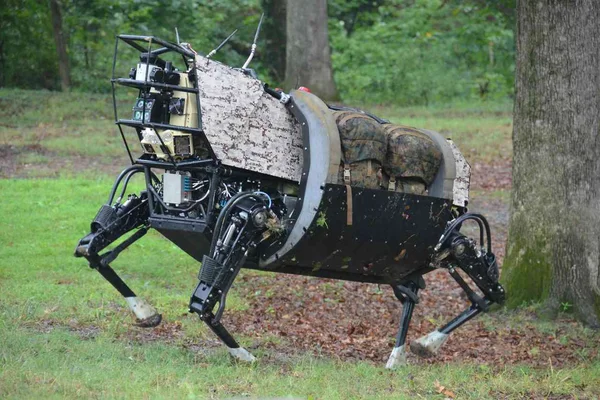
Boston Dynamics taps ex Amazon AI executive Rohit Prasad as CEO to lead Physical AI
Rohit Prasad, formerly Amazon's head scientist for Alexa and AGI, takes over as chief executive of Boston Dynamics as Hyundai pushes toward building 30,000 robot units a year by 2028.
Comments (0)
Log in or sign up to leave a comment.
No comments yet. Be the first to share your thoughts.