Gliomas are the most common form of cancer that begins in the central nervous system. They account for approximately 30 percent of all brain and CNS tumors and 80 percent of all malignant brain tumors, and about 24,000 new glioma cases are diagnosed in the United States each year. For the clinicians who treat those patients, one of the most consequential decisions in follow-up care is deciding whether a scan shows a tumor that has returned or grown, or a change caused by earlier treatment. Until this month, doctors in the United States had no FDA-approved positron emission tomography drug designed specifically for that task.
Amino acid PET imaging with floretyrosine F 18, commonly abbreviated as 18F-FET, is recommended in international clinical practice guidelines, including the NCCN Guidelines. Even so, no FDA-approved FET-PET product had been available in the United States, which meant that a technique endorsed by guidelines had no approved imaging agent behind it.
That changed on September 14, 2026. Telix Pharmaceuticals Limited, an Australian radiopharmaceutical company listed on the ASX and on NASDAQ under the ticker TLX, announced that the U.S. Food and Drug Administration had approved its New Drug Application for Pixclara, also called floretyrosine F 18 or 18F-FET. The product is described by the company as the first FDA-approved FET-PET imaging drug for glioma.
Telix is headquartered in Melbourne, Australia, with U.S. operations in Indianapolis, Indiana, and activities across North America, Europe, Latin America and Asia-Pacific. Its precision diagnostics portfolio is anchored by Illuccix and Gozellix for prostate imaging and now by Pixclara for glioma imaging, alongside late-stage therapeutic candidates. The approval also carries a regulatory backstory: the same application had been turned down by the agency in 2025, after regulators said additional clinical evidence was needed.
Key Facts
Pixclara is a radioactive diagnostic drug indicated for use with PET to differentiate recurrent or progressive glioma from treatment-related change, in conjunction with other diagnostic evaluations, in adults and pediatric patients 1 month of age and older. Telix Pharmaceuticals announced on September 14, 2026, that the approval makes the product the first FDA-approved FET-PET imaging drug for glioma in the United States and the only FDA-approved radiopharmaceutical imaging drug for glioma. FET-PET imaging is recommended in international clinical practice guidelines, including the NCCN Guidelines, but no FDA-approved FET-PET product had previously been available in the country.
The drug consists of a small molecule labeled with fluorine-18 that targets L-type amino acid transporters 1 and 2, known as LAT1 and LAT2. After an intravenous injection, the radioisotope emissions are detected by a PET scanner. The recommended adult dose is 185 to 259 MBq, which is 5 to 7 mCi, given as an intravenous bolus. The pediatric dose is 3 MBq per kilogram, with a minimum and maximum of 14 to 259 MBq.
Safety was evaluated in 382 patients with gliomas, comprising 371 adults who received a mean of 204 plus or minus 18 MBq and 11 pediatric patients. Headache was the only adverse reaction reported in 0.5 percent or more of patients, occurring in 0.5 percent of those treated. Nausea, injection site reaction, fatigue and malaise were each reported in fewer than 0.5 percent of patients.
Radiology Business reported on September 14, 2026, that the approval came after the company previously received a rejection from the agency last year, when regulators contended additional clinical evidence was needed. Regulators later accepted the application in April, and the imaging agent also earned Fast Track and Orphan Drug designations, targeting a Prescription Drug User Fee Act goal date of September 11, 2026. The approval was announced three days after that goal date.
RTTNews reported on September 14, 2026, that Telix shares rose about 9 percent in pre-market trading. The stock had traded between $6.28 and $12.48 over the past year, closed Friday, September 11, 2026, at $11.29, down 5.13 percent, and stood at $12.30 in pre-market trading, up 8.95 percent. Kevin Richardson, chief executive of Telix Precision Medicine, said the approval will enable broad U.S. access to FET-PET and give physicians more certainty in diagnosis and treatment planning.
Analysis
The bigger picture here is that this approval is less about a single product than about the regulatory status of an entire imaging class in the United States. FET-PET has been written into international guidelines, including the NCCN Guidelines, yet American physicians had no approved agent to use. StockTitan reported on September 14, 2026, that the company's ASX announcement frames the roughly 24,000 annual U.S. glioma cases as a significant addressable need. An approval of this kind does not create demand so much as it formalizes a practice that was already recommended.
The clinical argument rests on a specific diagnostic ambiguity. Patients treated for glioma often undergo repeated scans, and the central question is whether what appears on those scans represents recurrent or progressive disease or treatment-related change. Pixclara is indicated to help separate those two possibilities, in conjunction with other diagnostic evaluations. Patrick Wen, MD, chair of neuro-oncology at Mass General Brigham Cancer Institute, called the approval 'a very positive step forward for brain cancer imaging and treatment planning', and said that an FDA-approved FET-PET product with high diagnostic accuracy will make a significant positive difference to glioma management.
The commercial and regulatory story is equally telling. A rejection in 2025 followed by an acceptance in April 2026 and an approval in September 2026 shows how quickly a regulatory position can reverse when a sponsor supplies the additional clinical evidence regulators asked for. The Fast Track and Orphan Drug designations that accompanied the application are also a signal that the agency treats glioma imaging as an area of unmet need rather than a crowded category.
Kelly Sitkin, president and chief executive of the American Brain Tumor Association, said the approval 'will advance glioma care by enabling more precise monitoring, complementing the role of MRI' and helps address a critical unmet need in brain cancer diagnostics. That framing matters: an imaging drug does not treat cancer, but it can change what happens next for a patient, because monitoring decisions feed directly into treatment decisions.
Why It Matters
For patients and their families, the practical consequence is access. Until now, a technique recommended in guidelines was not backed by an FDA-approved product in the United States. An approval changes reimbursement conversations, institutional protocols and the confidence with which a nuclear medicine department can offer a scan. Telix Pharmaceuticals stated on September 14, 2026, that the approval will enable broad U.S. access to FET-PET.
The pediatric element is also notable. The indication covers patients 1 month of age and older, and the safety database included 11 pediatric patients alongside 371 adults. The labeled pediatric dose is 3 MBq per kilogram, bounded between 14 and 259 MBq, which gives clinicians a defined starting point for younger patients rather than one they must improvise. For a diagnostic drug that may be used in children, having that number written into the label is a meaningful difference for the physicians making the scan request.
There is a competitive dimension too. Telix already sells Illuccix and Gozellix for prostate imaging, and Pixclara extends the same diagnostics model into neuro-oncology. The company describes Pixclara as the only FDA-approved radiopharmaceutical imaging drug for glioma, which for now leaves it without a direct approved competitor in that specific indication.
Next Up
Pixclara, also referred to as TLX101-Px, is being evaluated in a Phase 3 registrational study for possible expansion into diagnosing brain metastases, an indication that is not approved. Telix also lists late-stage therapeutic candidates, TLX591-Tx, TLX101-Tx and TLX250-Tx, in pivotal trials for prostate, brain and kidney cancers. Those therapeutic candidates have not received marketing authorizations in any jurisdiction.
In the near term, the question is how quickly U.S. imaging centers adopt FET-PET now that an approved product exists, and whether the Phase 3 brain metastases study eventually widens the label. RTTNews reported on September 14, 2026, that the approval is the first of its kind for FET-PET glioma imaging in the United States, a milestone the market greeted with a pre-market gain of 8.95 percent.
Related Articles
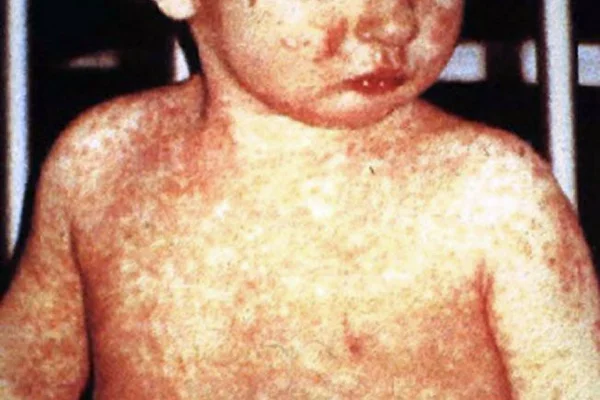
Pennsylvania Confirms Third Measles Death as Unvaccinated Woman, 40, Dies in Jefferson County
How a county coroner's finding in Jefferson County pushed Pennsylvania to its third measles-associated death of the year and deepened a fight with federal health officials over the count.
FDA Approves Scholar Rock's ISEMBYLD as First Muscle Targeted SMA Therapy
Scholar Rock won U.S. approval for ISEMBYLD, an antibody that blocks myostatin and becomes the first SMA treatment aimed at preserving muscle in patients already on SMN2 therapies.
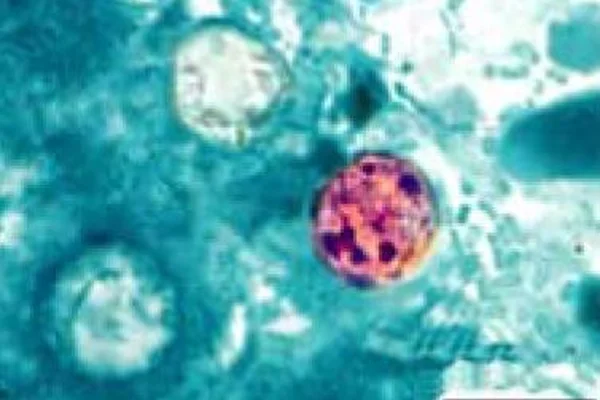
CDC declares largest US cyclospora outbreak over after 12,883 infections and two deaths
Federal health officials have closed the book on the largest recorded US cyclospora outbreak, a lettuce linked event that sickened 12,883 people across 21 states and killed two.
Comments (0)
Log in or sign up to leave a comment.
No comments yet. Be the first to share your thoughts.