Europe's Spaceport in French Guiana hosted a rare double deployment on 15 September 2026, when a single Vega C rocket carried two European Earth observation satellites into orbit and released them on separate trajectories. The mission, designated VV30, lifted off at 03:21 CEST, which was 01:21 UTC and 22:21 local time in Kourou on 14 September, and the European Space Agency confirmed that both spacecraft had reached orbit and made contact with ground control.
The two payloads serve very different purposes. FLEX, the Fluorescence Explorer, is an ESA Earth Explorer mission built to detect the extremely faint glow that plants emit during photosynthesis, an invisible signal that reveals how efficiently vegetation converts sunlight and carbon dioxide into energy. Copernicus Sentinel-3C is the third satellite in the Sentinel-3 series and will continue long-term measurements of oceans, land, ice and atmosphere for the Copernicus programme, the Earth observation component of the European Union space programme.
Flying two satellites on one rocket required new hardware. A launch adapter called Vespa allowed both spacecraft to be stacked inside the Vega C fairing, with Sentinel-3C positioned on top. That stacking order determined the deployment sequence: Sentinel-3C was injected into orbit first, about one hour into the mission, and FLEX followed roughly 56 minutes later after additional burns of the AVUM+ upper stage.
Thales Alenia Space, the joint company between Thales and Leonardo, was prime contractor for both satellites. ESA leads the Vega C programme and works with the Italian manufacturer Avio, which serves as prime contractor and design authority for the launcher and operated this flight as launch service provider.
Key Facts
The European Space Agency reported on September 15 that ESA's European Space Operations Centre in Germany received the all-important first signal from each satellite, confirming that both had been safely released from the rocket and had established contact with ground control. Mission controllers were set to spend the coming days conducting the launch and early orbit phase, checking and verifying the health and performance of both spacecraft.
Avio reported on July 30 that the VV30 mission would release its payloads into a sun-synchronous orbit at an altitude of about 820 km with an inclination of 98.6 degrees, and that the launch sequence from liftoff to the separation of the last satellite would last 116 minutes. Thales Alenia Space stated on September 15 that Sentinel-3C carries a launch mass of approximately 1,140 kg and will operate in low Earth orbit at an altitude of 814 km with an operational lifespan of 7.5 years. Avio put the Sentinel-3C mass at 1,143 kg and the FLEX mass at 397 kg, while Thales Alenia Space described FLEX as weighing approximately 400 kg with an operational lifespan in orbit of 3.5 years.
European Spaceflight reported on September 15 that Sentinel-3C joins Sentinel-3A and Sentinel-3B, which were launched in 2016 and 2018 respectively, and that the newest satellite is eventually intended to replace Sentinel-3A, which has exceeded its planned seven-year design life and has now been operating for more than a decade. The same report noted that FLEX is ESA's eighth Earth Explorer mission and that the flight was Avio's second Vega C launch of 2026, following the company's split from Arianespace.
Sentinel-3C is designed to monitor sea-surface temperature, ocean colour, sea level and sea-ice characteristics, along with land surface temperature, vegetation, soil temperature, inland water quality and fire detection. FLEX will produce global maps of vegetation fluorescence and will fly in tandem with a Sentinel-3 satellite, so that its observations can be combined with the Sentinel-3 imaging spectrometer to correct for atmospheric bias and to quantify fluorescence at ground level.
Vega C is an evolution of Europe's Vega family and can launch 2,300 kg into low Earth orbit. The rocket weighs 210 tonnes on the launch pad and reaches orbit using three solid-propellant stages, with a fourth liquid-propellant stage handling precise placement of payloads. The VV30 flight was the fifth Sentinel satellite deployed by the Vega launcher family, the third ESA scientific mission placed into orbit by Vega C and the eighth Vega C flight overall.
Analysis
What this really means is that Europe has now paired a pure science mission with an operational environmental monitoring satellite on a single medium-lift rocket, and the match is more deliberate than a shared launch date. FLEX and Sentinel-3C were both built by Thales Alenia Space, both operate near 814 km, and both are designed to work together: FLEX measures the faint fluorescence signal from plants, while the Sentinel-3 imaging spectrometer supplies the atmospheric correction that makes that signal usable on the ground.
The industrial structure behind the mission reinforces the point. Thales Alenia Space in France is prime contractor for the satellites and is responsible for developing the imaging spectrometer (OLCI), the radar altimeter (SRAL) and the platform, with entities in Spain, Belgium and Italy involved. A consortium of more than 100 European companies contributed to Sentinel-3, including Leonardo for the imaging radiometer (SLSTR) and Airbus Defence and Space for the microwave radiometer (MWR), while almost 40 European companies contributed to FLEX. Leonardo also built FLORIS, the instrument that gives FLEX its fluorescence measuring capability.
Simonetta Cheli, ESA's Director of Earth Observation Programmes, said the launch was the culmination of years of scientific innovation, engineering excellence and international cooperation, describing FLEX as a research mission developed within ESA's FutureEO programme that will advance understanding of plant health and the role of photosynthesis in the carbon and water cycles. She described Sentinel-3C as the third satellite in the Sentinel-3 series, systematically measuring Earth's oceans, land, ice and atmosphere to support Europe's Copernicus Services.
For Avio, the flight carried commercial weight. Giulio Ranzo, the company's chief executive, said the success confirms Avio as a reliable launch service operator for Vega C launches and that the launcher performed flawlessly, putting into orbit two strategic satellites for Europe. That judgement holds up on the evidence of this mission: two deployments in a single flight, on schedule, with both spacecraft confirmed healthy. The bigger picture here is that Europe's independent access to orbit for medium-class Earth observation payloads now rests on a launcher that Avio alone operates, which turns every flight into a test of technology and industrial confidence alike.
Why It Matters
Sentinel-3C matters because the constellation it joins is ageing. Sentinel-3A has exceeded its planned seven-year design life and has been operating for more than a decade, and Sentinel-3C is intended eventually to take over its role. After commissioning, the Sentinel-3 mission is jointly managed by ESA and Eumetsat, with Eumetsat responsible for routine spacecraft operations and for marine and near-real-time atmospheric data, while ESA delivers land, cryosphere, inland water and offline atmospheric products. Thales Alenia Space described Copernicus as the world's most advanced environmental monitoring programme, managed by the European Commission, funded by the EU and partially by ESA.
FLEX matters because it opens a measurement that has not been made from space with this level of precision across vast territories. Fluorescence is an extremely faint signal, and the Fluorescence Imaging Spectrometer on FLEX is built to detect it. Thales Alenia Space reported on September 15 that its chief executive, Herve Derrey, was delighted with the successful launch of both satellites, which will provide unique data to scientists and policymakers to help understand climate change and preserve ecosystems, and which demonstrate Europe's leadership in Earth observation.
Together, the two satellites show how climate and food security questions are increasingly answered with instruments. FLEX data is expected to support insights into agricultural productivity and plant health, while Sentinel-3C data supports climate monitoring, weather forecasting, environmental protection and emergency management.
Next Up
Both satellites now enter commissioning, with mission controllers at ESA verifying their health and performance during the launch and early orbit phase over the coming days. After commissioning, Sentinel-3C will join Sentinel-3B in orbit, and FLEX will begin flying in tandem with a Sentinel-3 satellite to align its fluorescence measurements with the constellation's atmospheric data.
Avio will turn to the third and final Vega C launch planned for 2026. Ranzo said during a September 10 earnings call that the mission is expected to launch at the very beginning of December and will carry a batch of satellites for Italy's IRIDE Earth observation constellation, and that Avio had initially expected to conduct a fourth launch this year but that one satellite was somewhat late.
Related Articles
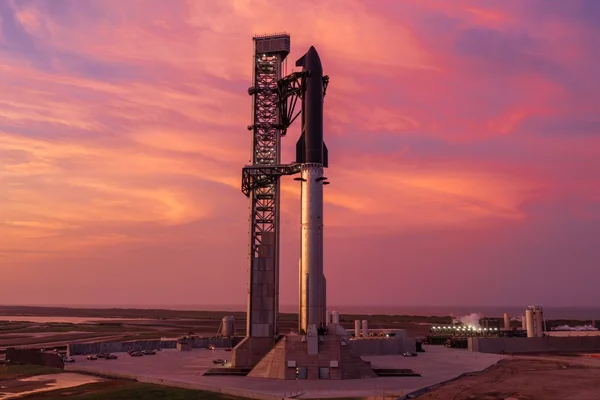
SpaceX launches 700th Falcon rocket and completes SES broadband constellation
The September 13, 2026 mission from Cape Canaveral delivered the final three O3b mPOWER satellites, finishing a 13 spacecraft medium Earth orbit network for SES and marking a reusable rocket milestone for SpaceX.
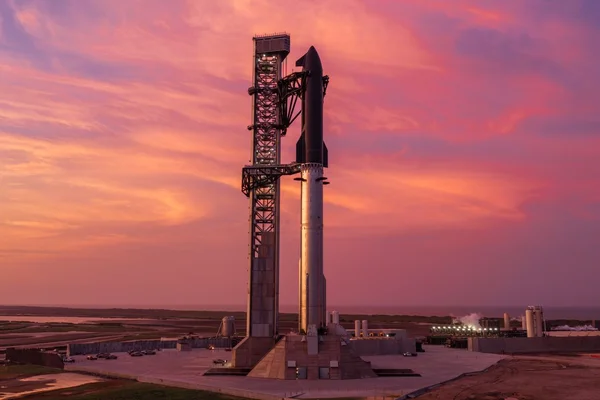
SpaceX Starship Flight 14 Eyes First Orbit With 20 Starlink V3 Satellites
Federal air traffic planners have reserved a two hour window on September 18, 2026 for a Starship mission that would fly about 20 Starlink V3 satellites and, per SpaceX's finance chief, bring in revenue.
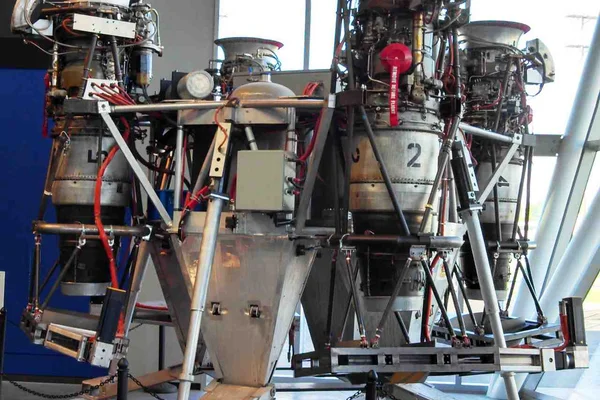
Rocket Lab protests NASA's $700 million Mars orbiter award to Blue Origin
Rocket Lab filed a GAO protest on September 11, 2026, challenging NASA's $700 million Mars Telecommunications Network award to Blue Origin over eligibility and review concerns.
Comments (0)
Log in or sign up to leave a comment.
No comments yet. Be the first to share your thoughts.