The first billion years of cosmic history were a period of furious construction. Dark matter halos collapsed under gravity, galaxies ignited their first generations of stars, and at the centers of the most massive of those galaxies, supermassive black holes began to grow. Gas and stars funnelled inward, and for a brief interval the resulting accretion disks radiated so intensely that they outshone every star in the host galaxy combined. Astronomers call these objects quasars, and they are the brightest beacons available for studying the distant universe.
Finding them is difficult. The quasar phase is short lived, the light from these objects is faint by the time it reaches Earth, and the earliest examples sit at redshifts so high that their radiation is stretched deep into the infrared. Surveys must therefore combine wide area coverage with sensitive spectroscopy. Even then, most confirmed quasars from the first billion years are solitary points of light, with nothing obviously nearby.
That is what makes close pairs interesting. If galaxies merge often, as cosmological models predict, then some quasars should appear in pairs, two accreting black holes inside a single extended structure or in two galaxies caught in the act of joining. Such systems offer a direct test of how the first massive galaxies and their central engines assembled. They are also rare, because catching two quasars at the same moment and place requires a fortunate alignment of physics and observing conditions.
On November 10, 2026, an international team announced that it had found exactly such a system, and that the pair is the most distant and most compact of its kind yet confirmed. The object, catalogued as J1602+4228AB and nicknamed Nāpōwawāʻenakaulua, consists of two actively feeding black holes separated by only 18,100 light-years, seen as they were roughly 900 million years after the Big Bang. The work, led by Silvia Onorato of NSF NOIRLab, appears in The Astrophysical Journal Letters and draws on observations from Gemini North and the James Webb Space Telescope.
Key Facts
NSF NOIRLab reported on November 10, 2026 that the pair lies about 900 million years after the Big Bang, at a redshift of about 6.08, which corresponds to roughly 12.9 billion light-years of travel for the light now reaching Earth. The two black holes have masses of about 1.5 billion and 400 million times the mass of the Sun. Their projected separation on the sky is 0.98 arcseconds, which works out to about 5.56 physical kiloparsecs, or approximately 18,100 light-years, roughly one fifth of the Milky Way's diameter.
The Astrophysical Journal Letters published the study on November 10, 2026, in volume 1011 as article L59, with an open access DOI of 10.3847/2041-8213/aeb11f. The paper reports a velocity offset between the two components of roughly 15 kilometers per second and systemic redshifts of 6.0781 and 6.0785. The authors derive Eddington ratios of about 1.23 and 1.07, meaning both black holes are accreting at or slightly above the Eddington limit, the point at which radiation pressure balances gravitational infall.
The discovery emerged from the Aether survey, a JWST program led by Emanuele Paolo Farina of NSF NOIRLab and Gemini, and described in the paper as an unbiased, parent sample representative survey of 199 to 200 quasars. That collection amounts to 43 percent of all known quasars at that cosmic stage. The companion was found serendipitously during visual inspection of the survey data, when researchers noticed that quasar J1602+4228A had a faint neighbor. The Astrophysical Journal Letters reported on November 10, 2026 that the paper had been received on September 1, 2026 and accepted on October 3, 2026.
Follow-up observations with Gemini North's Near Infrared Imager and Spectrograph, known as GNIRS, resolved the two objects as separate sources. Phys.org reported on November 10, 2026 that component B is so faint that observing it from the ground should have been nearly impossible, and that the sky over Maunakea was clean enough for the data to be collected in only two nights. Gemini Multi Object Spectrograph data then showed spectral differences that favor a genuine physical pair over a chance alignment.
The Science Beat reported on November 11, 2026 that this is only the third known quasar pair at cosmic dawn, and that no definitive theoretical explanation exists for how a single quasar of this mass could form so early, let alone two in the same small volume. The team suggests the system may mark an extreme peak in the matter density field of the early universe.
Analysis
The most striking number in the result is not the separation but the timing. At 900 million years after the Big Bang, the universe was about one thirteenth of its present age. Yet the two black holes already carried 1.5 billion and 400 million solar masses. Growing such objects requires either sustained accretion at very high rates over a long fraction of that interval, or seeds that were far more massive than the remnants of ordinary first generation stars. The measured Eddington ratios near unity show that both engines are currently running near their radiative limit, which helps explain their brightness but does not by itself explain how they got so large so quickly.
What this really means is that the discovery shifts a theoretical problem from the possible to the observed. A single massive quasar at high redshift can be accommodated, if awkwardly, by models that allow heavy seeds or brief episodes of super Eddington growth. Two massive quasars in the same compact system strain those models further, because they must share a common environment and a common history. The authors note that comparing the chance occurrence of such a pair with extrapolations of quasar clustering measured on larger scales yields an excess of about two to three orders of magnitude. That excess hints either at an underlying population of merger triggered quasar pairs that surveys have so far missed, or at an unusually dense galactic environment around this system.
The observational claim also comes with a caveat that the team states plainly. A gravitational lens model is still needed to rule out the possibility that the two images are the same quasar duplicated by an intervening mass. The spectral differences seen with Gemini's multi object spectrograph argue against lensing, because a lensed image would carry the same spectrum, but the team treats the lensing test as unfinished business. The history of high redshift astronomy includes several candidate pairs that later dissolved into lensed single objects.
The survey design deserves attention as much as the object. Aether did not target known pairs. It observed a large, representative sample of quasars with JWST's Near Infrared Spectrograph Integral Field Unit and then examined the data by eye, which is how the companion surfaced. The paper's statement that the survey covers 43 percent of all known quasars at that epoch turns a single curious object into a constraint on how common such pairs really are.
Why It Matters
Quasar pairs are natural laboratories for the connection between galaxy mergers and black hole growth. At cosmic dawn, the same phenomenon is compressed into a smaller, denser, younger system, and the light has been travelling for most of the history of the universe. A confirmed pair at 900 million years after the Big Bang therefore provides a rare direct probe of how the earliest massive galaxies assembled through interactions.
Onorato described the system as a unique environment and as a laboratory for astronomers to study how the very first massive galaxies and their central black holes assembled together through direct galaxy interactions during these early times. This links the growth of black holes to the assembly of the galaxies that host them, and it ties both to the larger question of how the first structures emerged from the matter distribution left by the Big Bang.
There is also a practical consequence for future surveys. If the excess clustering signal is real, then wide field infrared surveys should eventually uncover a population of similar pairs rather than a handful of curiosities. Each new pair would add a data point to the merger history of the early universe and would sharpen constraints on black hole seeding models.
Next Up
The immediate next step is the lensing analysis. The team has said that a gravitational lens model is required to rule out the alternative interpretation definitively, and that work will determine whether J1602+4228AB stands as a physical pair under the strictest scrutiny. Further spectroscopy and deeper imaging could also constrain the velocity structure and the surrounding environment of the pair.
Beyond this object, the Aether survey and its successors will continue to search for companions around the quasars already observed. With 200 quasars in the parent sample and only a fraction examined in detail so far, the statistical question of how often such pairs occur at cosmic dawn is only beginning to be answered. Future observations with Gemini North and JWST will test whether Nāpōwawāʻenakaulua is an outlier or the first clear view of a population that shaped the first massive galaxies.
Related Articles
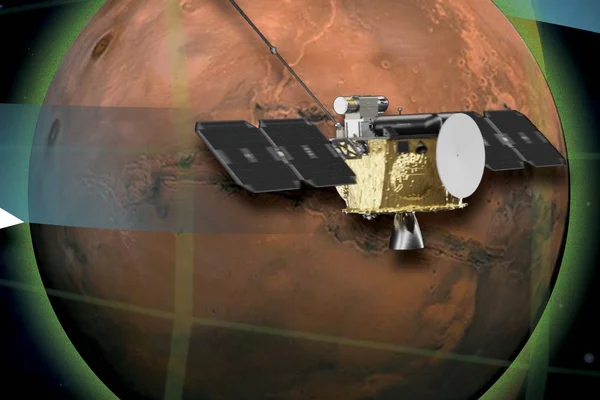
NASA Twin ESCAPADE Probes Complete First Powered Earth Flybys on the Way to Mars
Two small NASA satellites used engine burns during close passes over Earth to bend their path toward Mars, a maneuver the agency had never attempted on an interplanetary departure.
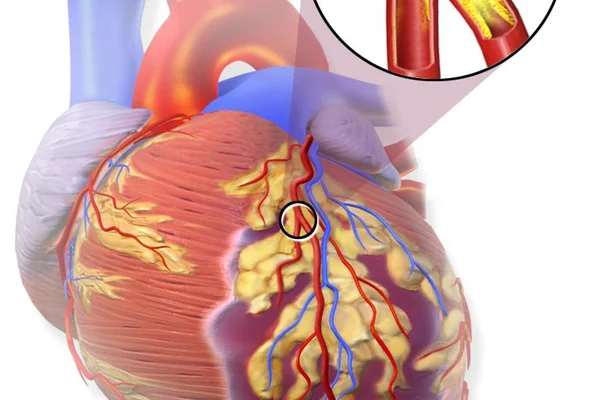
Cambridge mRNA Therapy Coaxes Adult Heart Cells to Divide and Restores Pumping in Mice
A transient, localized dose of modified mRNA encoding Myc and Cyclin T1 preserved cardiac output in mice after myocardial infarction, with benefit still measurable at 12 weeks.
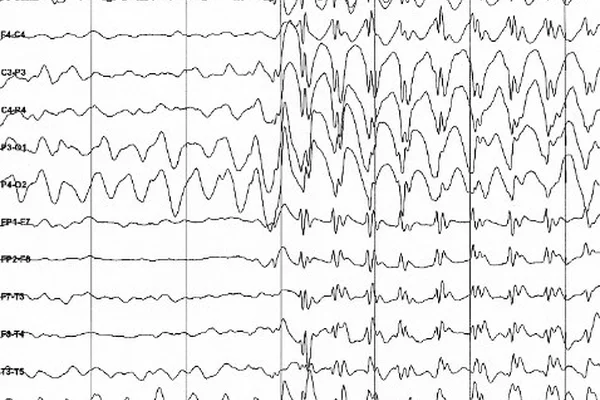
Chemogenetic gene therapy cuts monthly seizures by 92.6 percent in three epilepsy patients
Researchers in Beijing infused a gene therapy vector into the hippocampus driving three adults' seizures and then activated it with low-dose clozapine, reporting a 92.6 percent mean drop in monthly seizures.
Comments (0)
Log in or sign up to leave a comment.
No comments yet. Be the first to share your thoughts.