On September 10, 2026, at the International Space Summit in Paris, the European Space Agency awarded The Exploration Company a €760 million ($882 million) contract under ALADDIN Phase 2. The deal covers an initial demonstration mission of the reusable Nyx cargo capsule to the International Space Station, plus options for two additional cargo flights. It is the first and largest capsule transportation service contract ESA has given a European space company.
Europe has long relied on international partners for cargo return. The ISS is scheduled to retire around 2030, pushing ESA to develop a sovereign capability. The effort traces to 2022, when Member States endorsed the LEO Cargo Return Service. Two projects each received €25 million in Phase 1. Phase 2 was confirmed at the November 2025 Ministerial Council and tendered in March 2026. Now The Exploration Company has won that competition.
The Exploration Company, or TEC, is a Franco German startup founded in 2021 by Hélène Huby. Days before the award, it closed a €387 million ($450 million) Series C round, bringing total funding since founding to roughly $680 million. TEC is building the reusable Nyx capsule and the Storm high thrust rocket engine. Nyx can launch on any heavy lift rocket, dock autonomously, return up to 3,000 kilograms of cargo, and fly up to 10 missions per capsule.
The €760 million splits into €310 million for the initial ISS demonstration and up to €450 million for two optional service missions. ESA covers 60% of the demo cost, TEC 40% from private investors. The demo will launch on an Ariane 6 with Arianespace from Kourou, French Guiana. It must dock with the ISS no later than the second quarter of 2029, before the station's planned retirement. Choosing Ariane 6 makes TEC eligible for an extra ESA incentive up to €50 million.
Key Facts
ESA Director General Josef Aschbacher said ESA is acting as an anchor customer and strengthening Europe's commercial space sector. TEC CEO Hélène Huby said it is the first time a five year old European space startup has won a contract worth hundreds of millions of euros in open competition. Daniel Neuenschwander, ESA's Director for Human and Robotic Exploration, said the deal launches ALADDIN Phase 2 and that cargo return is a capability only a handful of nations have mastered. ALADDIN stands for Autonomous LEO Accelerated Demo Docking to ISS Node.
ESA said it selected TEC after the company demonstrated key technical readiness milestones and secured 40% of the demo financing from private investors, with ESA covering 60%. The award is the first and largest capsule transportation service contract ESA has given a European space company. The total value signed in Paris is €760 million, including €310 million for the initial demonstration and up to €450 million for two optional service missions.
European Spaceflight reported on September 10, 2026 that the €760 million deal covers an initial Nyx demonstration to the ISS plus options for two more flights, with €310 million for the demo and €450 million in options. The report noted TEC closed a $450 million Series C round earlier that week, bringing total funding since its 2021 founding to roughly $680 million. Both TEC and Thales Alenia Space Italy held Phase 1 contracts. ESA remains committed to competition and is continuing a second stage tender with Thales Alenia Space.
SpaceNews reported on September 10, 2026 that The Exploration Company has won a contract from ESA worth up to 760 million euros ($882 million) to fly a Nyx demonstration mission to the ISS in 2028. The award is one of the largest contracts ever given by ESA to a European startup. It is intended to give Europe an independent means of sending and returning cargo from low Earth orbit rather than relying on US or other non European vehicles.
EU-Startups reported on September 11, 2026 that the contract comes days after TEC closed a €387 million ($450 million) Series C round to fund final development of Nyx and accelerate work on Storm, a reusable high thrust rocket engine. The Storm engine uses liquid oxygen and bio methane in a full flow staged combustion cycle with up to 180 metric tons of thrust.
Analysis
The contract is not just a win for TEC. It is a signal that Europe is willing to fund commercial cargo return. What this really means is that ESA is shifting from being a developer to being an anchor customer, buying services rather than building hardware itself. Aschbacher's comment about strengthening Europe's commercial space sector supports this. The 60/40 cost split shows ESA wants private capital to share risk, and TEC's recent €387 million Series C shows investors are willing.
The choice of Ariane 6 is strategic. European launch vehicles need customers. By selecting Ariane 6, TEC becomes eligible for an extra ESA incentive up to €50 million, tying the capsule to European launch sovereignty. The docking deadline of the second quarter of 2029 is tight. The ISS is scheduled to retire around 2030. Huby's expected November 2028 docking gives some margin, but delay could be costly. The options for a future commercial space station show ESA is planning beyond the ISS.
The bigger picture here is that Europe is trying to avoid being left behind in low Earth orbit. Tech Times reported on September 10, 2026 that SpaceX operates more than 10,000 active Starlink satellites, over 67% of all active satellites, and that SpaceX did not attend the Paris summit after White House OSTP pressure. The same report said the summit produced more than 51 deals worth roughly €20 billion ($22 billion) and drew nearly 120 delegations. That shows momentum, but competition remains. Thales Alenia Space Italy is still in a second stage tender, and ESA says it remains committed to competition.
Nyx's specifications matter. Returning up to 3,000 kilograms and flying up to 10 missions per capsule are ambitious. If successful, Nyx could serve commercial stations like Axiom, Starlab, and Vast. TEC already has prebooking agreements with those three, taking booked missions to 10 worth roughly $2 billion. That backlog reduces risk for ESA. However, the demonstration must still achieve autonomous docking, a capability only a handful of nations have mastered, as Neuenschwander noted. The technical challenge is real.
Why It Matters
For Europe, this contract is about sovereignty. The ISS retirement in 2030 will leave a gap. Without a European cargo return vehicle, Europe would depend on US or other non European vehicles to send and return cargo from low Earth orbit. ALADDIN is intended to fill that gap. The €760 million investment is large, but it is a fraction of what a full development program would cost if ESA built the capsule itself. By acting as an anchor customer, ESA leverages private investment. TEC secured 40% from private investors, and its Series C of €387 million shows private confidence.
For The Exploration Company, the contract is transformative. Founded in 2021, TEC is five years old. Winning a contract worth hundreds of millions of euros in open competition is unprecedented for a European startup, according to Huby. Total funding since founding is about $680 million. The ESA contract adds €760 million in potential revenue, accelerating development of Nyx and Storm. It also validates TEC's reusable capsule approach. The company has prebooking agreements worth roughly $2 billion, so the ESA deal is a cornerstone, not the whole business.
For the broader space industry, the award signals that ESA is willing to buy commercial services for cargo return, similar to how NASA's commercial cargo programs helped SpaceX and Orbital Sciences. If TEC succeeds, other European startups may follow. The summit's €20 billion in deals and nearly 120 delegations show Europe is trying to build a self sustaining space ecosystem. The absence of SpaceX, after White House OSTP pressure, highlights geopolitical tensions. Europe's push for autonomous access to space is both economic and strategic.
Next Up
The immediate next step is for TEC to complete final development of Nyx and prepare for the demonstration. The launch is booked with Arianespace on an Ariane 6 from Kourou, French Guiana. Docking must occur no later than the second quarter of 2029. Huby told AFP she expects Nyx to dock with the station in November 2028. TEC will continue work on the Storm engine and pursue ISS certification with NASA. ESA will continue its second stage tender with Thales Alenia Space Italy.
Beyond the ISS, the options cover two additional service missions that could fly to the ISS or a future commercial space station. TEC has prebooking agreements with Axiom, Starlab, and Vast. If the demonstration succeeds, those options could be exercised. The Paris summit also saw Isar Aerospace's September 5 orbital launch from Andøya, Norway, the first commercial rocket to reach orbit from continental Europe, and confirmation that ESA astronaut Thomas Pesquet will command the Vast PAM 6 mission in 2027.
Related Articles
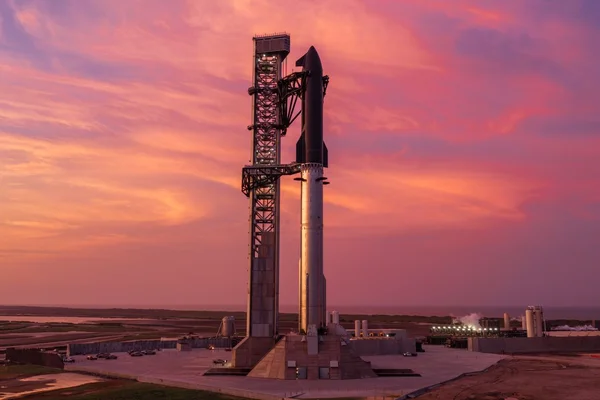
SpaceX Starship Flight 14 Eyes First Orbit With 20 Starlink V3 Satellites
Federal air traffic planners have reserved a two hour window on September 18, 2026 for a Starship mission that would fly about 20 Starlink V3 satellites and, per SpaceX's finance chief, bring in revenue.
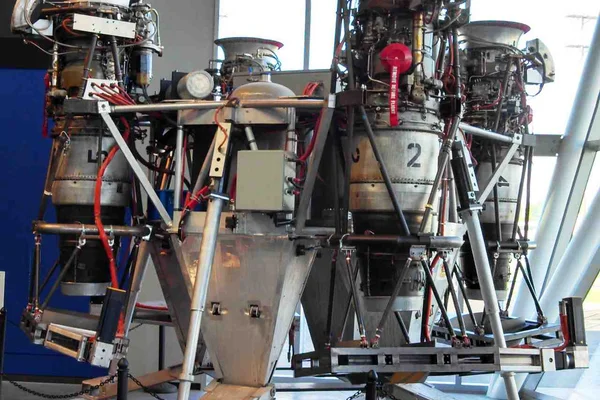
Rocket Lab protests NASA's $700 million Mars orbiter award to Blue Origin
Rocket Lab filed a GAO protest on September 11, 2026, challenging NASA's $700 million Mars Telecommunications Network award to Blue Origin over eligibility and review concerns.
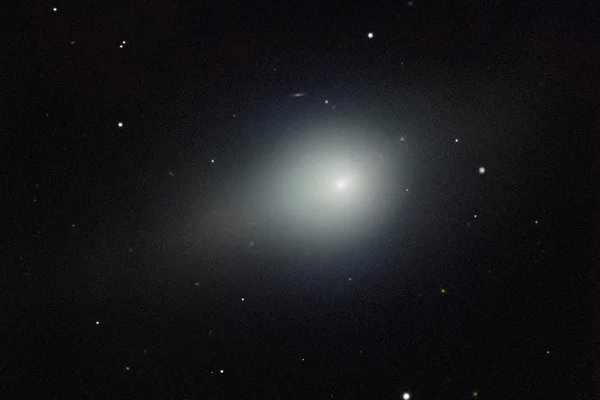
Interstellar comet 3I/ATLAS is rich in nitrogen and formed in deep freeze, study finds
New William Herschel Telescope observations show the interstellar comet 3I/ATLAS has an unusually high nitrogen to carbon monoxide ratio, suggesting it formed below about minus 240 degrees Celsius far from its home star.
Comments (0)
Log in or sign up to leave a comment.
No comments yet. Be the first to share your thoughts.