ENCE eSports Oy, the Helsinki company behind one of Finland's best known esports brands, spent thirteen years turning a roster acquisition into a Counter-Strike institution. The organisation entered the game in April 2013 by signing the TOOMUCHVIDEOGAMES line-up, and it grew from a domestic project into a Major finalist with a global following. On 26 October 2026 its board decided to file for bankruptcy, a decision that ends the company rather than merely the team, and one that leaves the futures of contracted players and staff unresolved.
The first high point came in 2019, when an all-Finnish line-up assembled in April 2018 around Aleksi allu Jalli, with Aleksib as in-game leader, reached the final of the IEM Katowice Major. ENCE lost that final 0-2 to Astralis, then beat the same opponent 2-0 in the BLAST Pro Series Madrid final two months later. The run produced The Verkkars' fan song EZ4ENCE, which has more than 20 million views on YouTube.
A second, more international peak followed. ENCE reached the semi-finals of the PGL Major Antwerp 2022 and won IEM Dallas in 2023, and revenue more than tripled from EUR 2.04 million in 2021 to EUR 6.31 million in 2023. In December 2023 the company sold the core of its title-winning team to Team Falcons, with SunPayus bought out, Snappi already signed and maden following on a free transfer. The sporting and commercial peaks arrived together, and neither proved repeatable.
The farewell was posted on X under the heading The end of an era. It thanked players, staff, partners and fans, gave special thanks to supporters who stayed through every win and loss, and ended with the letters GG. The statement gave no reason for the decision, named no court and no timetable, and it did not say what happens to the people still under contract. As of 26 October, Finland's trade register showed no bankruptcy entry for the company.
Key Facts
Pley.gg reported on October 26 that ENCE lost EUR 1.6 million across two years, and the annual accounts filed in the Finnish Trade Register and listed by Finder trace the slide in detail. Revenue was EUR 2,040,000 in 2021, EUR 4,072,000 in 2022, EUR 6,314,000 in 2023, EUR 3,153,000 in 2024 and EUR 1,322,000 in 2025. Results moved from +EUR 168,000 to +EUR 906,000 to +EUR 331,000, then to -EUR 680,000 and -EUR 940,000. Headcount fell from 23 to 18.
E-Sport Now reported on October 26 that Asiakastieto's financial records show a 50.1% revenue drop in 2024 followed by a further 58.1% decline in 2025, while the operating result swung from a EUR 521,000 profit in 2023 to a EUR 752,000 loss in 2024 and a EUR 993,000 loss in 2025. The combined losses for 2024 and 2025 came to EUR 1.62 million. The Esports Advocate reported on October 26 that revenue fell 79% between 2023 and 2025, that the equity ratio stood at 56.6% at the end of that year, and that the balance sheet had shrunk to EUR 536,056.
Liquidity, not accounting, was the binding constraint. Kauppalehti's figures, cited by The Esports Advocate, put equity at about EUR 303,000 at the end of 2025, down from EUR 843,000, a buffer smaller than four months of that year's operating losses. The company survived only through a EUR 400,000 capital injection, and cash had fallen to under EUR 2,000. Yle reported on October 26 that, according to Ilta-Sanomat, the organisation posted a loss of almost one million euros last year.
The decline arrived in two steps. The first was the December 2023 sale of the IEM Dallas core to Team Falcons; in January 2024 ENCE ranked 21st in ESL's world ranking, missed the top-20 partner cutoff, failed to qualify for the Copenhagen Major and saw prize money fall from about USD 717,000 in 2023 to about USD 227,000 in 2024. The second was structural. Valve announced in August 2023 that from 2025 tournament organisers could no longer hold unique business relationships with teams and would base invitations on Valve's rankings or open qualifiers, ending ESL's Louvre Agreement, which had given partner teams including ENCE a permanent ESL Pro League slot and a share of league revenue, estimated by eUrheilu.com to be worth hundreds of thousands of euros a year.
The reset came too late to change the outcome. On 11 March 2026 ENCE announced a strategic reset after reviewing the business with leadership and majority shareholders, saying heavy investment in international Counter-Strike had become hard to sustain, and benched the main roster and coaching staff. Academy players became the interim main team on 1 April 2026 while ENCE Academy went on hiatus. CEO Mika Kuusisto stepped down in June after more than seven years. The club confirmed long-term contracts for its CS2 squad on 25 September 2026, five weeks before the filing. The final roster of Schwarz, teme, millert, HENU, joeski and coach allu was 103rd in Valve's regional standings and had not played a top-tier event since September 2024; its last match was a 0-2 semi-final loss to Phantom at Elisa BreakOut Series #2 on 17 October 2026.
Analysis
What this really means is that ENCE did not fail at Counter-Strike so much as fail at converting Counter-Strike into a durable business. The organisation could still produce a Major finalist and an IEM champion, but the revenue that arrived with those results depended on arrangements the club did not control: a partner slot inside ESL's ecosystem, a share of league income and a roster whose value could be realised by selling players. When the sale happened in December 2023 and the partner economics were dismantled by Valve's 2025 rules, the company was left with the costs of a top-tier organisation and the income of a mid-tier one.
The timing of the reset is the most revealing detail. ENCE signed its rebuilt Finnish roster to long-term contracts on 25 September 2026, a month before the board voted to file, and Joe joeski Holmes said the news came out of the blue while head coach allu said he was heartbroken. A club that believed it had stabilised its cost base was still unable to service it. The gap between what the board knew about the balance sheet and what the players understood about their futures is the part of this story that will be hardest for the industry to explain.
The bigger picture here is that esports organisations of ENCE's size were never really standalone businesses. Their margins came from a closed league structure, and once Valve forced invitations back onto ranking and open qualification, the value of incumbency disappeared. ENCE's own numbers show how thin the protection had been: revenue tripled in two years, then lost nearly four fifths of its value in the next two, and equity that once looked comfortable covered only a few months of losses.
Why It Matters
Yle described ENCE as Finland's most famous and most successful esports organisation. The 2019 Major run made Counter-Strike a mainstream Finnish story, and the club's reach extended beyond one game: Joona Serral Sotala won the 2018 WCS Global Finals in StarCraft II with ENCE, becoming the first non-Korean champion of that event. Losing the company removes an institution that supplied players, coaches and credibility to an entire national scene.
The immediate harm is contractual. Six players and a head coach were under long-term deals confirmed five weeks before the filing, and the statement said nothing about whether those contracts survive, are transferred or are terminated. The filing also names no court, no administrator and no schedule, so creditors, staff and players are working from a public post rather than a legal process. For a company with 18 employees and a balance sheet of EUR 536,056, the queue of claims will be short but the uncertainty will not be.
For the wider industry, the case is a warning about dependence on partner revenue. ENCE was not a failing brand; it was a brand whose distribution deal was rewritten by the game's publisher. Organisations that built budgets on guaranteed league slots and revenue shares now have a concrete example of how quickly those assumptions can be withdrawn.
Next Up
The board's decision is a resolution to file, not a completed bankruptcy. ENCE has not said when or with which court it will submit the petition, and the Finnish trade register still showed no entry on 26 October. The next visible steps are the petition itself, the appointment of an administrator, and a public inventory of the company's assets.
For the players, the question is whether the roster stays together long enough to be transferred or released. The line-up sits 103rd in Valve's regional standings, its last competitive match was a semi-final defeat on 17 October, and its coach has already described himself as heartbroken. What happens to those contracts, and whether a buyer emerges for the ENCE name, will determine whether this is the end of a company or the end of a Finnish Counter-Strike era.
Related Articles

Modern Warfare 4 launches at $69.99 outside Game Pass with the series' best reviews in years
Infinity Ward's Modern Warfare 4 scored a Metacritic 84 and peaked at 227,622 Steam players, testing whether a full price Call of Duty can thrive outside Game Pass at launch.
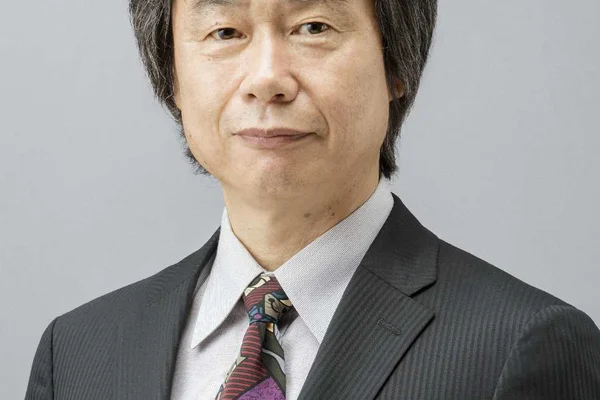
Nintendo's Shigeru Miyamoto Becomes First Game Creator to Receive Japan's Order of Culture
The Nintendo designer, 73, is among eight fiscal 2026 honorees and will receive the award from Emperor Naruhito at the Imperial Palace on Culture Day.

Australia's Federal Court orders Apple to open iOS and restore Fortnite by March 2027
Australia's Federal Court has given Apple until March 2027 to admit rival app stores, direct downloads and outside payments, and ordered Fortnite back on the local App Store.
Comments (0)
Log in or sign up to leave a comment.
No comments yet. Be the first to share your thoughts.