Dell Technologies delivered the clearest evidence yet that the AI server buildout is still accelerating when it reported record results for its fiscal 2027 second quarter on September 1, 2026. Revenue reached $47.0 billion for the quarter ended July 31, up 58 percent from a year earlier, and diluted earnings per share came in at $6.34, up 273 percent year over year. Reuters reported on Sep 1 that Dell raised its annual revenue forecast by $25 billion, the second time this year the company has lifted its outlook, on the strength of demand for AI servers. The defining number in the quarter was not on the income statement at all: Dell exited the period with roughly $95 billion of AI-server backlog, nearly six times the AI-server revenue it recognized during the quarter, according to a detailed review published by beancount.io on Sep 2.
The scale of that backlog is the clearest signal available to the market about how much computing capacity hyperscalers and enterprises are still trying to buy. Dell's AI server business has become the company's growth engine, transforming a company long associated with PCs and storage into one of the largest suppliers of the infrastructure that runs large language models. CNBC reported on Sep 1 that Dell now expects its AI server revenue to roughly triple in fiscal 2027, revising an earlier forecast that had called for the business to double. That upgrade, combined with the $95 billion backlog figure, suggests that the constraint on AI deployment is no longer demand but the industry's ability to manufacture and ship systems fast enough.
Key Facts
Dell's investor relations release, dated Sep 1, reported record second-quarter revenue of $47.0 billion, up 58 percent year over year, with record diluted EPS of $6.34, up 273 percent, and net income that more than tripled to $4.1 billion. The company raised its full-year revenue guidance by $25 billion, according to Reuters' Sep 1 coverage, and CNBC noted the same day that management's revised expectation for AI server revenue to roughly triple in fiscal 2027 marks a significant acceleration from the doubling the company had previously projected. Yahoo Finance reported on Sep 1 that the results beat analyst expectations, with the beat driven by the AI server segment rather than the traditional PC and storage businesses.
The backlog figure puts the growth in context. Dell exited the quarter with about $95 billion in AI server backlog, roughly six times the AI server revenue recognized in the quarter, according to beancount.io's analysis on Sep 2. That ratio means Dell is selling systems faster than it can build them, and it implies the company has visibility into revenue for quarters ahead. The company's traditional businesses are not collapsing, but they are no longer the story: the PC market has stabilized while the AI infrastructure business compounds, and Dell's profitability has followed the mix shift, with operating leverage flowing through as higher-margin AI systems scale.
The results also reflect a structural shift in how enterprise computing is being bought. Rather than purchasing servers piecemeal, customers are placing large, committed orders for AI infrastructure, which is why Dell's backlog has grown so large. The company's position is strongest where it competes with HPE and Supermicro for rack-scale AI systems that integrate Nvidia and AMD accelerators, and where it can bundle networking, storage and services around the core GPU servers. Dell's management said on the earnings call, according to the Sep 1 transcript published by Benzinga, that the AI opportunity is broadening beyond the largest hyperscalers to include enterprises building private AI capacity.
Analysis
What this really means is that the AI infrastructure cycle has not peaked, and Dell's $95 billion backlog is a forward indicator that contradicts any narrative of an AI capex slowdown. A backlog equal to six quarters of current AI server revenue does not build overnight, and it represents purchase commitments that customers have already made, not pipeline dreams. The decision to raise the annual forecast by $25 billion, taken just three months after the previous increase, tells the same story from a different angle: Dell's own management keeps being surprised by the strength of demand, and the company is now forecasting AI server revenue growth that most of the market would have dismissed as unrealistic at the start of the year.
The bigger picture here is that the AI buildout is becoming a multi-year capital cycle in which the winners are the companies that can manufacture at scale rather than the ones with the best chip designs. Nvidia sets the pace of the market, but Dell, HPE, Supermicro and the contract manufacturers capture the systems-level spend, and Dell's quarter shows how large that capture can be. The $47 billion revenue quarter, with roughly half coming from AI-related infrastructure, makes Dell one of the largest beneficiaries of the AI capex boom in the entire technology sector, bigger than most of the software companies that are building on top of the same infrastructure.
The risk embedded in the backlog is concentration and cyclicality. If a handful of hyperscalers account for the bulk of those $95 billion in commitments, a pause in any single customer's data center plans would show up quickly in Dell's numbers. The company is also exposed to the pace of Nvidia's product transitions, since customers may defer orders ahead of a new accelerator generation. But the fact that Dell has raised guidance twice in a single year suggests that, for now, the demand signals are pointing firmly in one direction, and the market's reaction to the quarter, with shares rising on the report, indicates that investors agree.
Why It Matters
For the AI industry, Dell's quarter is a demand signal that flows directly into the plans of every chipmaker, cloud provider and data center developer: if the systems vendor is sitting on $95 billion of AI server backlog, the upstream demand for GPUs, memory, networking and power is even larger. For Dell's competitors, the results raise the bar, because HPE, Supermicro and Lenovo will now be measured against a company that is growing its core business at 58 percent while tripling its AI server forecast. For enterprise buyers, the backlog is a warning that lead times for AI infrastructure will remain long, and that ordering early is becoming a competitive necessity. And for investors, the quarter is a reminder that the AI trade has a hardware leg that is generating real earnings, not just narrative. The contrast with the software layer is instructive: while AI application companies have seen their valuations swing on adoption headlines, Dell is converting the same demand into audited revenue and cash flow, which is why the market rewarded the report with a share-price gain even as other AI-adjacent stocks fell.
Next Up
In the coming weeks, watch whether Dell's AI server backlog grows or begins to convert into revenue, since the ratio between the two will determine whether the company's guidance is conservative or aggressive. Watch also for signals from Dell's largest customers about whether the orders in the backlog are expanding or being pushed out, and for the response from HPE and Supermicro as they report their own quarters. The bigger question is whether the AI infrastructure cycle can sustain the current pace into fiscal 2028, and whether Dell's $95 billion backlog is the high-water mark of the buildout or simply a waypoint on a longer curve.
Related Articles
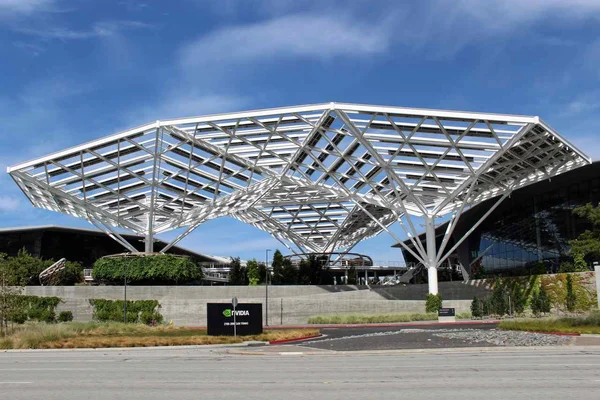
NVIDIA launches RTX Spark laptops worldwide at $2,599 in its first Windows PC silicon push
Six PC makers now sell Windows notebooks built around NVIDIA's first combined CPU and GPU superchip, with prices from $2,599 and up to 128GB of unified memory for local AI work.
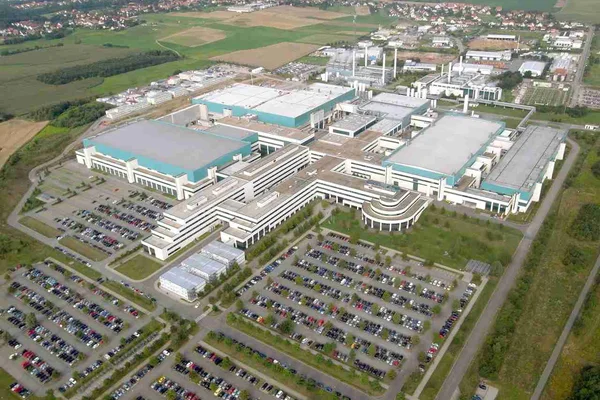
GlobalFoundries to Build Two 300mm Fabs in New York Backed by Japan's $21 Billion
Japan will supply as much as $21 billion for two 300mm plants at GlobalFoundries' Malta campus, with Apple and Renesas named as initial customers and Commerce taking equity.
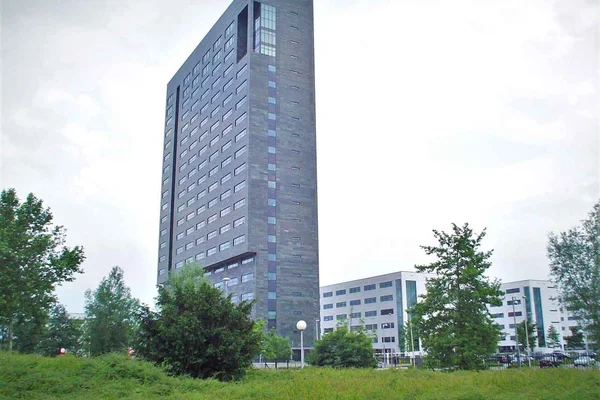
ASML posts record Q3 2026 results and raises outlook as AI demand outruns supply
The Dutch lithography giant beat profit expectations and lifted its 2026 sales guidance, saying customers now want tools for 2029 and 2030 and planned capacity will fall short.
Comments (0)
Log in or sign up to leave a comment.
No comments yet. Be the first to share your thoughts.