NVIDIA has spent more than three decades designing graphics processors and, more recently, the data center systems that train and run large artificial intelligence models. Until this week, however, the company had never shipped the main processor inside a Windows PC. That changed on October 16, 2026, when RTX Spark laptops went on sale worldwide from six hardware partners.
The launch roster covers ASUS, Dell, HP, Lenovo, Microsoft and MSI, with prices starting at $2,599 and climbing to about $7,000 for the most heavily configured machines. That range places the new category directly against Apple's MacBook Pro line and against the top end of the existing Windows notebook market.
Every system is built around one superchip that pairs an NVIDIA Grace CPU, co-designed with MediaTek, and a Blackwell RTX GPU that share a single pool of memory. NVIDIA says the combination delivers up to 128GB of unified memory and up to 1 petaflop of FP4 AI performance, enough to run large language models and personal AI agents on the device instead of in the cloud.
Jensen Huang, founder and CEO of NVIDIA, presented the launch as a platform moment for Windows. "RTX Spark brings the power of NVIDIA AI, RTX graphics and CUDA together with Microsoft Windows in one PC for creating, gaming and running personal AI agents," he said. Yusuf Mehdi, executive vice president at Microsoft, said the company is building Windows "to be the platform for hybrid intelligence, where AI can run locally when it makes sense and reach the cloud when needed."
Key Facts
The NVIDIA newsroom reported on October 16 that RTX Spark laptops are available today from ASUS, Dell, HP, Lenovo, Microsoft and MSI, calling the release a new beginning for Windows PCs. The launch lineup comprises the ASUS ProArt P14 and P16, the Dell XPS 16 Creator Edition, the HP OmniBook Ultra and OmniBook X 14, the Lenovo Yoga Pro 9n, the Microsoft Surface Laptop Ultra, and the MSI Prestige N16 Flip AI+ and Prestige N16.
Two configurations exist. The higher tier pairs a 6,144-core Blackwell RTX GPU with a 20-core Grace CPU and up to 128GB of LPDDR5X memory. A second tier combines a 5,120-core GPU with an 18-core CPU and up to 64GB. Windows Central reported on October 15 that the larger part is built from 10 Cortex-X925 and 10 Cortex-A725 cores boosting to 4.0 or 4.1 GHz, with efficiency cores at 2.8 GHz, 40 or 48 SMs, 4th-gen RT cores and 5th-gen Tensor Cores, LPDDR5X at up to 9,400 Mbps over a 256-bit, 16-channel interface, up to 300 GB/s of peak memory bandwidth, 600 GB/s of bidirectional NVLink-C2C, and TSMC 3nm CPU and GPU dies inside a 45 to 80 watt envelope.
PCWorld reported on October 8 that the Surface Laptop Ultra ranges from $2,600 to $5,900 with a 15-inch 3270x2180 touchscreen, up to 2TB of Gen5 storage, a 92Wh battery and a 4.41 pound chassis, while the ASUS ProArt P16 runs from $2,800 to $7,000 with a 16-inch 3840x2400 OLED touchscreen, up to 128GB of RAM, a 99.9Wh battery and a 3.9 pound body. The ASUS ProArt P14 spans $2,600 to $6,500 at 1.48 kg, and the Dell XPS 16 Creator Edition starts at $3,800 with a 16-inch 3200x2000 OLED panel. Preorders opened October 7, with shipments arriving the following week.
Software support at launch covers local AI agents, creative applications and major games. Unite.AI reported on October 16 that guided setup puts agents including GitHub Copilot, Hermes, OpenClaw, Perplexity, Pi and WorkBuddy in front of users. NVIDIA's Nemotron 3.5 Bolt 74B-A9B 24GB, a 74-billion-parameter model tuned for tool calling and multistep tasks, runs on supported configurations. NVIDIA also lists 8K 4:2:2 video editing, 3D scenes up to 90GB rendered while unplugged, NVIDIA Broadcast 2.3, and beta RTX Video with super resolution up to 4K and frame generation up to 4x.
Day one games include Cyberpunk 2077, Fortnite, Gears of War: E-Day, Marvel Rivals, World of Warcraft and NBA 2K27, with NVIDIA claiming AAA titles at 1440p above 100 frames per second when DLSS 5 and frame generation are enabled. Retail availability spans Amazon, B&H Photo Video, Best Buy and Costco, and launch events with live demonstrations are being held in Taipei, Seoul, Beijing, Istanbul, San Francisco and Berlin.
Analysis
What this really means is that NVIDIA has decided the CPU inside a Windows laptop is now part of its own platform story, not a component it buys from Intel, AMD or Qualcomm. A company that spent years selling accelerators that sat beside somebody else's processor is now selling the processor, the graphics core and the software stack as one package, and it has signed six of the largest PC makers to carry it.
The early reviews suggest a split verdict rather than a clean sweep. Windows Central reported on October 15 that after a week of testing, the GPU is the standout, with 6,144 cores delivering smooth framerates, faster rendering and local AI performance substantially quicker than integrated Snapdragon, Intel and AMD systems, while matching or approaching dedicated RTX 4070, 5060 and 5070 class graphics outside AI workloads. The same review found the CPU comparable to Apple's M4 Pro and Qualcomm's Snapdragon X2 Elite, stronger in multi-threaded work, but trailing the Apple M4 Max and the Snapdragon X2 Elite Extreme. In Cinebench 2026, the 20-core part scored 558 single-core and 6,885 multi-core, and 554 and 6,844 on battery.
That profile fits a deliberate bet. Buyers who want the fastest thin-and-light CPU will still look at Apple, but buyers who want to run quantized models, generate images, edit 8K footage or render large 3D scenes on battery are the audience NVIDIA is courting, and there the unified memory pool of up to 128GB matters more than a few percent of single-core speed. A 600 GB/s NVLink-C2C link and up to 300 GB/s of memory bandwidth are specifications that dedicated mobile GPUs in this power class cannot match, because those parts do not share one address space with the CPU.
Price is the other half of the argument. A starting point of $2,599 and a ceiling near $7,000 puts RTX Spark above most Windows notebooks and at or above a comparable MacBook Pro, and PCWorld noted that the design depends on large amounts of expensive integrated memory. OEMs are therefore selling configuration tiers rather than a single hero machine, which explains why the Surface Laptop Ultra spans $2,600 to $5,900 and the ASUS ProArt P16 spans $2,800 to $7,000. The bigger picture here is that the premium Windows laptop has become a memory and AI throughput sale, and NVIDIA now controls both ends of that specification sheet.
Why It Matters
For Microsoft, the launch advances a shift it describes as hybrid intelligence, in which Windows decides case by case whether a task runs on the local superchip or in the cloud. That promise depends on silicon able to hold a useful model in memory, which is exactly what up to 128GB of unified memory and 1 petaflop of FP4 compute are meant to provide. MediaTek's involvement in the custom CPU design, contributing to power efficiency, performance and connectivity, also signals that the Arm ecosystem around Windows now has a second heavyweight silicon supplier alongside Qualcomm.
For developers and creators, the practical change is that agents tied to GitHub Copilot, Hermes, OpenClaw, Perplexity, Pi and WorkBuddy can be started during guided setup on day one, and a 74-billion-parameter Nemotron model is supported locally. Workflows that previously required a cloud subscription or a desktop workstation, including 8K 4:2:2 editing and 3D scenes up to 90GB on battery, are now pitched as laptop tasks.
For the wider PC industry, the arrival of a sixth major silicon platform resets competitive pressure across the board. Apple, AMD, Intel and Qualcomm all now face a rival that bundles graphics, AI accelerators, memory architecture and a mature CUDA software stack. The fact that ASUS, Dell, HP, Lenovo, MSI and Microsoft itself are all shipping on the same day suggests the OEMs see enough demand at the high end to justify the bet.
Next Up
The immediate test is whether the $2,599 entry point and the roughly $7,000 ceiling hold up in retail through the holiday quarter, and whether the gap between the 5,120-core and 6,144-core tiers is worth the price difference for buyers who mostly run CPU-bound work. Independent benchmarks of sustained performance, thermals and battery life at the 45 to 80 watt envelope will matter more than launch-day demonstrations, and the first wave of reviews has already flagged battery behavior as power-profile dependent.
Longer term, the question is how quickly the software ecosystem follows. Windows on Arm has improved steadily, but RTX Spark is the first platform to make local large-model inference and agent execution a headline feature rather than an accessory. If that story holds, NVIDIA's first PC processor will be remembered less as a laptop chip launch and more as the moment the company inserted itself between Windows and the CPU socket.
Related Articles

GlobalFoundries to Build Two 300mm Fabs in New York Backed by Japan's $21 Billion
Japan will supply as much as $21 billion for two 300mm plants at GlobalFoundries' Malta campus, with Apple and Renesas named as initial customers and Commerce taking equity.
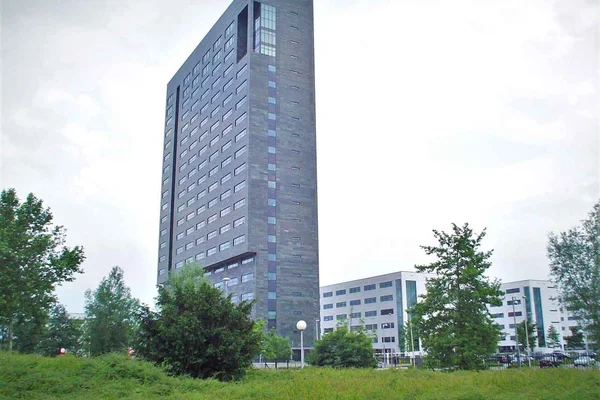
ASML posts record Q3 2026 results and raises outlook as AI demand outruns supply
The Dutch lithography giant beat profit expectations and lifted its 2026 sales guidance, saying customers now want tools for 2029 and 2030 and planned capacity will fall short.
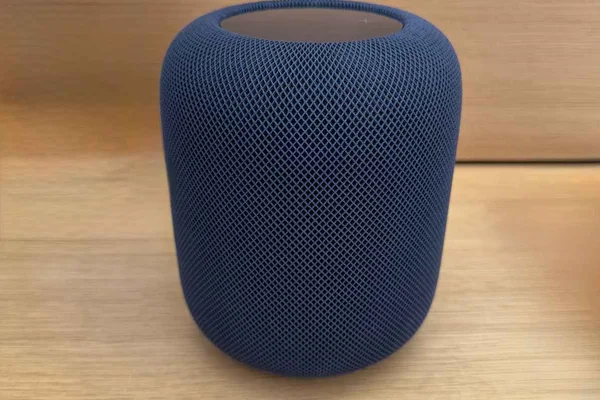
Apple launches HomeView smart home display at $299 with new Apple TV 4K and HomePod mini 2
Apple's October 13 event introduced a 7 inch smart display, a refreshed streaming box with an A19 chip, and a faster HomePod mini, with prices starting at $149.
Comments (0)
Log in or sign up to leave a comment.
No comments yet. Be the first to share your thoughts.