Dark matter particles may exert a hidden force on one another, but its effects are stranger than expected, ScienceDaily reported on August 2. An extra attraction helps the particles cluster, yet it also makes dark matter effectively lighter as the universe expands - weakening its gravitational impact and slowing the growth of cosmic structures.
The Simulation
The team ran a series of large cosmological simulations that included a self-interacting dark matter model. The extra force between particles should have made the universe clumpier, the reasoning went. Instead, the simulation showed the opposite: clumping slowed, because the effective mass of dark matter dropped as the universe expanded.
"The force does help clustering at small scales, but it kills it at large scales. The net effect is the opposite of what we expected," the lead author told ScienceDaily.
Why It Matters
Most dark matter models assume the particles interact only through gravity. Self-interacting dark matter is a small but persistent alternative, motivated by small-scale puzzles that the standard model cannot easily explain. The new simulation suggests that self-interacting models are not obviously ruled out, but they also do not obviously help - the predictions are now more nuanced than before.
What's Next
The team is now running higher-resolution simulations and comparing the predictions against upcoming survey data from the Vera C. Rubin Observatory's LSST camera, which is now generating 20TB of imaging per night. The work was published in the journal Physical Review Letters. Several upcoming galaxy surveys will provide the next set of constraints.
Related Articles
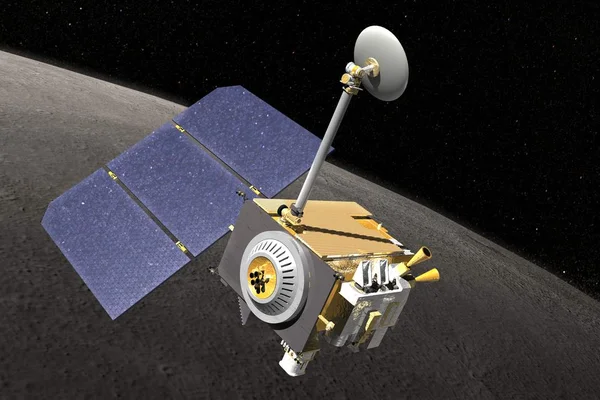
NASA Orbiter Spots McGetchin, the Largest Fresh Impact Crater Ever Found in the Solar System
A routine data-quality check by the Lunar Reconnaissance Orbiter Camera team has revealed a 222 meter crater named McGetchin, the largest fresh impact structure ever identified in the solar system.
CERN's ATLAS Recreates Cosmic Ray Showers With First Proton Oxygen Collisions
ATLAS physicists turned the Large Hadron Collider into a cosmic ray simulator, firing protons at oxygen to test how air showers begin, and found existing models fall short.
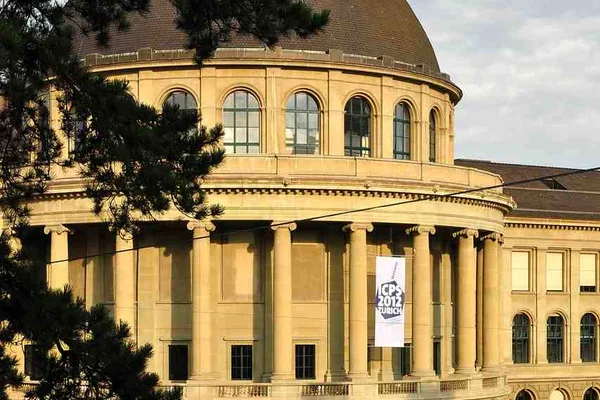
Cold muonium beam sets up first free fall gravity test on second generation antimatter
ETH Zurich and PSI researchers have extracted a cold, tightly focused muonium beam from superfluid helium, a first step toward measuring how second-generation antimatter falls under gravity.
Comments (0)
Log in or sign up to leave a comment.
No comments yet. Be the first to share your thoughts.