NASA's Curiosity rover has discovered an astonishing, extensive field of small polygon-shaped rock patterns — described as honeycomb-like — inside Gale Crater, in an area informally called Valle Grande, ScienceDaily reported on July 31. While similar formations have been seen elsewhere on Mars, this is the first time such a large concentration has been found in a single location. The patterns measure roughly 1.3 to 3 inches across and wrap around a nearby 20-foot-tall butte.
An Unsolved Puzzle
Mission scientists have not yet determined how the formations arose. On Earth, similar patterns can form from drying mud, the expansion and contraction of underground ice, or mineral-rich groundwater — three very different histories with very different implications for ancient Mars. The team is studying the shapes for clues to the region's geological past.
Researchers hope the discovery will shed light on Mars' ancient geological history and past environments, the mission team said, since polygon fields can record episodes of wetting and drying.
Why It Matters
The discovery adds to Curiosity's long-running campaign to reconstruct the ancient environment of Gale Crater, which rover data have shown once held lakes and rivers. Understanding how the polygons formed could reveal whether the patterns record wet-dry cycles — conditions that can concentrate organic molecules and are of keen interest to astrobiologists hunting for habitable conditions in Mars' past.
Related Articles
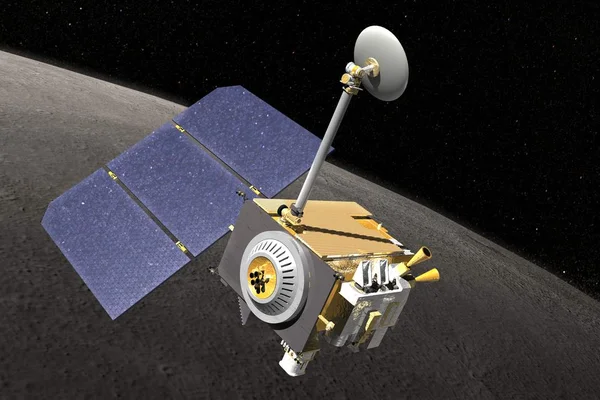
NASA Orbiter Spots McGetchin, the Largest Fresh Impact Crater Ever Found in the Solar System
A routine data-quality check by the Lunar Reconnaissance Orbiter Camera team has revealed a 222 meter crater named McGetchin, the largest fresh impact structure ever identified in the solar system.
CERN's ATLAS Recreates Cosmic Ray Showers With First Proton Oxygen Collisions
ATLAS physicists turned the Large Hadron Collider into a cosmic ray simulator, firing protons at oxygen to test how air showers begin, and found existing models fall short.

Cold muonium beam sets up first free fall gravity test on second generation antimatter
ETH Zurich and PSI researchers have extracted a cold, tightly focused muonium beam from superfluid helium, a first step toward measuring how second-generation antimatter falls under gravity.
Comments (0)
Log in or sign up to leave a comment.
No comments yet. Be the first to share your thoughts.