For most of the history of planetary exploration, the route to Mars has been set by geometry. The two planets line up favorably only once every 26 months, and a mission that misses that alignment has traditionally faced a two-year wait. NASA's twin ESCAPADE spacecraft, short for Escape and Plasma Acceleration and Dynamics Explorers, were built to fly in October 2024. Delays with Blue Origin's New Glenn rocket pushed them past that window, and the mission faced the oldest problem in Mars travel: what to do when the planets will not cooperate.
The answer was a trajectory that no NASA science mission had tried. The two small satellites launched on November 13, 2025, from Cape Canaveral Space Force Station in Florida, then flew into a kidney-bean-shaped loiter orbit around the Earth-Sun Lagrange point 2, roughly a million miles from Earth on the side facing away from the Sun. There they circled for nearly a year while Earth and Mars closed the gap, waiting for a moment when a short engine burn and a close pass by their home planet could do the work a conventional launch window normally provides.
That plan, designed by Advanced Space, worked. On the morning of November 7, 2026, the first twin, nicknamed Blue, dropped to about 1,000 miles (1,600 kilometers) above Earth's surface and fired its main engine for roughly nine minutes. Two days later, on November 9, the second spacecraft, Gold, repeated the performance at about 650 miles (1,050 kilometers). Both passes combined Earth's gravity with a sustained burn, a maneuver known as a powered flyby, or Oberth maneuver, in which a spacecraft fires at its point of highest speed to extract the most energy from its propellant.
ESCAPADE is now on a 10-month cruise to Mars, with orbit insertion burns planned for September 7 and September 9, 2027. The mission is managed by the Space Sciences Laboratory at the University of California, Berkeley, with Rocket Lab building the spacecraft, Advanced Space designing the trajectory and Blue Origin providing the launch. Principal investigator Rob Lillis, a planetary and space physicist at Berkeley, has argued for years that two small satellites flying in formation could answer questions a single orbiter cannot.
Key Facts
NASA reported on November 9, 2026, that both ESCAPADE spacecraft had completed powered Earth flybys and were on target for Mars. The first made closest approach at about 5 a.m. EST on Saturday, November 7, at roughly 1,000 miles (1,600 kilometers); the second followed at about 6 a.m. EST on Monday, November 9, at about 650 miles (1,050 kilometers). Each performed an approximately nine-minute trans-Mars injection burn, the firing that commits it to the interplanetary path.
"This is the first time NASA has used a powered Earth flyby to propel a spacecraft toward Mars, and we've now executed this maneuver twice, flawlessly, in just two days," said Asal Naseri, acting associate flight director for the Heliophysics Division at NASA Headquarters in Washington. The distinction matters: this was not a gravity assist, in which a planet's motion bends a trajectory for free, but a gravity assist amplified by an engine burn timed to the closest and fastest part of the pass.
SpaceNews reported on November 10, 2026, that Gold came within about 1,050 kilometers of Earth a little more than 48 hours after Blue's pass at about 1,600 kilometers, and that both Rocket Lab-built spacecraft used the Oberth effect to maximize maneuver performance. The publication noted that this was the first time a NASA spacecraft had used a powered flyby to reach Mars, and that the pair loitered around Lagrange point 2 for nearly a year after launching on the second flight of New Glenn.
Speaking at a November 9 meeting of the Mars Exploration Program Analysis Group, Lillis compared the burns to the maneuver that matters most at the destination. "These burns were critical in the same way a Mars orbit insertion burn is," he said. "I'm happy to report that they went well. They were executed perfectly."
ESCAPADE is the last surviving mission of NASA's SIMPLEx planetary science program, which selected it in 2019 alongside Janus, canceled in 2023, and Lunar Trailblazer, which malfunctioned after its February 2025 launch and was formally ended five months later.
Analysis
What this really means is that the launch window, long treated as an unbreakable law of interplanetary travel, is becoming an engineering variable. Space.com reported on November 10, 2026, that NASA's Mars missions traditionally leave Earth during a brief alignment window that occurs only every 26 months. ESCAPADE instead spent about a year in a holding pattern near Lagrange point 2, then used a close Earth pass to buy the energy it needed. Jeff Parker of Advanced Space, the mission's lead mission designer, said the method allows launch almost anytime instead of waiting every two years for planetary alignment.
The trade is not free. A powered flyby demands precise navigation, a robust engine and a spacecraft that can survive a long dwell in a harsh environment before its real mission begins. The burn has to happen at the right altitude, moment and attitude, with no margin for a second attempt. SpaceNews reported on November 10, 2026, that the trajectory was developed by Advanced Space to open up Mars launch opportunities outside traditional windows. The reward is schedule flexibility, and schedule flexibility is money: a mission that can launch outside the biennial window can ride whatever rocket is available and absorb delays without losing its destination.
The bigger picture here is that ESCAPADE is as much a test of mission architecture as of plasma physics. Two spacecraft, each about the size of two refrigerators and carrying three scientific instruments and a couple of cameras, were built by Rocket Lab, launched by Blue Origin, steered by Advanced Space and operated by a university laboratory. NASA's Heliophysics Division supplies programmatic backing, but the technical work is spread across commercial and academic partners. If the model holds at Mars, it lowers the barrier for small missions that could never justify a flagship budget.
There is also an unplanned scientific dividend. Space.com reported on November 10, 2026, that the extended tour let the twins study Earth's magnetotail far beyond the roughly 800,000 miles (1.27 million kilometers) reached by earlier missions. Over about 10 days at approximately 1.19 million miles (1.91 million kilometers) from Earth, they captured the structure of the distant tail, how it flaps, how it moves and how plasma flows within it. Lillis called the data "unprecedented" and noted that it was the first time two spacecraft had done this simultaneously. A second opportunity came when the Moon passed through the structure, letting ESCAPADE observe alongside the twin ARTEMIS-THEMIS spacecraft from four perspectives at once.
Why It Matters
The destination science is about loss. Mars once had a thick atmosphere that may have supported liquid water and possibly life, and where that atmosphere went is central to why the planet is now cold and dry. ESCAPADE will measure the Martian upper atmosphere and magnetosphere at altitudes between 100 and 6,200 miles (160 and 10,000 kilometers), examining a hybrid magnetosphere assembled from leftover fields of an ancient core and a weaker field in the upper atmosphere. The twins will watch how a solar wind moving at roughly a million miles per hour drives atmospheric escape.
Michele Cash, ESCAPADE program scientist at NASA Headquarters, said the findings could help plan future human exploration of Mars. The link is practical as well as scientific: the solar wind and radiation environment that stripped the planet's atmosphere is the one that future crews and their equipment would face. Two spacecraft measuring conditions at two places at once, separated by up to 30 minutes along the same orbit, let researchers distinguish spatial structure from temporal change, which a single orbiter cannot do.
For NASA's heliophysics community, the mission is also a demonstration that its instruments and its people can operate at Mars. If ESCAPADE succeeds, that boundary between solar wind physics and planetary atmospheric loss looks like a permanent program rather than a one-off.
Next Up
The immediate work is quiet. After a few minor course corrections, the twins will coast for about 10 months before arriving two days apart in September 2027, when each performs an 11-minute main-engine burn to enter Mars orbit. They will first settle into capture orbits lasting about 60 hours, then lower into science orbits. By late 2027, when solar conjunction interrupts communications, one spacecraft should circle Mars every 8.5 hours and the other every 9.5 hours.
After conjunction, both make final maneuvers so that by mid-2028 they are in nearly matching science orbits. Science then splits into two campaigns: Campaign A flies the pair in nearly identical orbits like a string of pearls, with a follow distance within 30 minutes, for six months, while Campaign B separates them to sample different regions of the Martian magnetic environment at once. For a mission born of a missed launch window, that is a remarkably full itinerary.
Related Articles
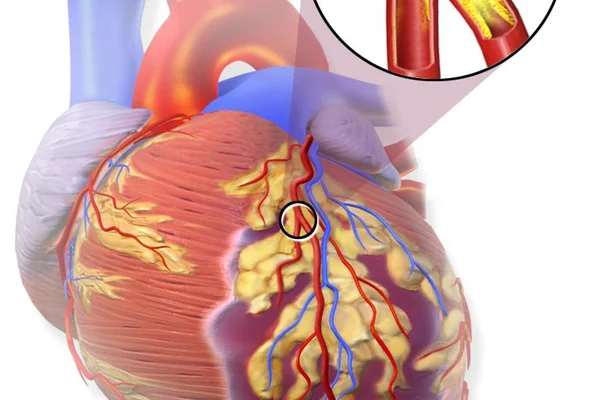
Cambridge mRNA Therapy Coaxes Adult Heart Cells to Divide and Restores Pumping in Mice
A transient, localized dose of modified mRNA encoding Myc and Cyclin T1 preserved cardiac output in mice after myocardial infarction, with benefit still measurable at 12 weeks.
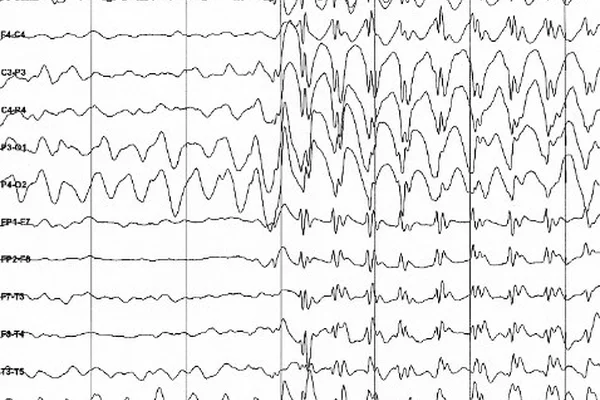
Chemogenetic gene therapy cuts monthly seizures by 92.6 percent in three epilepsy patients
Researchers in Beijing infused a gene therapy vector into the hippocampus driving three adults' seizures and then activated it with low-dose clozapine, reporting a 92.6 percent mean drop in monthly seizures.
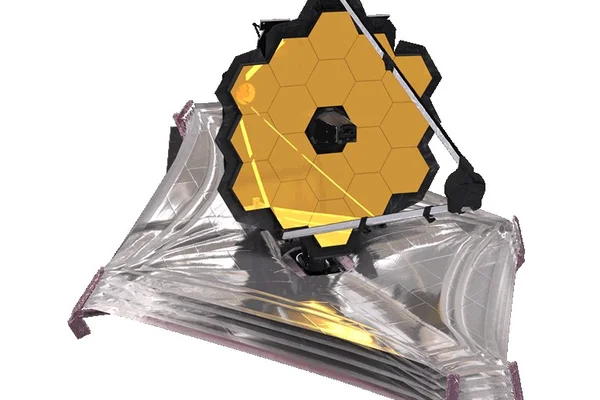
Digital Twin Of JWST Strips Starlight And Reveals Hidden Exoplanet 51 Eridani b
A physics based digital twin of the James Webb Space Telescope models instrument instabilities in coronagraphic data and uncovers a giant planet at 4.3 micrometres that standard starlight subtraction missed.
Comments (0)
Log in or sign up to leave a comment.
No comments yet. Be the first to share your thoughts.