China's space agency has confirmed an August launch for a new quantum internet satellite, the next step in a program that began with the Micius/Mozi spacecraft in 2016. The same week, the Micius team was awarded an international quantum-research prize, reinforcing the program's standing outside China.
What the New Satellite Does
The August payload is described as a quantum internet demonstrator capable of entanglement distribution across multiple ground stations and key generation at rates far higher than the 2016 baseline. It also carries a quantum-sensor package for time-transfer and clock-comparison experiments.
"Micius proved the concept. The new satellite is the first step toward a constellation that treats quantum keys as a service," said a quantum-network researcher familiar with the program.
The Prize and the Politics
The international award, given by a European quantum consortium, recognized the Micius team's role in demonstrating intercontinental quantum-secured communication in 2017. The award comes at a politically sensitive moment, with the U.S. and EU having just signed the AISS AI framework that excluded Chinese AI vendors.
Why It Matters for the Global Race
Quantum-secured communications have moved from research curiosity to national infrastructure priority. The U.S., EU, UK, Japan, and India all have active programs, but China's vertical integration - satellite, ground station, and quantum random-number generation in one supply chain - remains the most complete.
If the August launch succeeds and the demonstrator scales to a small constellation by 2028, China will own the first commercial-grade quantum-key-distribution network. That is a strategic asset that no amount of sanctions can replicate quickly.
Related Articles
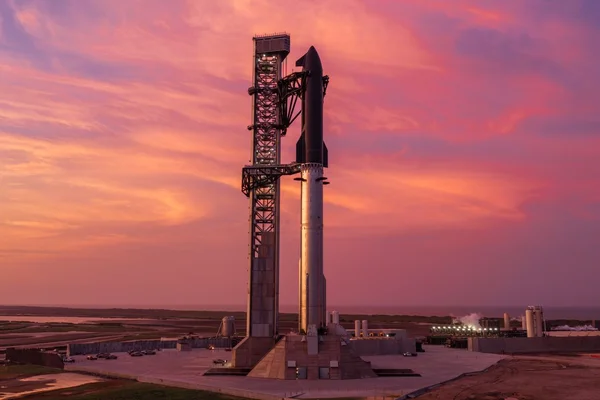
SpaceX Starship Flight 14 Eyes First Orbit With 20 Starlink V3 Satellites
Federal air traffic planners have reserved a two hour window on September 18, 2026 for a Starship mission that would fly about 20 Starlink V3 satellites and, per SpaceX's finance chief, bring in revenue.
Rocket Lab protests NASA's $700 million Mars orbiter award to Blue Origin
Rocket Lab filed a GAO protest on September 11, 2026, challenging NASA's $700 million Mars Telecommunications Network award to Blue Origin over eligibility and review concerns.
ESA Awards The Exploration Company 760 Million Euro Contract for Nyx Cargo Capsule to ISS
The European Space Agency has selected The Exploration Company to fly a reusable Nyx cargo capsule to the International Space Station under a contract worth up to 760 million euros.
Comments (0)
Log in or sign up to leave a comment.
No comments yet. Be the first to share your thoughts.