Data center racks have become the unit of competition in the artificial intelligence buildout, and on October 12, 2026, at the OCP Global Summit in San Jose, California, AMD added a new one to its lineup. The company introduced the AMD Helion agentic AI rack, an open blueprint for agentic AI infrastructure that is based on an Open Compute Project spec-design and powered by AMD compute. AMD Newsroom reported on October 12 that the design builds on the open-platform approach of the AMD Helios rack-scale solution that the company revealed at the same event a year earlier.
Agentic AI, the class of software in which autonomous agents plan, call tools, write code and orchestrate long workflows, has become the framing AMD uses for the CPU-heavy half of the AI market. Dan McNamara, senior vice president and general manager of Compute and Enterprise AI at AMD, said that agentic AI is not a single workload and that it spans personal agents, enterprise applications, code execution and complex workflows, each with different compute requirements.
Helion arrives as a standardized 21-inch rack reference design. Tom's Hardware reported on October 12 that the design is built to the Open Compute Project's ORv4 and DC-MHS standards, supports 44 OpenU trays, and can house up to 128 EPYC 9996 Venice processors in a CPU-only configuration, totaling 32,768 Zen 6 cores per rack. Air-cooled and liquid-cooled versions are both supported. AMD will not sell the racks itself; OEMs and ODMs will bring Helion-based systems to market.
Yahoo Finance reported on October 12 that the rack was unveiled at the OCP Global Summit in San Jose and positions AMD against Nvidia, which offers its own rack server reference designs, including the NVL72 servers. Helion agentic rack configurations are currently under development with ecosystem partners and are planned to be available in November 2026, with support quotes from Cisco, Dell Technologies, HPE and Hon Hai Technology Group.
Key Facts
AMD Helion supports two example configurations. The first is a CPU-only rack powered by 6th Gen AMD EPYC processors that can support up to 32,768 CPU cores, designed for hyperscale customers that want dedicated capacity for agent execution and a connection to separate model inference infrastructure. The second is an all-in-one rack that combines AMD EPYC CPU nodes, AMD Instinct MI350P GPU nodes and general-purpose compute on one platform, aimed at enterprise agentic AI.
The CPU-only ceiling is reached through the dense 256-core design available with the EPYC Venice 9996. Tom's Hardware reported on October 12 that 128 of those processors deliver 32,768 Zen 6 cores inside a single rack. The 21-inch width is a break from the 19-inch form factor that has dominated enterprise data centers for decades, and the design follows OCP's ORv4 and DC-MHS specifications.
AMD plans to contribute the AMD Helion specification to the Open Compute Project, a step that would let other vendors build compatible systems from the same blueprint. The company said Helion agentic rack configurations are under development with ecosystem partners. Ecosystem support quotes were provided by Cisco Compute, Dell Technologies, Hon Hai Technology Group and HPE, with statements attributed to Jeremy Foster of Cisco and Arun Narayanan of Dell Technologies.
Helion complements rather than replaces Helios, the rack-scale solution AMD introduced at the OCP Global Summit a year earlier. Reporting notes that Helios AI training customers may also deploy Helion racks for CPU-heavy agentic workloads, which positions the two racks as companions in the same data center rather than rivals.
The reference design is the second rack-scale blueprint AMD has brought to the Open Compute Project event in two years, following Helios. Yahoo Finance reported on October 12 that the Helion rack is meant to be outfitted with different mixes of CPUs and GPUs depending on customer needs, and that it serves as a set of instructions for AMD partners and clients to build the platforms.
Analysis
The bigger picture here is that AMD is trying to define the rack, not just the chip inside it. Rack-scale reference designs have become the primary way AI hardware vendors shape what customers buy, because they fix the power, cooling and networking assumptions that partners design around. Yahoo Finance reported on October 12 that AMD is positioning Helion against Nvidia's NVL72 rack reference designs, and the comparison is deliberate: the two companies are now competing over the shape of the data center as much as over silicon.
What this really means is that the CPU-only rack is a bet on a different mix of AI spending. Agentic workloads spend a large share of their time on orchestration, tool calls and code execution, which run on CPUs, rather than on the matrix math that GPUs accelerate. A hyperscale customer that wants dedicated capacity for agent execution can fill a Helion rack with 128 EPYC 9996 Venice processors at 256 cores each and keep model inference on separate infrastructure.
The financial context makes the timing legible. Yahoo Finance reported on October 12 that AMD's most recent earnings beat analyst estimates on both the top and bottom lines, with earnings per share up 245 percent and revenue up 50 percent to $11.5 billion, plus a better-than-expected current-quarter outlook. Nvidia brought in $96.2 billion in the prior quarter, and AMD stock is up roughly 182 percent year to date against Nvidia's 25 percent over the same period.
AMD is also lowering the barrier to adoption by not selling racks itself. OEMs and ODMs bring Helion-based systems to market, and the air cooling option means customers in older facilities are not immediately shut out. Offering a standardized 21-inch design alongside a contribution to the Open Compute Project suggests AMD wants Helion to be a multi-vendor standard rather than a single-source product.
Why It Matters
Agentic AI is the part of the stack where CPU count still shapes what users experience. Personal agents, enterprise applications, code execution and complex workflows each carry different compute requirements, as McNamara noted, and the rack design is AMD's answer to the fact that no single node type covers all of them. A rack that can be configured as CPU-only for hyperscalers or as a mixed CPU, MI350P GPU and general-purpose platform for enterprises addresses both ends with one blueprint.
Power and cooling are the binding constraints in every new data center, and AMD frames Helion as a way to make efficient use of available power. Supporting both air and liquid cooling lets the same reference design land in facilities with different readiness levels. That matters for the November 2026 availability target, because customers that cannot yet support liquid cooling still have a path to deploy.
The competitive stakes are visible in the market. Nvidia's NVL72 designs set a template that AMD is now answering, and AMD stock performance this year shows how much investors expect from the company's AI execution. If Helion becomes an OCP standard with multiple OEMs building it, AMD gains a distribution channel that does not depend on winning every individual server bid.
Next Up
Helion agentic rack configurations are currently under development, with availability planned for November 2026, and Tom's Hardware reported on October 12 that partners are to be named by AMD chief executive Lisa Su at the OCP Global Summit. AMD also plans to contribute the specification to the Open Compute Project, which would open the design to the wider ecosystem.
The next signals to watch are the named OEM and ODM partners, the first customer deployments of the CPU-only configuration, and whether Helios training customers add Helion racks alongside their GPU systems. AMD's framing suggests the company expects both racks to coexist in the same data centers rather than compete for the same slot.
Related Articles
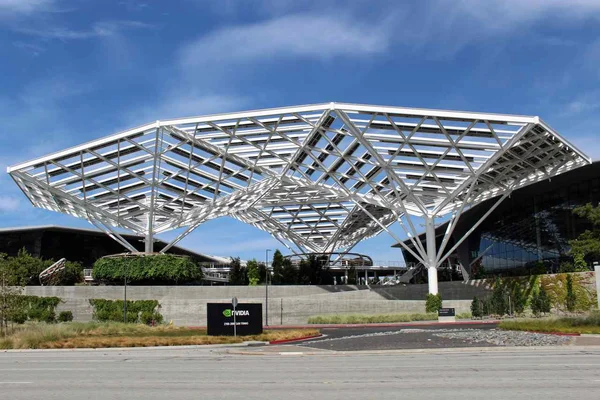
Nvidia reportedly ends RTX 5090 output as GB202 silicon goes to RTX Pro cards
Reports from multiple hardware outlets say Nvidia has stopped sending GB202 chips to its GeForce RTX 5090, a move that would leave the RTX 5080 as the fastest consumer card.
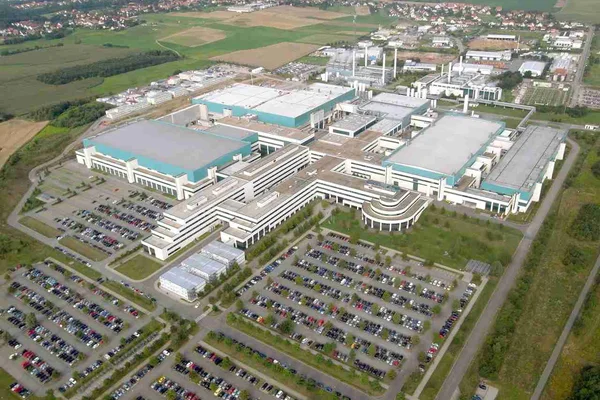
GlobalFoundries signs $2 billion five-year deal with TSMC for first US silicon interposer supply
GlobalFoundries will build silicon interposers for TSMC at its Malta, New York fab under a five-year, $2 billion agreement, with volume production expected in the first half of 2028.
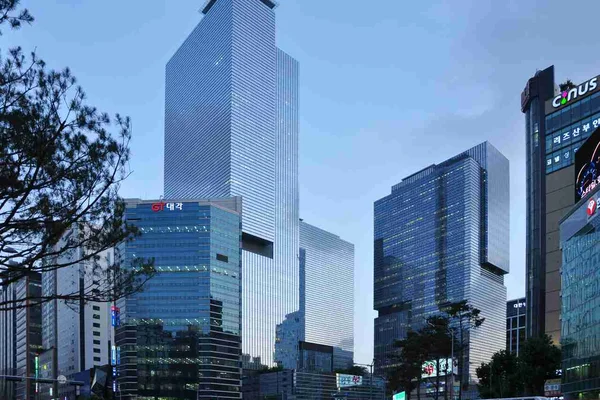
Samsung posts record $80.2 billion quarterly profit as AI memory boom lifts chipmakers
Samsung's preliminary third quarter figures point to a 782.5 percent profit jump and a 55 percent operating margin, with TSMC also booking record revenue on the same AI demand.
Comments (0)
Log in or sign up to leave a comment.
No comments yet. Be the first to share your thoughts.