Memory prices have become the defining cost problem for the personal computer industry in 2026, and the squeeze has now reached the notebook market in a way that buyers can see on a price tag. DDR5 SO-DIMM modules, the small sticks of laptop memory that every modern gaming notebook depends on, have climbed to roughly six times their mid 2025 prices, a jump that manufacturers can no longer absorb quietly. The surge follows the same pattern already visible in desktop memory, where prices rose about 500 percent over a 12 month period, and it has been driven by the enormous appetite of artificial intelligence data centers for high bandwidth memory and conventional DRAM capacity.
German PC maker Schenker Technologies and its gaming brand XMG sit at the sharp end of that problem. The company builds enthusiast laptops under the XMG name and professional machines under the Schenker label, and it sells directly to customers through its bestware store. In its r/XMG_gg community on Reddit, the company told buyers that purchasing costs had risen again and that it would pass a portion of those costs on, a decision that produced increases of EUR 100 to EUR 150 on most models and a much larger EUR 300 adjustment on one flagship workstation class notebook.
The new prices took effect on September 18, 2026, according to the company, and they apply to a wide slice of the XMG catalog. Not every machine was touched: the XMG EVO line, the SCHENKER CONNECT, the ELEMENT models and the SCHENKER WORK range were left alone in this round. But the increases landed on the models that enthusiasts watch most closely, from the mainstream CORE and FUSION families to the high end APEX machines and the NEO 16.
What makes the episode notable beyond one company's price list is the breadth of the cost pressure XMG described. This is no longer a story about memory alone. The company pointed to circuit boards, electronic components, processors, graphics cards and video memory all moving in the same direction, with freight and insurance costs adding another layer on top.
Key Facts
Tom's Hardware reported on September 25, 2026 that the maker of XMG gaming laptops and Schenker workstations said prices for DDR5 SO-DIMMs have increased sixfold since July 2025, and that the company believes RAM will be in short supply through 2027 and beyond. The same report noted that the DDR5 SO-DIMM jump tracks closely with desktop RAM, which experienced a similar 500 percent climb over the past 12 months.
TechPowerUp reported on September 23, 2026 that most affected XMG models went up EUR 100 to EUR 150, with the new prices taking effect on September 18 through the bestware store. The model list is specific: the XMG APEX 16, CORE 15, CORE 16, FUSION 16, NEO 16 and several PRO models rose by EUR 100, while the APEX 16 MAX, APEX 17, FOCUS 17 and FUSION 15 rose by EUR 150. The SCHENKER KEY 18 Pro saw the largest single adjustment at EUR 300.
The cost of upgrading also changed. According to TechPowerUp, the RTX 5090 Laptop GPU upgrade is now EUR 120 more expensive across the NEO 16 and the SCHENKER KEY 18 Pro. XMG EVO, SCHENKER CONNECT, ELEMENT and SCHENKER WORK models were not affected in this round, and the company said some CPU, GPU and memory configurations may face longer lead times or temporary stock shortages.
TechRadar reported on September 23, 2026 that XMG highlighted data drawn from Geizhals, the German retail price tracker, showing that DDR5 RAM for laptops is close to six times the price it was before the memory shortage began in mid 2025. XMG told its community that the reason for the rises is another increase in purchasing costs, and that it is no longer just about RAM and SSDs because PCBs, electronic components, CPUs, graphics cards and video memory are also contributing to the higher cost level.
GoKawiil reported on September 25, 2026 that XMG says its margins remain fixed, meaning the increases reflect supplier cost pressures rather than profit taking, and that the company has pledged to lower prices again if input costs fall. The same summary noted that executives differ on the outlook, with Micron's chief executive expecting shortages into 2027 while Asus's chief executive expects prices to ease later that year. Acer chief executive Jason Chen expects PC prices to rise another 5 percent to 20 percent in the fourth quarter of 2026, with average selling prices peaking around mid 2027.
Analysis
The most striking element of the XMG announcement is not the size of any single increase but the list of components behind it. RAM and SSDs started this cycle, yet the company now names PCBs, electronic components, Intel and AMD laptop CPUs, graphics cards and GDDR7 video memory as cost drivers too. When a single vendor can point to that many inputs moving at once, the problem stops looking like a memory market quirk and starts looking like a broad repricing of the parts that go into a modern gaming laptop. What this really means is that the era of aggressive year on year laptop value gains is pausing, at least for the segment that depends on discrete graphics and fast memory.
The freight and insurance angle adds a second layer that is easy to overlook. XMG cited the conflict in the Middle East, where higher oil and fuel prices have pushed up air freight costs, while sea cargo traveling from Asia to Europe through the Red Sea and the Suez Canal now carries higher insurance premiums. Those are not memory costs at all, yet they land on the same invoice. A gaming laptop is a globally assembled object, and when shipping lanes become more expensive and more risky, the final retail price absorbs the difference.
The bigger picture here is that the memory shortage has moved from a data center story into a consumer story. AI infrastructure buildouts have consumed enormous volumes of DRAM and high bandwidth memory, and the capacity that would normally serve notebooks and desktops has become scarce and expensive. Laptop makers that buy DDR5 SO-DIMMs on the open market have little leverage when supply is this tight, which explains why XMG frames its increases as cost recovery rather than strategy. The pledge to cut prices again if component costs fall is a sensible promise, but it also quietly admits that the company expects this phase to be temporary, even as it warns that RAM will be short through 2027.
The disagreement among executives is the clearest signal of genuine uncertainty. Micron's chief executive expects shortages to run into 2027, and XMG echoes that timeline. Asus's chief executive expects prices to ease later in 2027, and Acer's chief executive Jason Chen expects PC prices to rise another 5 percent to 20 percent in the fourth quarter of 2026 before average selling prices peak around mid 2027. Those forecasts differ enough to matter for anyone deciding whether to buy now or wait, and they suggest that no one in the supply chain has a confident read on when the cycle turns.
Why It Matters
For buyers, the practical effect is that the cost of a gaming laptop is no longer falling in the way it did for most of the past decade. A EUR 100 to EUR 150 increase on a mainstream XMG model is meaningful, and a EUR 300 increase on the SCHENKER KEY 18 Pro is substantial, but the more important detail may be the EUR 120 premium now attached to an RTX 5090 Laptop GPU upgrade. That is the configuration enthusiasts actually chase, and it is the one where memory, video memory and GPU silicon costs collide at once.
The ripple effects extend beyond XMG. If DDR5 SO-DIMM pricing stays near six times its mid 2025 level, every notebook vendor that buys the same modules faces the same arithmetic, whether or not it has announced anything yet. TechRadar noted that the RTX 5070 has already seen a 30 percent price rise versus two months earlier in the United States, and that the worsening memory crisis could squeeze Nvidia's VRAM supply further, citing Micron's end of life 2GB GDDR7 modules. A component shortage that constrains graphics memory would hit the entire gaming laptop category, not just one German brand.
The longer term question is what happens to product planning. Manufacturers facing unpredictable memory and GPU costs have to decide whether to raise prices, reduce memory configurations, cut margins, or delay launches. XMG has chosen a transparent route by publishing its reasoning and naming the affected models, which gives competitors and customers a reference point. But transparency does not change the underlying scarcity, and XMG's warning about longer lead times suggests that price may not be the only thing in short supply.
Next Up
The next milestone to watch is the fourth quarter of 2026, when Acer chief executive Jason Chen expects PC prices to rise another 5 percent to 20 percent. If that forecast holds, the XMG increases will look less like an outlier and more like the first visible step in a broader consumer price reset. Buyers and analysts will also be watching German retail data from Geizhals, the same source XMG used to make its case, for any sign that DDR5 SO-DIMM prices have stopped climbing.
Further out, the gap between the Micron timeline and the Asus timeline will resolve itself in 2027. XMG has promised to lower prices again if component costs fall, so its future price list is effectively a public bet on which forecast proves correct. Until then, the company's message to its community is straightforward: the increases reflect supplier costs, the margins are fixed, and the memory shortage is expected to last into 2027 and perhaps beyond.
Related Articles
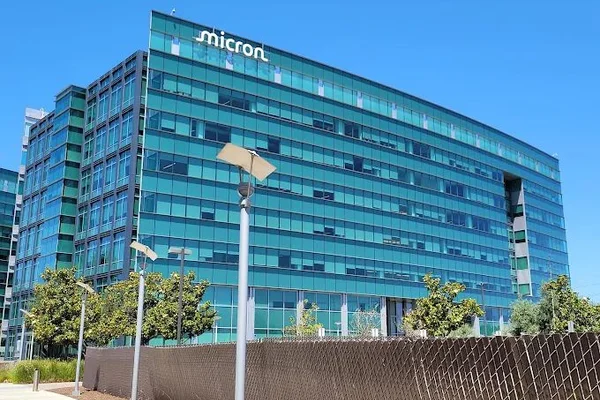
Micron Discontinues 2GB GDDR7 Chips, Only 3GB Modules Remain for RTX 50 GPUs
Micron has marked its 2GB GDDR7 memory chips as end of life, leaving only 3GB modules and raising questions about supply for Nvidia's GeForce RTX 50 series GPUs.
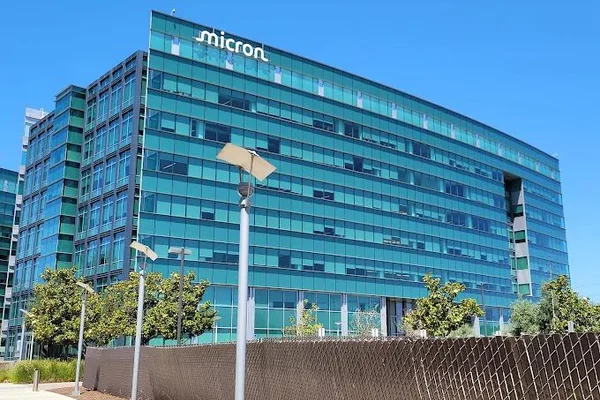
Micron Ends 2GB GDDR7 Production Leaving Nvidia RTX 50 Series With Two Memory Suppliers
Micron has designated both of its 2GB GDDR7 parts as End of Life, trimming Nvidia's RTX 50 memory supply base to Samsung and SK hynix while its 3GB modules remain in production.

Qualcomm unveils Snapdragon 8 Elite Gen 6 and Extreme Gen 6, first 2nm 5GHz mobile chips
Qualcomm's two new flagship platforms use a 2nm TSMC process and a 5GHz Oryon CPU to run on-device AI agents, with the Extreme tier adding 8K60 video and 18MB of GPU memory.
Comments (0)
Log in or sign up to leave a comment.
No comments yet. Be the first to share your thoughts.