South Korea's two largest memory chipmakers are now chasing the same scarce machines. Samsung Electronics and SK hynix are each preparing orders for extreme ultraviolet lithography equipment worth roughly 10 trillion to 20 trillion won, according to industry sources, as the Dutch supplier ASML has told investors that its planned output for 2027 and 2028 will not be enough to satisfy customer demand.
EUV lithography is the step that draws circuit patterns with light at a wavelength of 13.5 nanometers. Because that light is so short, a single exposure can replace several rounds of multi-patterning, which cuts cost, cycle time and defect risk. For advanced DRAM and for the high bandwidth memory stacks that feed artificial intelligence accelerators, the number of EUV layers is now one of the clearest measures of how modern a fab really is.
ASML is the only company that builds these tools at volume, which turns an ordinary purchasing decision into a scheduling problem. The company reported record third-quarter 2026 total net sales of 11.7 billion euros, a gross margin of 57.5% and net income of 5.0 billion euros. Memory makers accounted for 46% of its system sales in the quarter, so their capital plans carry unusual weight inside the supplier's own order book.
What has changed this autumn is the question executives are asking. Instead of how much equipment can we afford, the question has become when can we take delivery. Lead times for critical tools have stretched to as much as twice the previous maximum, and every quarter of delay at a memory fab translates into output that cannot be sold into a tight AI market. That is the backdrop for the order race now unfolding in South Korea.
Key Facts
Chosun Biz reported on November 8 that Samsung Electronics and SK hynix are placing competitive orders for EUV tools, each in the 10 trillion to 20 trillion won range, citing industry sources. Both companies are scheduled to receive equipment from ASML in stages starting next year. The report said additional orders are planned depending on how expansion plans develop, which raises the likelihood of higher capital expenditure at both firms.
The race already has a firm anchor. SK hynix disclosed on March 24 a purchase of EUV equipment worth about 11.95 trillion won, roughly 7.97 billion dollars, with delivery due by December 31, 2027. Reuters reported on March 24 that this was the largest single order publicly disclosed by an ASML customer. Bernstein analyst David Dao estimated the contract represents 30 new EUV machines over two years, slightly more than the 26 he had previously forecast, while NH Investment and Securities analyst Ryu Young-ho said the tools would serve both the Yongin plant and the M15X fab in Cheongju for HBM and advanced DRAM.
ASML said on October 14 that supply as currently planned for both 2027 and 2028 will not fully meet customer demand. EUV shipments this year are running at around 65 units, up nearly 50% from 44 units last year, and the company has already committed to a 30% capacity increase in 2027 while investigating a further 30% for 2028. Chief executive Christophe Fouquet was blunt on the call, saying that 30% in 2027 and 30% in 2028 will not allow ASML to meet demand, and that some customers are expressing interest in placing orders for 2029 and even 2030.
Samsung's order flow tracks its Pyeongtaek build out. In November last year the company announced a 450 trillion won five-year domestic investment plan that includes Pyeongtaek Campus Line 5, known as P5, targeting operations in 2028, with more than 60 trillion won required per fab. Phase-one cleanroom work at P5 is expected to finish in the first half of next year, after which tool move-in begins, and Samsung has already ordered lithography equipment for that line.
Demand intensity is rising at the same time. TrendForce said SK hynix plans to apply EUV to more than five layers in 1c DRAM, its sixth-generation 10nm-class process, two more layers than the previous generation. Samsung intends to deploy high-NA EUV in volume DRAM production by 2028, adding it layer by layer as process steps qualify. Each added layer consumes tool time, which is why order size and layer count are now discussed in the same breath.
Analysis
What this really means is that the constraint on advanced memory supply has moved from capital to calendar. Samsung and SK hynix can both sign checks in the trillions of won, but neither can manufacture a scanner, and ASML's own numbers show why the queue is tightening: 65 EUV units this year against 44 last year is strong growth, yet it is still a small number next to the fab plans being announced by memory customers who expect their own supply to lag demand until at least 2028.
The order figures should therefore be read as options on time rather than as simple capacity additions. SK hynix's 11.95 trillion won contract runs through December 2027, and the Korean report points to delivery dates extending beyond 2027 for the new wave of orders. Chosun Biz reported on November 8 that both companies are considering moving up order timing because lead times have doubled, a detail that matters more than the headline won figures. A company that orders earlier pays earlier, but it also guarantees a slot before a rival does.
There is a bullish reading and a cautious one. The bullish case, echoed by Morgan Stanley analyst Lee Simpson with an Overweight rating and a 1,700 euro price target on ASML, is that confirmed Korean orders would be the cleanest rebuttal to fears of softening demand. The cautious case is that memory capital spending has always been cyclical, and orders placed in a shortage are the ones most likely to be trimmed if the cycle turns. The ad-hoc-news analysis, published on November 8, noted that the Korean pipeline is a demand tailwind arriving just as ASML's supply constraints take center stage, and it stressed that the actual tool count remains undisclosed.
The bigger picture here is geographic and strategic. China accounted for 23% of ASML's system sales in the third quarter of 2026, up from 14% in the prior quarter, and Chinese memory makers have reportedly stockpiled equipment ahead of possible export restrictions. Korea's share of ASML's memory business now carries policy weight as well as commercial weight, because the delivery slots that Samsung and SK hynix lock up are slots that other regions do not get.
Why It Matters
The immediate consequence is that the AI hardware supply chain has a new bottleneck to watch. HBM output depends on DRAM wafer capacity, DRAM wafer capacity depends on EUV layer counts, and EUV layer counts depend on machines that arrive on a fixed schedule set in Veldhoven. If ASML cannot lift 2028 capacity beyond the 30% already under review, then memory pricing in 2028 will be decided less by demand forecasts and more by which fabs received tools in 2026 and 2027.
For Samsung the stakes are existential in a different way. P5 is the company's bid to regain cost leadership in DRAM, and more than 60 trillion won per fab only pays back if the line is equipped on time. A slip in lithography deliveries would push the 2028 operations target and weaken the return on a 450 trillion won national investment plan that has already been announced publicly.
For SK hynix the calculation is narrower but just as sharp. Its March commitment of 11.95 trillion won was the largest single order ever disclosed by an ASML customer, and it was justified by HBM demand tied to AI accelerators. If EUV layers in 1c DRAM rise to more than five, two more than the prior generation, then every additional layer is both a cost and a moat, because competitors without slots cannot match the layer count at scale.
Next Up
The next hard checkpoint is technical. A tool qualification at imec involving larger photomasks is scheduled for the fourth quarter of 2026, a step that matters for high-NA EUV readiness and therefore for Samsung's 2028 volume plan. On the corporate calendar, Samsung's P5 phase-one cleanroom is due to finish in the first half of next year, with tool move-in following, and ASML has guided fourth-quarter 2026 net sales of 14.2 billion to 15.2 billion euros at around 57% gross margin, with full-year sales of 44 billion to 45 billion euros.
What is not yet settled is disclosure. Confirmed additional Korean orders would be the cleanest signal that the 10 trillion to 20 trillion won range is real rather than indicative, but no announcement date has been set. Until then, watch three things: whether ASML formally raises its 2028 capacity plan above 30%, whether Samsung confirms a second lithography order for P5, and whether SK hynix converts its 2027 delivery deadline into an earlier one. Each would tell the market how tight the slot race has actually become.
Related Articles
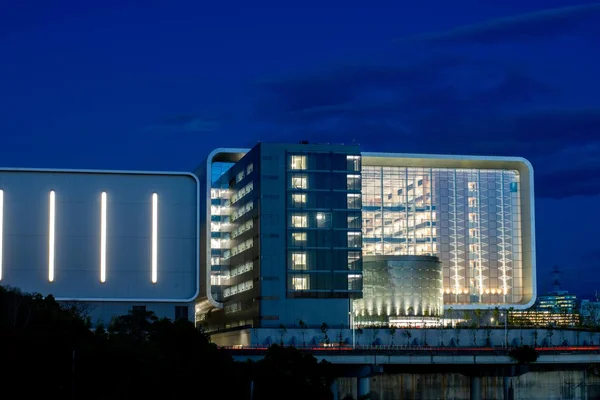
TSMC Weighs 3D DRAM for Nvidia, Then Insists It Will Stay a Logic Foundry
A report that TSMC began planning 3D DRAM for Nvidia collided with its insistence that it remains a pure-play logic foundry, exposing the tension between AI memory demand and foundry neutrality.
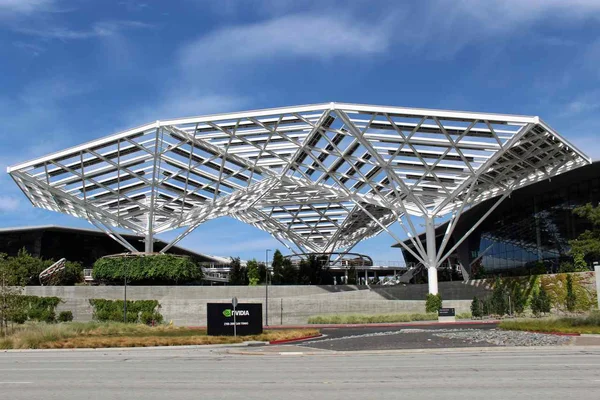
Nvidia Says Vera CPU Beats x86 Rivals With 1.6x More AI Agents per Watt
Nvidia's Arm-based Vera processor is being pitched as a single answer to both agent speed and power efficiency, backed by partner tests that remain vendor-supplied rather than independently audited.
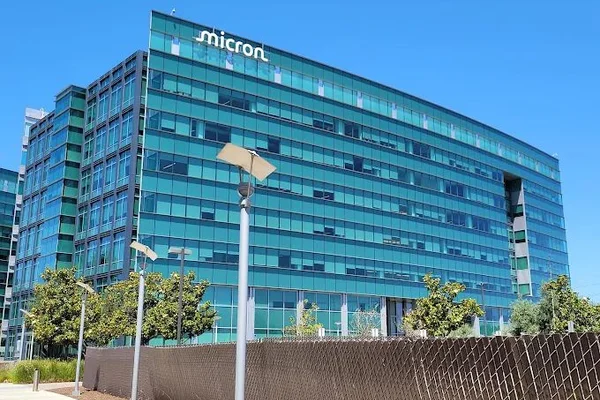
Micron Halts $4.5 Billion Taiwan Memory Plant as Union Pay Talks Stall
Construction at Micron's Fab 11E site in Taoyuan has all but stopped after the chipmaker and its local union failed to agree on profit-sharing, with talks set to resume on November 6.
Comments (0)
Log in or sign up to leave a comment.
No comments yet. Be the first to share your thoughts.