Unitree priced its Shanghai initial public offering at 150.8 yuan per share on August 18, raising 6.1 billion yuan (approximately $854 million) and valuing the company at roughly 61 billion yuan ($8.6 billion) at the IPO price — making it the first mainland humanoid robot maker to list on a Chinese exchange. Trading opens August 19, the same day the World Robot Conference opens in Beijing with more than 300 companies, 2,000 exhibits, and 150 product launches. The World Humanoid Robot Games follow from August 22 to 26 at the National Speed Skating Oval, and for the first time will include factory, hotel, and household scenarios rather than only sprints and dance routines.
The IPO Numbers
Unitree's IPO was more than 8,000 times oversubscribed by retail investors, Reuters reported on August 18, and the company plans to use the proceeds to scale manufacturing of its quadruped and humanoid lines and to expand overseas. Unitree generated 13.3 percent of its 2025 revenue from U.S. customers — a number now under direct threat after the Federal Communications Commission added advanced foreign-produced robots, including humanoids and quadrupeds, to its list of equipment posing national security concerns. Still, the August 19 listing locks in a valuation benchmark for the Chinese humanoid sector at a moment when global robotics capital is suddenly paying close attention.
What's Actually New at the Conference
For the first time, the World Robot Conference is being held in the same week as a commercial-reality reckoning. Reuters reported on August 18 that analysts at Guotai Securities estimate an industrial humanoid would need to cost about 160,000 yuan including maintenance to pay for itself within two years, compared with a worker earning 80,000 yuan annually. In reality, current systems run 300,000 to 500,000 yuan, per a Berlin-based think tank cited by Reuters, and Georg Stieler — a robotics analyst advising industrial companies in China — estimates 50 to 70 percent of humanoids produced in 2026 will end up in 「data factories」 generating training data rather than performing productive work for paying customers.
The August 22–26 Games: First Real-World Tests
The World Humanoid Robot Games run from August 22 to 26 at the National Speed Skating Oval — the same 「Ice Ribbon」 venue used for the 2022 Winter Olympics. The schedule reviewed by Reuters includes packing and warehousing, industrial assembly and material feeding, retail and office services, EV charging, and dexterous tasks such as connecting cables and using tools. Unlike a sprint or dance routine, these tasks test whether robots can identify unfamiliar objects, manipulate them repeatedly, recover from mistakes, and complete jobs without engineers stepping in. Organizers have built some events around continuous operation in complex environments, which is closer to a deployment scenario than any public humanoid competition to date.
Why It Matters Beyond Unitree
Unitree's listing is the structural event. Lumos Robotics, a Mitsubishi Electric-backed startup exhibiting at WRC, has built its MOS robot for industrial inspection and material handling rather than household or entertainment applications — an explicit hedge against the data-factory risk. LG and NVIDIA, in parallel, signed an agreement on August 13 to jointly develop a bipedal humanoid for Q1 2027 using NVIDIA's Jetson Thor module, Isaac GR00T foundation model, and Halos safety system. The combined signal is that 2026 is the year the humanoid category shifted from 「what can the robot do」 to 「what can the robot do reliably enough for someone to pay for it」 — and Unitree's August 19 listing sets the public price for that question.
Related Articles
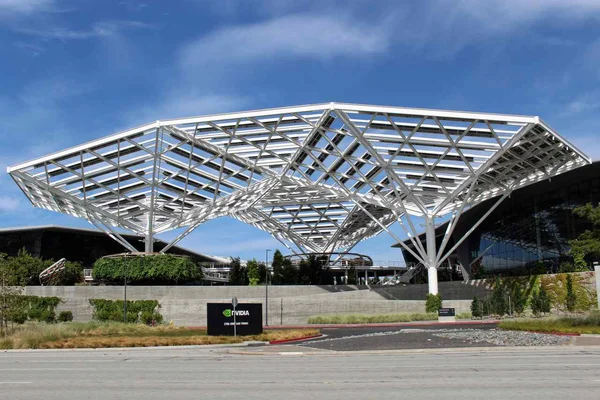
FieldAI signs term sheet for $700M raise at $10B valuation for robot brain
The Irvine-based robotics software startup has signed a term sheet for a $700 million round that would value it at $10 billion, up from $2 billion in 2025, as investors bet on a universal robot brain.
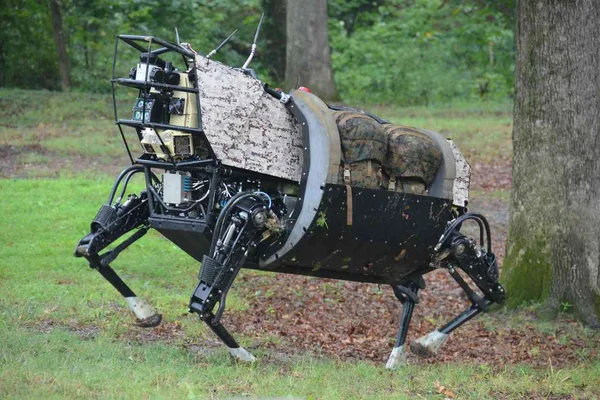
Boston Dynamics Drops Pinky on New Atlas Hand Built for Mass Production
The Hyundai robotics unit has replaced a seven degree of freedom hand with a four finger design that targets 100,000 units a year and skips the pinky entirely.
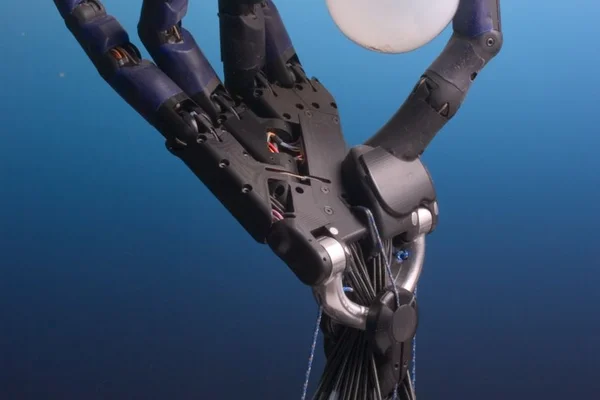
Agility Robotics and FORT Robotics Sign MOU to Extend Digit 5 Safety Beyond the Robot
The October 1, 2026 memorandum of understanding makes FORT Robotics the off-robot safety layer for Agility's next-generation humanoid, pairing an existing component supply relationship with joint compliance work.
Comments (0)
Log in or sign up to leave a comment.
No comments yet. Be the first to share your thoughts.