The U.S. Senate has passed the Frontier Model Safety and Accountability Act, a bipartisan bill that would require third-party safety testing for the largest AI models before deployment. The 67-31 vote sends the bill to the House, where leadership has signaled it will move quickly. If signed into law, the bill would create the most significant federal AI oversight regime to date.
What the Bill Does
The legislation applies to any AI model trained using more than 10^26 floating-point operations — a threshold that captures frontier-scale systems from OpenAI, Google, Anthropic, Meta, and a small number of Chinese labs. Covered models must undergo pre-deployment evaluation by an accredited third-party auditor, with results filed to a new AI Safety Board inside the Department of Commerce.
"This bill does not stop innovation. It ensures that the most powerful systems in the world are tested before they reach the public," said Senator Maria Cantwell, the bill's lead Democratic sponsor.
Key Provisions
- Compute threshold: 10^26 FLOP triggers covered-model status
- Pre-deployment testing: Third-party, accredited auditors
- Incident reporting: Mandatory disclosure of serious safety events within 72 hours
- Enforcement: Civil penalties up to $50M per violation
Industry Response
Major AI labs have largely supported the bill's framework, in part because it creates a clear federal standard that preempts the patchwork of state laws now proliferating. OpenAI, Anthropic, and Google have published joint statements endorsing the testing requirements. Smaller open-source developers have raised concerns about the cost of third-party audits, and the bill includes a partial fee waiver for academic and small-team projects.
What's Next
The House Energy and Commerce Committee is expected to mark up a companion bill within weeks. Industry lobbyists are pushing amendments to narrow the compute threshold and extend the implementation timeline. If the House passes a compatible version, the bill could reach the President's desk before the end of the year.
The legislation also creates a template for allied nations. The UK, Japan, Canada, and Australia have signaled interest in aligning their own frontier-model rules with the U.S. framework. A coordinated Western approach to AI safety is finally within reach.
Related Articles

EU Cyber Resilience Act Reporting Rules Go Live With 24 Hour Flaw Disclosure Deadline
Manufacturers selling connected products in the EU must now alert ENISA and a national CSIRT within 24 hours of learning that a vulnerability is being actively exploited.

South Korea PIPA Amendment Takes Effect With 10 Percent Global Revenue Fine Ceiling
The revised law caps aggravated penalties at 10 percent of worldwide revenue, outranks GDPR limits, and writes the first national rules for training AI models on personal data.
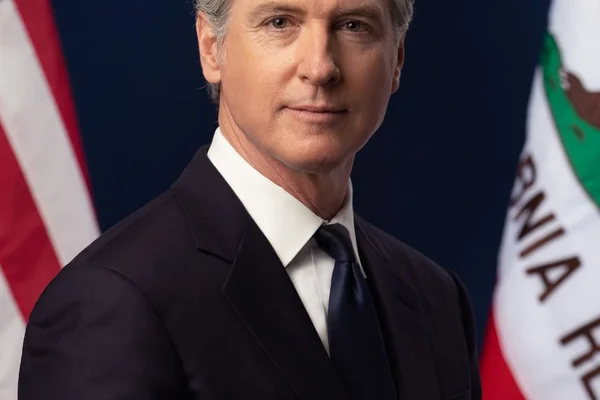
Newsom signs SB 813 and AB 1405 as California becomes first state to require AI audits
California will build a public registry of AI auditors by 2029 and let independent verification organizations assess models under two bills endorsed by OpenAI and Anthropic.
Comments (0)
Log in or sign up to leave a comment.
No comments yet. Be the first to share your thoughts.