The United Nations Environment Programme acknowledged on September 2, 2026 that the world will exceed the Paris Agreement's 1.5 degree Celsius warming target, marking the first time a UN body has formally conceded that the goal at the center of global climate policy is effectively out of reach. In its report Limiting Overshoot, released in Nairobi on Sep 2, UNEP said global warming has already reached about 1.4 degrees Celsius above pre-industrial levels and is rising at roughly 0.25 degrees per decade, which puts the world on track to cross 1.5 degrees within a few years under every realistic scenario. Reuters reported on Sep 2, in coverage by David Stanway, that the report shifts the framing of climate policy from preventing the breach to managing it, a shift the agency calls "overshoot, peak and decline."
The report's central message is that the breach is no longer a question of if but of how high and for how long. Even in the most optimistic scenario, in which every national climate plan and net-zero pledge is fully delivered, the report finds that global temperatures would peak near 1.8 degrees Celsius before gradually declining. Under current policies, the median projection is about 2.6 degrees Celsius of warming by 2100, and the report warns that every additional fraction of a degree intensifies the risks of extreme weather, ecosystem collapse, ice-sheet destabilization and sea-level rise that would threaten coastal cities and low-lying island nations. UNEP executive director Inger Andersen said in the report's release that "there are no good outcomes if we remain above 1.5 degrees Celsius," calling on governments to make any overshoot as small and as short as possible.
Key Facts
The report's arithmetic is stark. Warming is currently about 1.4 degrees Celsius above the 1850 to 1900 baseline, according to the UNEP press release on Sep 2, and the remaining carbon budget for holding temperatures to 1.5 degrees is being consumed so quickly that the threshold is expected to be crossed within a few years. The best-case peak of roughly 1.8 degrees Celsius assumes full delivery of current pledges, which the report itself notes is far from assured given the gap between promises and the policies actually in place. The Associated Press, in coverage published on Sep 3, emphasized the report's conclusion that cutting emissions to net zero is only the midpoint of the task: because warming already baked into the system does not reverse on its own, countries must then sustain net-negative emissions, removing more carbon dioxide from the atmosphere than they emit, to bring temperatures back down.
The report also recalibrates the role of carbon dioxide removal. It is explicit that removal cannot substitute for deep emissions cuts, but it is equally explicit that removal is mandatory in every pathway that returns the world below 1.5 degrees Celsius. The Guardian's coverage on Sep 2 and Sep 3 noted that the report's emphasis on removal comes as engineered carbon capture remains tiny relative to the need, and that the gap between what removal technologies currently do and what the report's pathways require is one of the widest in climate policy. The report calls for urgent cuts to both carbon dioxide and methane, and it says the countries with the greatest historical responsibility must act fastest, a formulation that puts the largest emitters, the United States, China and the European Union, at the center of the response.
The human dimension of the overshoot is spelled out in the report's risk assessment. UN Secretary-General Antonio Guterres said in response to the findings that "this summer's scorching heat, raging wildfires and deadly floods are a warning of what lies ahead," and he called for making the overshoot "as small and short as possible," according to the UNEP release. The report warns that warming above 1.5 degrees increases the likelihood of crossing irreversible tipping points, including the destabilization of the West Antarctic and Greenland ice sheets, the degradation of the Amazon rainforest, and the disruption of the Atlantic Meridional Overturning Circulation, the ocean current system that regulates climate across the North Atlantic. For vulnerable nations, including the island states that have made 1.5 degrees a matter of survival, the report's admission is a diplomatic watershed that will reshape the negotiations at the next UN climate summit.
Analysis
What this really means is that the climate policy establishment has finally reconciled itself to a future it spent a decade refusing to contemplate, and the consequences for global governance will be profound. The 1.5 degree target was never just a scientific threshold, it was the political glue that held the Paris Agreement together, the number that gave vulnerable nations a reason to trust the process and that gave campaigners a concrete demand. By declaring the target effectively unreachable, UNEP is not just updating a projection, it is removing the central organizing principle of international climate diplomacy and replacing it with a more complicated and politically harder message: the world will overshoot, the question is by how much, and the countries that caused the problem must now also pay to clean it up. That message does not mobilize action the way "keep 1.5 alive" did, and every government that used the target to justify delayed action will now have an excuse to delay further.
The bigger picture here is that the report's real argument is about the period after net zero, and that is where the political difficulty lies. Saying the world must reach net-negative emissions is another way of saying that some countries must remove more carbon than they emit for decades, and the report does not flinch from the implication: the burden falls on the largest historical emitters, who are also the countries least willing to accept it. The report's call for removal at a scale far beyond current capacity sets up the central climate fight of the next decade, which will be over who pays for the hundreds of billions of tonnes of carbon dioxide removal that the overshoot pathways require. That fight will pit the developed world against developing countries that argue they should not pay to clean up emissions they did not create, and it will pit the fossil fuel industry against everyone else over who bears the cost of the transition.
There is a strategic reading of the report that is more hopeful than the headline suggests. By moving the goal from preventing 1.5 degrees to minimizing and shortening the overshoot, UNEP is giving governments a target that is actually achievable, a peak near 1.8 degrees followed by a decline, and achievable targets are more likely to be acted on than impossible ones. The report's insistence that every fraction of a degree matters is a way of keeping pressure on even after the headline threshold is crossed, and its emphasis on methane, which is short-lived in the atmosphere, offers a concrete lever that can slow warming within a decade. The danger is that governments hear only the admission of failure and use it to abandon ambition altogether, which is exactly the outcome the report is trying to prevent.
Why It Matters
For every country that signed the Paris Agreement, the report changes the terms of the climate conversation, because national climate plans will now be judged not against the 1.5 degree goal but against the more complex task of limiting the overshoot, a shift that will reshape how targets are set and how progress is measured. For the insurance industry, agriculture, coastal real estate and every sector exposed to extreme weather, the admission that temperatures will exceed 1.5 degrees validates the risk models that have been pricing in a hotter future, and it will accelerate the repricing of climate risk across the global economy. For carbon removal companies and their investors, the report is an endorsement of their central thesis, that removal will be needed at enormous scale, and it will likely channel more capital into direct air capture and related technologies. For climate-vulnerable nations, the report is both a confirmation of their worst fears and a new political weapon, since it puts the major emitters on record acknowledging that the harm they warned about is now unavoidable.
Next Up
In the coming weeks, watch for the reaction at the UN General Assembly, where the report's findings will dominate the climate discussions and where vulnerable nations will press for concrete commitments on loss and damage and on removal financing. Watch also for the major emitters' responses, particularly whether the United States, China and the European Union adjust their 2035 targets in light of the report's conclusion that current pledges still allow a peak near 1.8 degrees. The most important near-term signal will be whether the report's admission of overshoot translates into faster action on methane and on carbon removal funding, or whether it becomes, as its authors fear, a license for further delay.
Related Articles
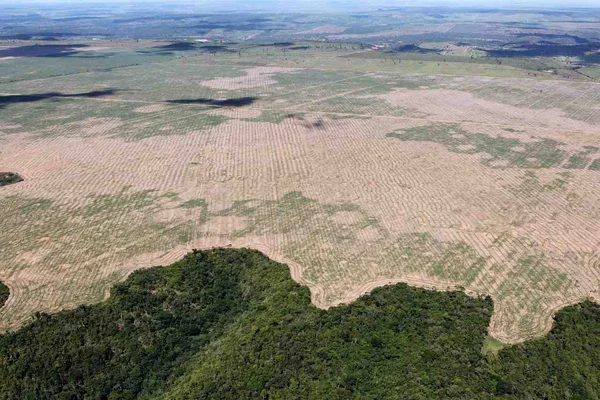
Brazil Amazon deforestation hits record low of 3,335 km2 days before pivotal runoff vote
Brazil's space agency INPE says Amazon clearance fell to 3,335 square kilometers in the year to July, the smallest tally since 1988, with a presidential runoff set to decide whether the policy survives.

IPCC suspends 65th plenary session in Addis Ababa without a deal on AR7 timeline or budget
A deadlock of nearly three years over the Seventh Assessment Report schedule deepened when talks in Ethiopia ran out of time, with a 30 country coalition warning the science may miss the 2028 stocktake.

2026 State of the Climate Report Finds 7 of 16 Vital Signs at Record Extremes
Seven of sixteen tracked planetary indicators hit record extremes in 2026, and scientists say the pace of warming has roughly doubled since 2010 to about 0.36C per decade.
Comments (0)
Log in or sign up to leave a comment.
No comments yet. Be the first to share your thoughts.