The Intergovernmental Panel on Climate Change suspended its 65th Plenary Session in Addis Ababa on the night of 16 October 2026 without agreement on when its next major scientific reports will be published or how the panel will fund them. IPCC Chair Jim Skea took the decision after the meeting overran its planned duration of 12 to 16 October, at a point when many delegations from least developed countries and small island states had already had to leave the Ethiopian capital.
The session had been convened to settle the schedule for the three working group contributions to the Seventh Assessment Report, known as AR7. Working Group I covers the physical science basis of climate change, Working Group II examines impacts, adaptation and vulnerability, and Working Group III deals with mitigation. Alongside that timeline, the IPCC budget remained open and under discussion when the session was suspended, leaving the panel's two most consequential procedural questions unresolved.
The IPCC was established by the United Nations Environment Programme and the World Meteorological Organization in 1988 and is open to all UN and WMO member countries, and it now counts 195 member governments. Its seventh assessment cycle formally began in July 2023 with elections held in Nairobi, and the Panel agreed in Istanbul in January 2024 to produce the three working group reports. The Synthesis Report of AR7 is to be produced after those reports and released by late 2029.
The suspension is the latest turn in an impasse that has now lasted nearly three years, and it lands with awkward timing. Governments are due to assess progress toward the goals of the 2015 Paris Agreement at UN climate talks in November 2028, in the second Global Stocktake, the process the AR7 reports are meant to inform. The IPCC has said the three AR7 reports remain its central products for governments preparing for that review.
Key Facts
Reuters reported on October 16 that the meeting of the IPCC's members was suspended without agreement on a timeline to publish its next review of the latest climate science. The agency reported that the impasse could leave countries to decide the next phase of climate action without consensus on critical issues, including the extent to which some global warming might be reversible, and it described agreeing publication dates as the main agenda of the week in Addis Ababa. The agency put the panel's membership at 195 member states.
AFP reported on October 16 that France's senior envoy said a few countries had blocked the 2028 date that many European countries wanted for the panel's next assessment. Benoit Faraco said in a post on LinkedIn that a broad coalition of developed and developing countries from all five continents, united in their support for science and the timeline proposed by scientists, managed to withstand pressure from a few countries seeking to slow down the adoption of the reports. He said the deadlock was not new and risked costing valuable time in the response to climate change.
Positions have hardened along a familiar line. AFP reported on October 16 that Saudi Arabia, India and China argue that postponing the seventh assessment report until 2029 will give developing countries more time to absorb its findings, while Reuters reported on October 16 that India, Kenya, Saudi Arabia, Russia and China are pressing for more time to prepare the reports so that scientists from less resourced countries can make meaningful contributions. The IPCC said on October 16 that the timelines for the three working group contributions and the budget remain open and under discussion.
Marshall Islands climate envoy Tina Stege said her delegation had come to work but found every proposal dismissed, on inclusivity, on the relevance of the science for national planning and on the necessity of evidence to inform the next Global Stocktake. She called that a shameful play for time when there is no time to waste. AFP reported on October 16 that she described the outcome as a travesty and said a handful of countries continue to delay the reports.
The arithmetic of the standoff is stark. A 30 country coalition, including European, Latin American and small island states, wants the 2028 timeline. Ministers from more than 30 nations signed a letter last week criticising those whose entrenched interests are at odds with reducing greenhouse gases, according to AFP, and European and other industrialised nations made up roughly half of the 35 signatories, with the chair of the Least Developed Countries group, representing the world's 44 poorest nations, also signing. IPCC reports are normally released every five to seven years, and the sixth assessment report came out in 2021. Skea had opened the meeting by imploring nations to end the stalemate, and AFP reported that he warned of the organisational and reputational significance of the decision.
Analysis
The IPCC's own framing of the suspension, that the Chair's decision safeguards and upholds the inclusivity of plenaries where major decisions are made by consensus, is accurate as far as it goes. What this really means is that the body governments depend on to define the physical boundaries of climate policy could not agree on when to publish its own findings, and that the cost of that failure will be paid first by the countries with the least capacity to absorb it.
The coalition map explains why the deadlock has proved so durable. This is not a simple split between rich and poor. On one side sits a coalition of 30 countries, including European, Latin American and small island states, that wants the reports finished in time for the 2028 Global Stocktake. On the other sits a group that includes Saudi Arabia, India, China, Kenya and Russia, which argues that extra time would let scientists from less resourced countries contribute meaningfully to a report approved by consensus. Both arguments carry weight, and that is precisely what makes a compromise so hard to assemble.
Skea's warning when the Addis Ababa meeting opened, in which he implored nations to end the stalemate and pointed to the organisational and reputational significance of the decision, now reads as a forecast rather than a caution. Faraco's conclusion that the deadlock is not new and risks costing valuable time points in the same direction. The bigger picture here is that the IPCC's consensus model, which gives every one of its 195 member governments a veto over the final product, has become the mechanism through which a handful of governments can set the calendar for the global scientific assessment that everyone else uses.
Why It Matters
IPCC reviews are written by hundreds of international experts, approved by every member state, used by governments to plan climate responses and cited in international court rulings. Their publication date is therefore not an administrative detail. If the three AR7 working group reports slip past the UN climate talks due in November 2028, governments will assess their progress toward the Paris Agreement goals against the previous cycle, whose sixth assessment report came out in 2021.
The unresolved scientific question at the centre of the fight is equally consequential. Reuters reported that the issues left without consensus include the extent to which some global warming might be reversible, a question that shapes how governments weigh adaptation spending against emissions cuts. Delaying the reports does not delay the warming they describe, and the countries that pushed hardest for the 2028 publication date are, in many cases, the small island states and least developed countries facing the sharpest physical risks.
The 30 country coalition and the ministers who signed the letter last week have framed the delay as a question of evidence for the next Global Stocktake, and the chair of the Least Developed Countries group, representing 44 nations, joined them in signing. That alignment matters because countries with the smallest emissions are asking for the fastest science, while countries including China, India, Russia, Saudi Arabia and Kenya are asking for more time before the reports are finalised.
Next Up
The IPCC said the 65th Plenary Session and the Panel's deliberations on the pending agenda will resume at the earliest opportunity, but it gave no date, which leaves the AR7 timeline and the budget suspended along with the session itself. The Synthesis Report of AR7 is still to be produced after the working group reports and released by late 2029.
The calendar pressure is already fixed. Governments meet for the second Global Stocktake at UN climate talks in November 2028, and the IPCC has said the three AR7 reports remain its central products for governments preparing for that review. Until the Panel reconvenes and the consensus is rebuilt, no working group report has a confirmed publication date.
Related Articles

2026 State of the Climate Report Finds 7 of 16 Vital Signs at Record Extremes
Seven of sixteen tracked planetary indicators hit record extremes in 2026, and scientists say the pace of warming has roughly doubled since 2010 to about 0.36C per decade.
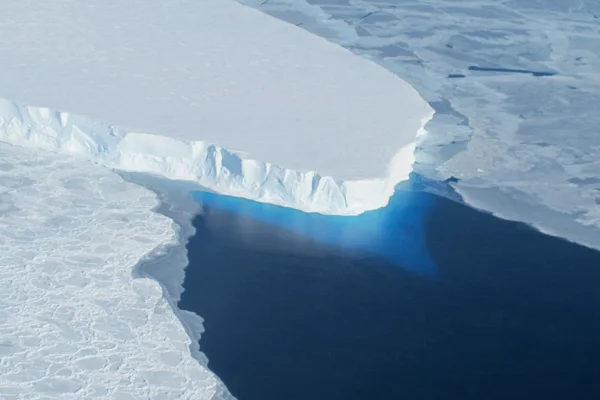
Thwaites Glacier sea level projection doubles to 30 mm by 2100 in new ice sheet model
A UC Irvine and NASA JPL ice sheet model that lets seawater intrude beneath grounded ice roughly doubles Thwaites Glacier's projected 2100 sea level contribution.
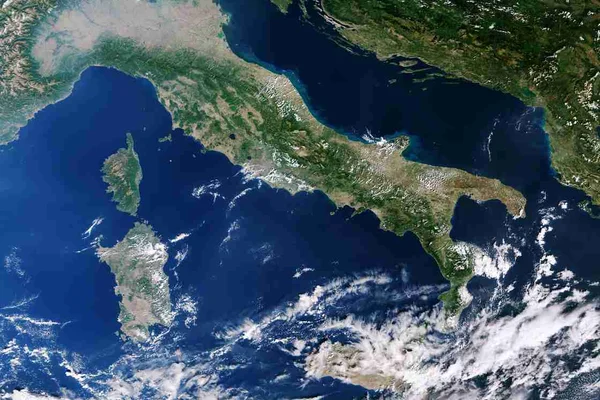
Copernicus says September 2026 was second warmest on record as El Niño strengthens
Global average surface air temperature reached 16.27°C in September 2026, 1.63°C above pre-industrial levels, marking the second straight month above the 1.5°C threshold.
Comments (0)
Log in or sign up to leave a comment.
No comments yet. Be the first to share your thoughts.