SpaceX's Starship has successfully landed on Mars, becoming the largest spacecraft ever to touch down on another planet and the first fully reusable vehicle designed from the outset for interplanetary travel. The uncrewed mission, launched from Starbase in Texas, completed a 225-million-mile journey and landed softly in the Arcadia Planitia region, a flat plain selected for its underground ice deposits.
A Historic Landing
The landing sequence unfolded over several tense minutes as Starship fired its Raptor engines to slow from hypersonic speeds, deployed aerodynamic flaps for steering, and finally flipped vertical for a powered descent. High-definition video transmitted back to Earth showed the vehicle settling onto the Martian surface with all four landing legs deployed.
"This is the first step toward making life multiplanetary. Mars is now a real destination, not just a goal," said Elon Musk at a post-landing press conference, acknowledging that the mission had exceeded even SpaceX's optimistic expectations.
Mission Objectives
The primary goals of the landing mission include:
- Surface validation: Confirm that Starship can survive the Martian environment
- Resource assessment: Demonstrate ice detection equipment near the landing site
- Communication relay: Test high-bandwidth laser links back to Earth
- Payload deployment: Release instruments to monitor weather and radiation
The Road Ahead
SpaceX has laid out an ambitious timetable. A propellant production demonstration mission is planned for 2028, followed by the first cargo missions carrying habitat modules, rovers, and life support equipment. The company aims to send the first human crew to Mars in 2031, with a permanent outpost established by 2035.
The Global Reaction
The landing has galvanized the global space community. NASA, which has relied on SpaceX for ISS crew transport, is now evaluating how Starship could accelerate its own Moon and Mars plans. China and India both announced renewed interplanetary efforts within days of the landing. And public interest in space exploration has surged to levels not seen since the Apollo era.
Landing on Mars is only the beginning. Building a sustainable human presence on another world remains one of the greatest engineering challenges in history — but for the first time, it feels achievable.
Related Articles
NASA Ends Swift Observatory Science Mission as Atmospheric Drag Forces Reentry
NASA has ended science operations for the Neil Gehrels Swift Observatory after nearly 22 years, and the spacecraft is expected to reenter Earth's atmosphere within weeks.
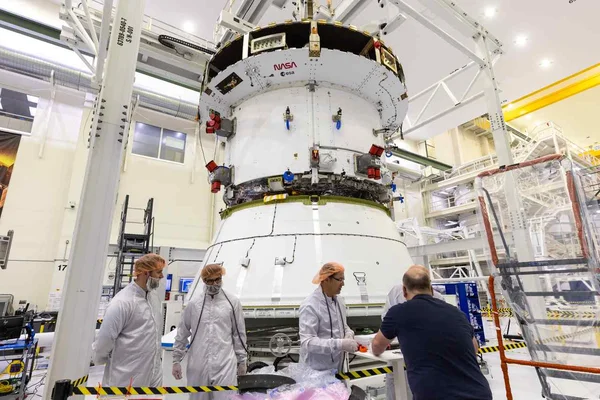
NASA holds Artemis III to summer 2027 as safety panel questions Artemis IV lander plan
NASA's October 23 update keeps four astronauts on a summer 2027 low Earth orbit rehearsal, while its safety advisers want the Artemis IV landing plan reconsidered over refueling risk.

Russian Satellite Kosmos 2612 Stalks ICEYE-X36 to Within 500 Metres in Low Earth Orbit
LeoLabs tracking data shows a Russian military spacecraft held station within roughly 500 metres of a US-registered radar satellite for several days before withdrawing.
Comments (0)
Log in or sign up to leave a comment.
No comments yet. Be the first to share your thoughts.