SpaceX has reached a new milestone in its Falcon rocket program. On September 13, 2026, a Falcon 9 rocket launched three satellites for SES, completing a 13-spacecraft broadband constellation in medium Earth orbit. The mission lifted off from Space Launch Complex 40 at Cape Canaveral Space Force Station at 2:49 p.m. EDT (1849 UTC). This was the 700th Falcon rocket launch for SpaceX, a company that has become synonymous with reusable launch vehicles. SES is SpaceX's oldest commercial customer. The launch occurred on a Sunday afternoon.
The three satellites, designated F11, F12, and F13, are the final additions to the O3b mPOWER constellation built by Boeing for SES. Boeing Satellite Systems International built the spacecraft. SES is headquartered in Luxembourg and is listed on the Paris and Luxembourg stock exchanges under the ticker SESG. The constellation is designed to deliver high-performance connectivity services around the world, targeting commercial, civil, and defense sectors.
The O3b mPOWER system now consists of 13 satellites in medium Earth orbit. Each satellite has a dry mass of about 1,900 kg, according to SES. The first two satellites launched on December 16, 2022, with later pairs following in April 2023, November 2023, December 2024, and July 2025. The final trio is expected to enter commercial service by mid-2027.
The launch came after Boeing announced the delivery of the final trio in early September 2026. The O3b mPOWER program has been a long-term strategic partnership between Boeing and SES. Boeing built the satellites on its 702X platform, which is also used as a baseline for national security applications. The satellites are designed to offer resilient, secure, and scalable connectivity.
Key Facts
Spaceflight Now reported on September 13, 2026 that the Falcon 9 carried the trio to orbit from SLC-40 at 2:49 p.m. EDT. The first stage booster, B1080, was flying its 29th mission. B1080 had previously flown four ISS missions, ESA's Euclid observatory, SES Astra 1P, and 22 Starlink batches. About 8.5 minutes after liftoff, it landed on the droneship A Shortfall of Gravitas. This was the 166th landing on that vessel and the 661st Falcon booster landing overall.
Spaceflight Now also reported on September 13, 2026 that the launch marked SpaceX's 700th Falcon rocket launch to date. The total is split between 687 Falcon 9 rockets and 13 Falcon Heavy rockets. Additionally, this was the 400th orbital launch from Space Launch Complex 40, of which SpaceX was responsible for 345. The pad gained a crew and cargo access tower in 2023 and began flying Dragon missions in March 2024 with B1080 on CRS-30.
SatNews reported on September 13, 2026 that Boeing completed the 13-satellite O3b mPOWER constellation for SES with the launch of the final three spacecraft. Each satellite is built on Boeing's standardized 702X platform with a software-defined payload architecture. This architecture lets operators dynamically adapt bandwidth routing, focus beam power, and adjust signal capacity in real time based on geographic demand. Following injection into MEO, F11, F12, and F13 will undergo orbit-raising, system checks, and initialization over the coming months.
Boeing announced on September 2, 2026 that it had completed the manufacturing and delivery of the final three O3b mPOWER satellites to SES. Xavier Bertran, SES chief product and innovation officer, said the delivery lets SES 'ramp up our constellation's capabilities to meet growing commercial and government demand.' He added that 'the performance we are seeing from the 10 satellites already on orbit validates this architecture.' Adel Al-Saleh, CEO of SES, said the launch marks a defining milestone for SES as it completes the O3b mPOWER constellation and further strengthens its MEO capabilities.
Runway Girl Network reported on September 13, 2026 that SES announced the successful launch of its eleventh, twelfth, and thirteenth O3b mPOWER satellites. The three satellites launched at 2:49 pm local time aboard a SpaceX Falcon 9 rocket from SLC-40. The 45th Weather Squadron had forecast a 60 percent chance of favorable weather. The satellites were to deploy from the second stage nearly 34 minutes after liftoff, staggered by seven minutes.
Analysis
The bigger picture here is that SpaceX's 700th Falcon launch is not just a numerical milestone. It demonstrates the reliability and reusability of the Falcon fleet, with booster B1080 flying its 29th mission. That level of reuse is unprecedented in the launch industry. It suggests that SpaceX has mastered the art of recovering and refurbishing orbital rockets, which drives down costs and increases launch cadence.
For SES, completing the O3b mPOWER constellation is a strategic move to capture growing demand for connectivity. The system supports cruise lines, airlines, mobile operators, cloud providers, and governments. It also targets remote services such as online education and telehealth. The fact that an electrical issue affected satellites 5 and 6, leading to changes on satellites 7 through 11 and the addition of two spacecraft, shows how SES and Boeing adapted to technical challenges. This adaptability is crucial for maintaining service quality in a competitive market.
The constellation's dual-use nature is particularly notable. Boeing uses a hardened version of the payload architecture for U.S. Space Force programs including Wideband Global SATCOM and Evolved Strategic SATCOM. This means the same basic technology serves both commercial and military customers. Ryan Reid, president of Boeing Satellite Systems International, said the fully operational O3b mPOWER constellation proves the effectiveness of the company's software-defined payload technologies for the most demanding missions. The bigger picture here is that software-defined payloads are becoming a standard for flexible, secure communications.
What this really means is that the line between commercial and government space is blurring. SES now offers more than 100 years of combined industry leadership following its Intelsat acquisition. With the O3b mPOWER constellation complete, SES can scale up service delivery and network throughput globally. The company is also setting the foundation for its next-generation MEO network strategy, which includes sovereign, secure communications, space data relay, and hosted payloads.
Why It Matters
This launch matters because it completes a major broadband constellation that will serve customers in underserved, remote, and demanding environments. Once operational by mid-2027, the newly launched satellites will offer services ranging from tens of Mbps to multiple gigabits per second of capacity to any site. That kind of bandwidth can support critical applications for enterprises, governments, mobility, and telecom customers.
The milestone also highlights SpaceX's dominance in the launch market. The 400th orbital launch from SLC-40, with SpaceX responsible for 345 of them, shows how central the company has become to access to space. The pad's evolution, including the addition of a crew and cargo access tower in 2023 and Dragon missions starting in March 2024, illustrates its versatility. For Boeing, the delivery concludes the initial 13-satellite constellation and reinforces its long-term partnership with SES.
The company says it is building smarter, more integrated solutions that bring together the strengths of multiple technologies and orbits to deliver seamless connectivity worldwide. This vision includes sovereign, secure communications and space data relay. With the constellation complete, SES is positioned to serve a wide range of customers, from cruise lines to government organizations, with resilient and scalable connectivity.
Next Up
Following injection into MEO, the three new satellites will undergo orbit-raising, system checks, and initialization over the coming months. They are projected to enter full commercial service in mid-2027. SES continues to progress toward its next-generation MEO network strategy, which aims to deliver sovereign, secure communications and hosted payloads. SpaceX, meanwhile, will continue its Falcon launch cadence while also developing Starship, though no specific date for the next Falcon milestone was provided in the sources. No further Falcon milestones were announced.
Related Articles
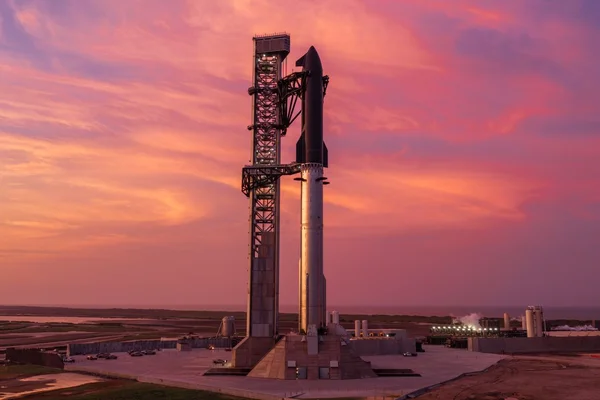
SpaceX Starship Flight 14 Eyes First Orbit With 20 Starlink V3 Satellites
Federal air traffic planners have reserved a two hour window on September 18, 2026 for a Starship mission that would fly about 20 Starlink V3 satellites and, per SpaceX's finance chief, bring in revenue.
Rocket Lab protests NASA's $700 million Mars orbiter award to Blue Origin
Rocket Lab filed a GAO protest on September 11, 2026, challenging NASA's $700 million Mars Telecommunications Network award to Blue Origin over eligibility and review concerns.
ESA Awards The Exploration Company 760 Million Euro Contract for Nyx Cargo Capsule to ISS
The European Space Agency has selected The Exploration Company to fly a reusable Nyx cargo capsule to the International Space Station under a contract worth up to 760 million euros.
Comments (0)
Log in or sign up to leave a comment.
No comments yet. Be the first to share your thoughts.