NASA has completed fueling the Nancy Grace Roman Space Telescope, clearing the way for its planned August 30 launch aboard a SpaceX Falcon Heavy from Kennedy Space Center — nine months ahead of the original schedule, the agency announced this week. The observatory will travel to the Sun-Earth L2 Lagrange point to investigate dark energy, dark matter, and exoplanets, with a field of view about 100 times larger than the James Webb Space Telescope.
What Roman Will Do
Roman's wide-field infrared camera is designed to map the expansion history of the universe, probe dark matter's distribution through gravitational lensing, and survey exoplanets across the galactic bulge. Its high-latitude time-domain survey will also scan for transients and supernovae at a rate that dwarfs previous surveys. Astronomers expect the mission to complement JWST the way a survey telescope complements a portrait camera.
An Accelerated Roadmap
The launch date is a rare piece of good news in NASA's flagship program calendar. The agency also confirmed this week that the defunct SpaceX Falcon 9 upper stage from the January 2025 launch carrying Blue Ghost and Hakuto-R is expected to crash into the Moon on August 5 near Einstein Crater — an impact that NASA's Lunar Reconnaissance Orbiter and South Korea's Danuri orbiter will image before and after, providing a free geology experiment.
Related Articles
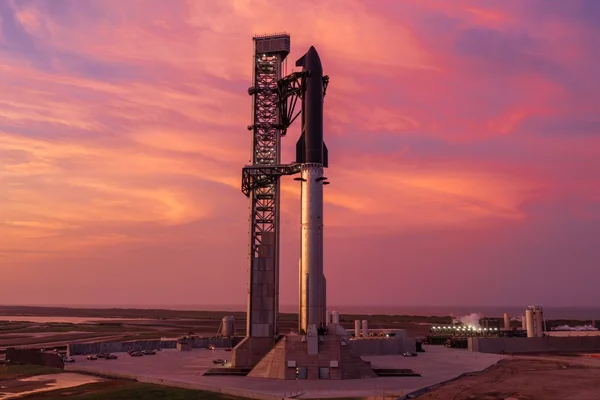
SpaceX launches 700th Falcon rocket and completes SES broadband constellation
The September 13, 2026 mission from Cape Canaveral delivered the final three O3b mPOWER satellites, finishing a 13 spacecraft medium Earth orbit network for SES and marking a reusable rocket milestone for SpaceX.
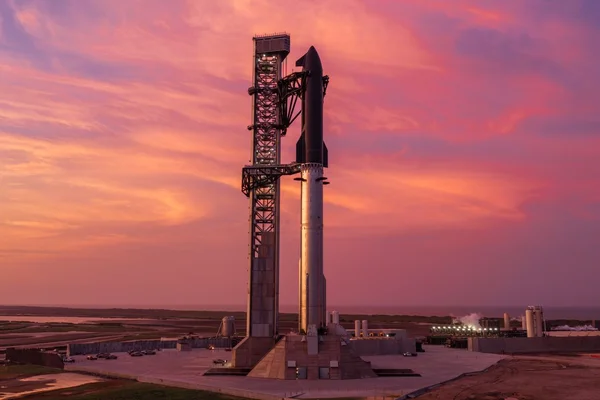
SpaceX Starship Flight 14 Eyes First Orbit With 20 Starlink V3 Satellites
Federal air traffic planners have reserved a two hour window on September 18, 2026 for a Starship mission that would fly about 20 Starlink V3 satellites and, per SpaceX's finance chief, bring in revenue.
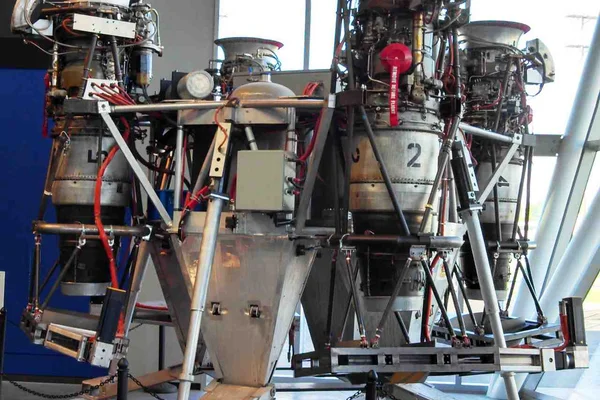
Rocket Lab protests NASA's $700 million Mars orbiter award to Blue Origin
Rocket Lab filed a GAO protest on September 11, 2026, challenging NASA's $700 million Mars Telecommunications Network award to Blue Origin over eligibility and review concerns.
Comments (0)
Log in or sign up to leave a comment.
No comments yet. Be the first to share your thoughts.