A team of physicists at UC Santa Barbara and the University of Texas at Austin has published the first numerical reconstruction of the violent merger that ejected a supermassive black hole from its host galaxy at nearly 1,000 kilometers per second. The work, published in Physical Review Letters and summarized by UCSB on August 24, identifies an extreme spin configuration as the source of the unprecedented recoil kick.
What Was Spotted
In September 2022, astronomers noticed a thin streak more than 200,000 light-years long pointing away from the center of a galaxy roughly 7.5 billion light-years from Earth. Its leading edge was an unresolved point moving at almost 1,000 km/s, with no detectable stars. Researchers initially dismissed the streak as a Hubble imaging artifact, but follow-up spectroscopy with the James Webb Space Telescope in 2025 confirmed it as a chain of young blue stars being triggered into formation by a runaway supermassive black hole plowing through intergalactic gas.
What the Simulation Found
The UCSB-UT Austin team modeled the gravitational wave emission from the parent black-hole merger and found that the recoil from even an asymmetric merger of similar-mass black holes tops out at around 200 km/s, far short of the observed 1,000 km/s. To match the observed kick, the heavier of the two parent black holes must have been spinning at 70-75% of the maximum allowed by general relativity, with its rotation axis tilted and precessing like a wobbling top. The team also deduced that the rotation axes of the host galaxies were misaligned, and that the larger galaxy was at most four times the mass of the smaller.
Why It Matters
General relativity predicts that 5-10% of supermassive black-hole mergers should produce a large recoil kick, but this is the first object confirmed to fit the prediction. The merged galaxy, designated GX in the paper, still shows signs of its prior shake-up but has largely settled over 70 million years. The team argues that upcoming JWST surveys should turn up more such systems, which is important preparation for LISA, the gravitational-wave observatory planned for orbit in the next decade, which will listen for low-frequency signals that today's ground-based detectors cannot reach.
What to Watch Through Year-End
Three checkpoints follow. First, follow-up JWST observations of additional candidates identified by the team could expand the catalog of confirmed runaway supermassive black holes from one to several within the year. Second, the LISA mission's adoption review by the European Space Agency, scheduled for late 2026, will determine launch readiness for the early 2030s. Third, the team's companion analysis of host-galaxy rotation will be tested against the upcoming Vera C. Rubin Observatory's Legacy Survey of Space and Time data, which begins full operations in 2027 and is expected to catalog billions of galaxy mergers.
Related Articles
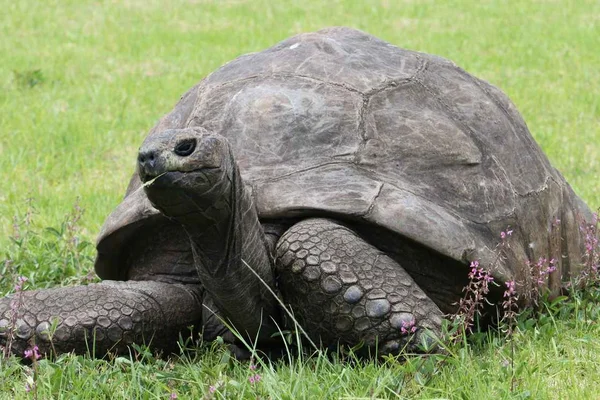
Jonathan the 194 year old tortoise carries 287 gene variants linked to longevity
A genomic and epigenetic study of the world's oldest land animal found 287 variants in DNA repair and cancer suppression pathways plus unusually stable mitochondrial gene switches.
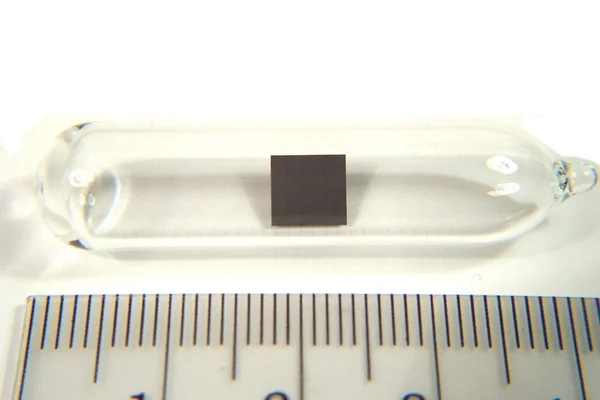
Vienna and Beijing Teams Build First Operating Thorium 229 Nuclear Clocks
Two independent research groups in Vienna and Beijing have reported the first operating nuclear clocks, using thorium-229 nuclei in calcium fluoride crystals and lasers to count time.

Nobel Prize in Chemistry 2026 awarded to Kagan and Soai for the mystery of life's one handed molecules
The Royal Swedish Academy of Sciences honoured two chemists whose work explains how reactions can favour one mirror image of a molecule, the trick that makes life and many modern drugs possible.
Comments (0)
Log in or sign up to leave a comment.
No comments yet. Be the first to share your thoughts.