Physical Intelligence, the San Francisco startup that builds foundation models for robots, is negotiating a funding round of at least $1 billion at a valuation of roughly $20 billion, according to Bloomberg, which reported on October 27 that existing backers Avenir and Lux Capital are in talks to lead the deal. The company, often called Pi, would nearly double the $11.5 billion valuation it reached earlier in 2026 if the round closes near the numbers under discussion.
The talks land at an unusual moment for the robotics software sector. Venture investors have spent two years hunting for the layer that sits between artificial intelligence models and physical machines, the software that lets a single set of weights translate camera images and spoken instructions into motor commands across many different bodies. Pi has positioned itself as exactly that layer, arguing its models can run on hardware built by other companies rather than on a robot of its own design.
That pitch has already attracted an uncommon roster of backers for a company founded in 2024. Alphabet's independent growth fund CapitalG, Thrive Capital and Amazon founder Jeff Bezos are among the investors who joined earlier rounds, according to the reporting. OpenAI, which is separately hiring for robotics work, also appears among the supporters described in the coverage.
The new round, if completed, would be the third sharp step up in less than two years for a business that does not yet sell a product and, according to the people Bloomberg spoke to, has no revenue at all. That combination of a soaring paper valuation and an empty top line is the center of the story, and it is why the talks have become a marker for how far investors are willing to price the physical world version of the large model bet.
Key Facts
Bloomberg reported on October 27 that the round would raise at least $1 billion and would nearly double the company's valuation, putting it at about $20 billion. The people familiar with the matter said Pi does not yet have revenue. Physical Intelligence, Avenir and Lux Capital did not respond to requests for comment, Bloomberg added. Investing.com reported on October 27 that the discussions are still early, a detail that matters because terms can move before a deal is signed.
The valuation history is steep. AIReport reported on October 29 that the company raised $400 million at a $2.4 billion valuation in November 2024, then reached $11.5 billion earlier in 2026. A close near $20 billion would represent an eightfold climb from the 2024 mark in under two years, and the third significant step up in that window.
The company was founded in 2024 by former Google DeepMind researchers working with academics from Stanford University and the University of California, Berkeley. It trains the pi family of robot foundation models, which map camera images and language instructions to actions across robot arms and mobile platforms. It has released weights for pi0 and pi0.5 openly under an Apache 2.0 license, with base checkpoints pretrained on more than 10,000 hours of robot interaction data. Its demonstrations include folding laundry, bussing tables and sorting trash from dishes without task specific programming.
On October 13, 2026, Pi opened its latest models to outside developers through a beta API. Developers can upload data, fine tune the models on company managed compute and run them through a hosted inference gateway, with access currently waitlisted and pricing not announced. The Next Web reported on October 28 that the beta has lifted investor interest in the round. Early partners include Actor, whose autonomous wheel loader scoops and loads material with no operator in the cab, and Almond, whose dual arm Axol robot learned to deburr its own parts after four days of iteration on the API.
The competitive field is crowded and well funded. Skild AI, another startup building software that helps robots learn, was valued at $14 billion in January 2026 and said in September that its annual run rate revenue had passed $100 million. Tesla's Optimus program, which Elon Musk has compared to raising a toddler, and OpenAI's robotics hiring give Pi deep pocketed rivals on both the hardware and the model sides. Robotics startups have raised nearly $48 billion this year, according to AIReport.
Analysis
The obvious question is why a pre revenue company commands $20 billion. What this really means is that investors are no longer pricing robot software on current contracts but on the possibility of a standard operating layer, a position analogous to what an operating system occupies in personal computing. If one model family can generalize across arms, wheel loaders and mobile platforms, the company that owns it collects rent on every machine that adopts it, and the addressable market stops being measured in units of hardware.
That logic explains the sequencing. Pi released weights openly for pi0 and pi0.5, which looks generous until you notice that openness builds the developer habit and the data flywheel, while the hosted API keeps the fine tuning and inference relationship commercial. The beta launched two weeks before the funding reports surfaced, and the timing is hard to read as accidental. A waitlisted developer pipeline is the closest thing a pre revenue robotics company has to a demand signal, and it gives the lead investors something more concrete than a demonstration video.
The risk is equally clear. Cloud hosted robot control depends on network connectivity, and the company itself flags that some sites cannot rely on it. A factory floor or a construction site that loses connectivity loses the brain. Rivals with their own hardware, notably Tesla, can tune silicon and model together and avoid that dependency, while Skild AI's $100 million run rate shows a competitor already converting software into recurring revenue rather than into another financing round.
The comparison to the inflated software multiples of 2021 is tempting but imprecise. The bigger picture here is that capital is concentrating on a small number of foundation model labs in each domain, and investors would rather pay a premium for the presumed winner than spread bets across a dozen integrators. Avenir and Lux Capital leading, rather than a new outside name, suggests existing holders want to protect their position before the price moves again.
Why It Matters
For the wider robotics industry, the round sets a reference price. Every startup building manipulation software, from warehouse picking to surgical assistance, will be measured against a $20 billion mark achieved with no revenue. That compresses the negotiating room for smaller teams and makes acquisition or talent absorption more likely than independent scaling for all but a handful of firms.
For developers, the beta API matters more than the headline number. A hosted gateway that accepts uploaded data and returns a fine tuned policy lowers the cost of trying robot learning, and the two named early partners show the approach working on tasks as different as loading material and deburring machined parts. If that pattern holds, the practical bottleneck shifts from model quality to data collection at the customer site, which is a slower and less glamorous problem.
For investors, the round is a test of patience. Pi's own launch post acknowledged that real world robotic applications are not easy, noting that robotic construction, robotic surgery and warehouse automation each requires an entire company. A $20 billion valuation implies those verticals arrive on schedule, and there is no revenue yet to cushion a delay.
Next Up
Attention now turns to the close. Neither Physical Intelligence nor the two prospective leads would comment, and terms described as early can still move. The gap between the $11.5 billion mark from earlier in 2026 and the roughly $20 billion figure is the number to watch, along with any disclosure of pricing for the waitlisted API.
Beyond the round, the measurable signals are the partner list and the revenue line. AIReport reported on October 29 that the company still has no revenue, and Skild AI's $100 million run rate gives the market a benchmark for what a maturing robotics software business looks like. If Pi converts its beta developers into paying inference customers before the next financing, the valuation argument becomes easier to defend. If it does not, the $20 billion number will be remembered as the moment physical AI pricing ran ahead of physical AI deployment.
Related Articles
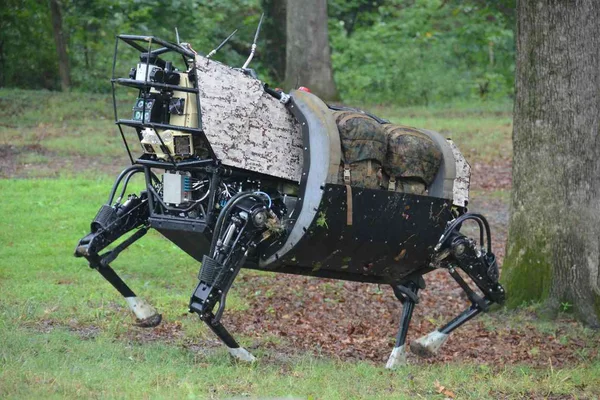
Boston Dynamics Finalizes Korean Atlas Supplier Lineup and Asks for Parts for 10000 Robots
Korean trade papers say Boston Dynamics has locked in a supplier roster for its Atlas humanoid and wants partners ready for orders covering 10000 units, though no purchase order exists yet.
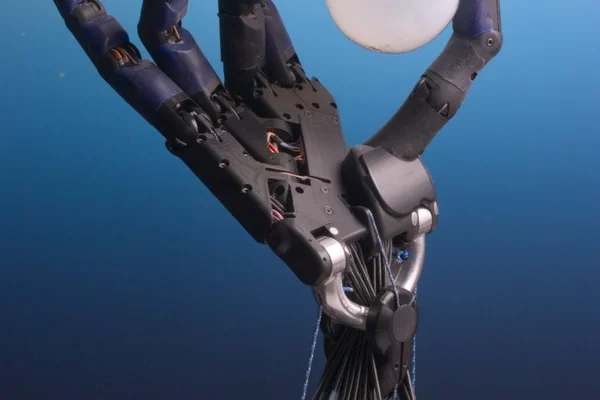
GXO Adds Agility Robotics Digit Humanoids at Two More US Warehouses
The logistics giant will put Digit to work in North Carolina and Tennessee from early 2027, even after its chief executive told analysts in August that humanoid pilots had not yet paid back.

Teradyne Robotics and Sereact Put Cortex Physical AI on Universal Robots Arms
Teradyne Robotics has made its Sereact partnership official, placing the Cortex physical AI platform on Universal Robots arms as CEVA Logistics handles Zalando returns in Germany and Poland.
Comments (0)
Log in or sign up to leave a comment.
No comments yet. Be the first to share your thoughts.