The Nobel Assembly at Karolinska Institutet in Stockholm announced on October 5, 2026, that the 2026 Nobel Prize in Physiology or Medicine is awarded jointly to Karl Deisseroth, Peter Hegemann and Georg Nagel for their discoveries concerning light-gated ion channels and optogenetics. The prize, worth 12 million Swedish kronor (about US$1.2 million), will be shared equally among the three laureates.
Optogenetics is a method that makes it possible to show how nerve cells shape memories, feelings and behaviours in the living brain. It began with Peter Hegemann's curiosity about how Chlamydomonas, a single-celled alga, swims towards light. In the early 2000s, he and Georg Nagel discovered channelrhodopsin, an algal protein on the cell surface. When illuminated by blue light, a channel opens and charged ions flow in, creating an electrical impulse. Whatever cell they put the protein into became light-sensitive.
Karl Deisseroth introduced the gene into rat nerve cells and triggered a nerve signal with blue light, publishing the breakthrough in 2005. Two years later, he made the light-controlled switch work in the brains of living mice. The method is now called optogenetics and has revealed neural circuits governing specific memories, feelings and behaviours relevant for neurological and psychiatric disorders.
Per Svenningsson, Chair of the Nobel Committee for Physiology or Medicine, said: "Optogenetics provides opportunities for mapping the brain in a way that we could once only dream of." The announcement kicks off Nobel week, with the physics prize on Tuesday, chemistry on Wednesday and literature on Thursday.
Key Facts
NobelPrize.org reported on October 5 that the prize is awarded for optogenetics, a method that makes it possible to show how nerve cells shape memories, feelings and behaviours in the living brain. The official press release states that Hegemann and Nagel discovered channelrhodopsin, an algal protein that opens a channel when illuminated by blue light, allowing charged ions to flow in and create an electrical impulse. Deisseroth then introduced the gene into rat nerve cells and triggered a nerve signal with blue light in 2005, and by around 2007 he controlled the movement of mouse whiskers.
CNN reported on October 5 that the method acts as a "light-sensitive switch," allowing scientists to "map which cells are responsible for which function," according to Anna Wedell, a member of the Nobel Prize committee. CNN noted that German researchers Hegemann, 71, and Nagel, 73, discovered the protein before American scientist Deisseroth, 54, "transformed the protein into a light-controlled switch for nerve cells." The committee added that the work has "laid the foundation for a new era in neuroscience."
STAT News reported on October 5 that the three laureates developed a method that uses light, combined with genetic modification of neurons, to switch individual cells on or off in a living brain. STAT noted that Deisseroth, 55, is a professor at the Howard Hughes Medical Institute and Stanford University; Hegemann, 72, is a professor at Humboldt University in Berlin; and Nagel, 73, is a professor at the University of Würzburg. The work started in the early 1990s at the Max Planck Institute, when Hegemann wondered how Chlamydomonas swims toward light.
NPR and the Associated Press reported on October 5 that the Nobel Prize in medicine was awarded Monday to three scientists working on the mechanisms the brain uses to switch on, or off, the activity of individual nerve cells. The report noted that Thomas Perlmann, the secretary of the medicine committee, was able to reach all three winners by phone Monday. The prize money this year is 12 million Swedish kronor (about $1.2 million), whether for an individual, small group of laureates or organization.
Optica reported on October 5 that the three researchers were awarded the prize for their pioneering contributions to optogenetics. Gisele Bennett, 2026 Optica President, said: "The impact of the research of Drs. Deisseroth, Hegemann and Nagel has been absolutely transformative. Optogenetics gives researchers the ability to control selected neural circuits with light with high spatial and temporal precision. This work has truly opened a new era in the field of neuroscience."
Analysis
The bigger picture here is that the Nobel committee has chosen to honor the foundational discovery of light-gated ion channels and the subsequent engineering that turned them into a tool for neuroscience. The award recognizes the entire arc from basic algal biology to a method that can manipulate specific neural circuits with millisecond precision and cellular resolution. As Deisseroth told STAT, "When you think about light in science or light in medicine, you think of it as an observational tool... But with optogenetics, it's the complete opposite."
Yet the decision also highlights the difficult question of credit in collaborative science. STAT News reported that commentators noted Ed Boyden, first author on Deisseroth's landmark 2005 paper and now at MIT, was not among the laureates. The committee's background also cited Gero Miesenböck, whose 2002 work preceded the 2005 breakthrough, and Zhuo-Hua Pan of Wayne State University, whose 2004 research was supported by a $300,000 NIH grant. These omissions do not diminish the laureates' achievements, but they underscore that major scientific advances often emerge from a web of contributors rather than a single eureka moment.
What this really means is that the Nobel Prize, with its rule of a maximum of three winners per year, cannot fully capture the distributed nature of modern discovery. The committee's choice to honor Hegemann and Nagel for the algal protein and Deisseroth for its application in mammalian neurons reflects a deliberate focus on the critical steps that made optogenetics possible. It also signals that the prize is increasingly recognizing tools and methods, not just fundamental biological insights.
The award arrives at a time when neuroscience is grappling with the complexity of the brain and the need for precise experimental tools. Optogenetics has already been used to identify neural circuits governing pain, social behaviors, thirst, food consumption, reward and attention, according to CNN. The method's ability to control specific cells with light has transformed the study of neurological and psychiatric disorders, offering a way to test causal links between circuit activity and behavior.
Why It Matters
Clinical researchers are attempting to restore sight in people with visual impairment. The Nobel committee cited a blind person who regained some vision with a channelrhodopsin-like protein and special light-emitting glasses, as reported by CNN. This represents one of the first translational applications of optogenetics, moving from basic science to a potential therapy for retinitis pigmentosa.
Beyond vision, optogenetics has become a standard tool in laboratories around the world. The Nobel committee wrote on X that the method "is now being used in laboratories around the world to reveal the brain's mysteries," according to NPR and the Associated Press. Researchers can now map which cells are responsible for which function, as Anna Wedell noted, providing insights that could lead to new treatments for conditions such as depression, addiction and Parkinson's disease.
The prize also celebrates the value of curiosity-driven research. Hegemann's initial question about how a single-celled alga swims toward light seemed far removed from medicine. Yet that question led to channelrhodopsin, which in turn gave scientists a powerful switch for nerve cells. The story illustrates how basic science can yield unexpected and transformative applications.
Next Up
Monday's medicine prize is followed by the physics prize on Tuesday, chemistry on Wednesday and literature on Thursday. After Friday's peace prize is awarded, the Nobel Memorial Prize in Economic Sciences will be announced on October 12. Each prize carries the same amount: 12 million Swedish kronor, about $1.2 million.
In the coming years, optogenetics is expected to advance further into clinical trials. Researchers will continue to refine the technique for restoring vision and possibly for treating other neurological conditions. The 2026 award may accelerate interest and funding in these efforts, while also prompting ongoing discussion about how to recognize the many contributors to scientific breakthroughs.
Related Articles
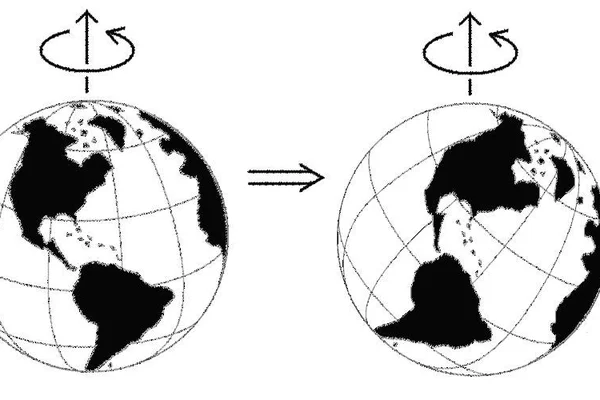
Ancient Sea Levels Reveal Earth Tipped on Its Axis at Least Four Times in 320 Million Years
A Science study led by Mathew Domeier at the University of Oslo uses global flooding records to argue that the solid Earth reoriented relative to its spin axis several times since the Carboniferous.

Animals may have evolved 200 million years earlier than fossils suggest, Oxford led study says
A University of Oxford led team argues in Science Advances that animals originated 800 to 700 million years ago by testing microfossils from Mongolia and recalibrating molecular clocks.
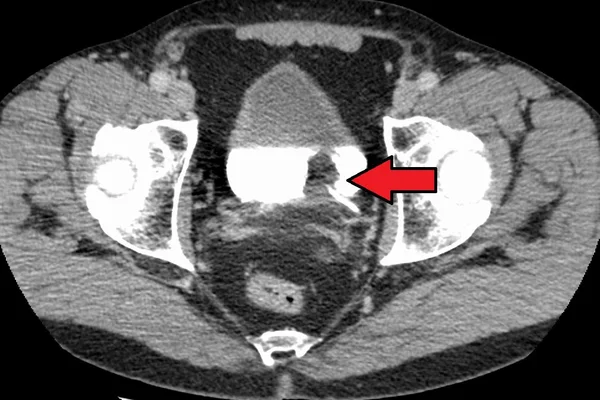
Stanford urine RNA test detects 95 percent of localized bladder cancers and predicts BCG response
A new urine cell-free RNA liquid biopsy called uRARE-seq identified 95 percent of localized bladder cancers in a 683-sample study and predicted which patients would benefit from BCG immunotherapy.
Comments (0)
Log in or sign up to leave a comment.
No comments yet. Be the first to share your thoughts.