The satellite internet industry has crossed a major threshold: more than one billion people now rely on low-Earth-orbit constellations for some portion of their internet access. Starlink, Project Kuiper, and China's Guowang network have transformed satellite connectivity from an expensive backup to a mainstream option for rural homes, ships, aircraft, and emergency responders.
The Constellation Race
Three major providers now dominate the market:
- Starlink: 8,000 satellites in orbit, serving 65 million subscribers across 120 countries
- Amazon Kuiper: 3,500 satellites launched, integrated with AWS cloud services
- Guowang: China's state-backed constellation, covering Asia, Africa, and Latin America
"Satellite internet has achieved what fiber could not: near-universal coverage. The economic and social implications are just beginning to unfold," said Tim Farrar, president of satellite consulting firm TMF Associates.
Bridging the Digital Divide
The most transformative impact has been in regions with limited terrestrial infrastructure. Remote schools, rural clinics, and disaster zones now have access to broadband-quality connectivity for the first time. Farmers use satellite internet to operate precision agriculture equipment. Maritime workers stream video calls home from the middle of the ocean.
The New Space Economy
Beyond consumer internet, satellite constellations are enabling a host of new industries and services. Earth observation, weather monitoring, asset tracking, and secure government communications are all growing rapidly. Morgan Stanley estimates that the global space economy will reach $1 trillion by 2040, up from roughly $450 billion today, with satellite broadband as the largest growth segment.
Concerns remain about orbital debris, light pollution affecting astronomy, and spectrum congestion. But with a billion users already online, the satellite revolution has firmly moved from speculative to essential.
Related Articles
NASA Ends Swift Observatory Science Mission as Atmospheric Drag Forces Reentry
NASA has ended science operations for the Neil Gehrels Swift Observatory after nearly 22 years, and the spacecraft is expected to reenter Earth's atmosphere within weeks.
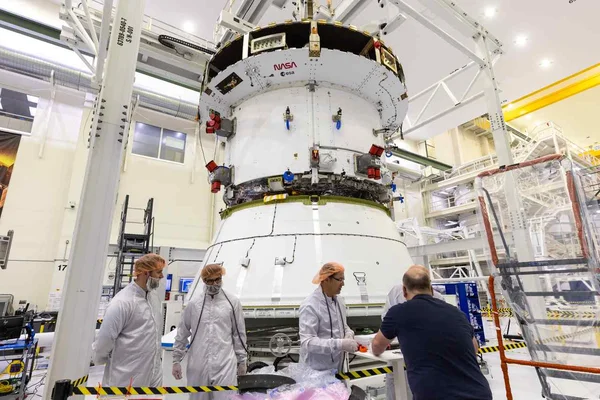
NASA holds Artemis III to summer 2027 as safety panel questions Artemis IV lander plan
NASA's October 23 update keeps four astronauts on a summer 2027 low Earth orbit rehearsal, while its safety advisers want the Artemis IV landing plan reconsidered over refueling risk.

Russian Satellite Kosmos 2612 Stalks ICEYE-X36 to Within 500 Metres in Low Earth Orbit
LeoLabs tracking data shows a Russian military spacecraft held station within roughly 500 metres of a US-registered radar satellite for several days before withdrawing.
Comments (0)
Log in or sign up to leave a comment.
No comments yet. Be the first to share your thoughts.