A torrent of mud, rock and glacier ice tore through villages on the Nepal side of the border with Tibet on August 26, and within ten days the flood had become one of the most destructive climate-related disasters in Nepal's modern history. The water was released by a glacier and ice-rock collapse near Langtang National Park and then descended a valley river into settlements that had little warning. Nepal's National Disaster Risk Reduction and Management Authority, known as NDRRMA, said on September 5 that the confirmed death toll had reached 1,344 and that more than 5,000 people were still missing, with search teams yet to reach the most isolated hamlets.
In the middle of the rescue effort, Kathmandu chose to frame the catastrophe in explicitly political terms. Foreign Minister Shisir Khanal argued on September 3 and 4 that the world owes Nepal climate compensation, not charity, and that the money flowing to his country should be understood as a settlement of an account rather than as goodwill. His case rests on an uncomfortable asymmetry. Nepal is responsible for less than 0.1 percent of global greenhouse gas emissions, yet it is the one counting the dead and paying for glaciers destabilized by a warming climate driven overwhelmingly by other countries. In Khanal's telling, the flood was not a natural misfortune but an imported climate shock, and international support should be priced accordingly.
Key Facts
The trigger was a glacier and ice-rock collapse near Langtang National Park on August 26. The released water raced down a valley river on the Nepal side of the Nepal-Tibet border, swelling the Bhotekoshi and Trishuli corridors before the flood fanned out across lowland districts. Anadolu Agency reported on September 5 that the force of the water left residents almost no time to flee and that officials expected the casualty figures to keep rising as communications were restored to cut-off areas.
The death toll climbed in near-daily increments: past 1,100 by September 2, to 1,225 by September 3, and to 1,344 by September 5, when NDRRMA also put the number of missing at more than 5,000. The authority separately warned of a secondary risk from a newly formed lake upstream on the Lhende River, where obstructed drainage could release another surge.
The economic toll is enormous relative to the size of the country. Infrastructure damage is estimated at $2.6 billion, and the flood gutted the energy sector that Nepal has made the centerpiece of its development strategy. Telegraph India reported on September 4 that the disaster had damaged or destroyed more than a dozen hydropower plants along the Bhotekoshi and Trishuli river valleys, knocking out hundreds of megawatts of generation capacity and leaving reconstruction needs that will take years to meet. Hydropower is also one of Nepal's main exports, so the losses cut twice, weakening both the relief effort and the country's longer-term fiscal position.
Nepal's own contribution to the problem is negligible. The country generates less than 0.1 percent of global greenhouse gas emissions, a figure officials repeat when arguing that the flood was an externally imposed cost. At the same time, the Himalayan rivers that rise in Nepal and in transboundary glaciers supply fresh water to more than 2 billion people across South Asia, so the stability of Nepal's mountains carries weight beyond its borders. The government estimates its climate adaptation needs between 2025 and 2035 at $18 billion to $20 billion, a sum that looks small next to a single season of destruction.
Analysis
The bigger picture here is that Nepal is trying to move the international conversation from generosity to obligation, and the shift is more than a matter of tone. Aid is discretionary: a donor gives on its own terms, keeps the moral high ground, and expects gratitude, while the recipient remains a supplicant. Compensation inverts that relationship. When one party owes another, the payer is the party under obligation, and the transfer is a settlement rather than a favor. Khanal chose his words deliberately on September 3 and 4, describing what Nepal needs as compensation for loss and damage caused by emissions that originated overwhelmingly in wealthier states, which he and other officials identified as including China, the United States and India.
What this really means is that the debate over the United Nations Loss and Damage Fund has stopped being abstract. The fund, formally the Fund for Responding to Loss and Damage, was created to help vulnerable countries cope with impacts they cannot adapt away from, but its resources are tiny relative to the need. Pledges stand at roughly $768 million against independent estimates of hundreds of billions of dollars in annual loss-and-damage costs across the developing world, and individual grants are capped at about $20 million. A single Nepalese flood has produced an estimated $2.6 billion in infrastructure damage alone. Nepal's request will test whether the mechanism can move money quickly and at scale or whether it remains largely symbolic while the real costs keep landing on the countries least able to carry them.
The disaster also carries a scientific warning that extends far beyond Nepal. The collapse near Langtang fits a broader pattern in which warming destabilizes high-altitude ice and rock, and in which glacial lakes swollen by meltwater sit like reservoirs above inhabited valleys. A sudden breach can turn a narrow river corridor into a lethal channel within minutes, which makes glacier-lake dynamics a climate risk multiplier rather than an isolated hazard. NDRRMA's warning about a newly formed upstream lake on the Lhende River is a reminder that the danger does not end with the first surge. The Indian Express reported on September 4 that the demand for compensation had drawn a cautious response in New Delhi, where officials described climate change as a shared challenge while stopping short of accepting liability for Nepal's losses.
Why It Matters
Nepal is a test case for a question every climate-vulnerable state is now asking: who pays when the damage arrives? If a country with negligible emissions and catastrophic losses cannot obtain meaningful compensation through the international system, the Loss and Damage Fund and the diplomacy around it will look hollow to the nations most exposed to floods, droughts and heat. Nepal's insistence that support be called compensation rather than charity is an attempt to lock in the principle that emitters bear responsibility, before the memory of this particular flood fades.
The regional stakes magnify the point. The rivers fed by Himalayan glaciers supply fresh water to more than 2 billion people, so the same warming that destabilizes Nepal's valleys threatens water security across a large share of humanity. When Kathmandu speaks about collapsing ice, it is describing not only a local emergency but also a shared resource that is becoming less predictable. It also raises hard questions about building hydropower stations in the steep corridors where glacial floods do the most damage.
For Nepal itself, the arithmetic is unforgiving. A country responsible for less than 0.1 percent of global emissions now faces an estimated $2.6 billion in infrastructure damage, the loss of more than a dozen hydropower plants, and adaptation needs it has priced at between $18 billion and $20 billion over the coming decade. Those figures dwarf what domestic resources can cover, which is why the government insists the money must come from those who created the problem.
Next Up
Diplomatic attention now shifts to New York, where Prime Minister Balendra Shah is expected to attend the UN General Assembly in late September and to press the case for climate justice from the podium. Nepal has said it will use the session to call for the Loss and Damage Fund to be capitalized at a level that matches documented losses, with its own flood cited as the most recent evidence of what is at stake. The address will also be an opportunity to press major economies on the principle that support for climate victims is an obligation rather than a favor.
The diplomacy is delicate, because the countries Nepal points to as top emitters, including China, the United States and India, are also important partners on aid, trade and infrastructure. Kathmandu must balance its demand for accountability against its need for working relationships with those same governments. Greta Thunberg voiced public backing for Nepal's position, arguing that money sent to the country should be treated as climate debt rather than donation, giving the compensation framing a prominent global constituency even if governments remain reluctant to accept the label.
On the ground, the emergency is far from over. With more than 5,000 people still missing, affected communities face a long search and a harder rebuilding process, and the risk posed by other glacial lakes means the authorities will be watching the mountains even as they dig out from this flood. The coming weeks will show whether the world treats Nepal's loss as a debt to be settled or as another tragedy to be mourned, and that answer will shape climate diplomacy far beyond the Himalaya.
Related Articles
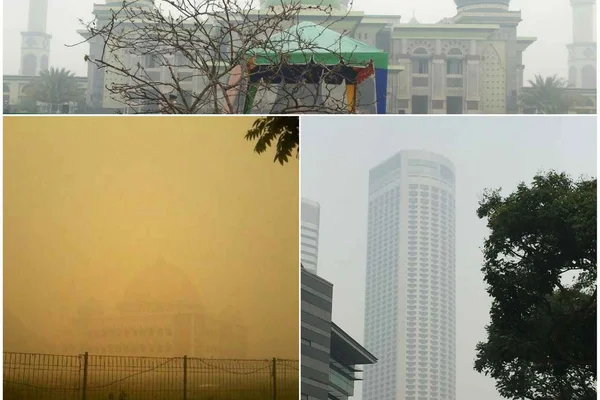
Indonesia haze crisis: 1.9 million hectares burned as Jakarta protests demand disaster status
Satellite data shows 1,916,588 hectares burned across Indonesia this year while the Health Ministry counts 283,270 respiratory infections and protesters in five cities demand national disaster status.
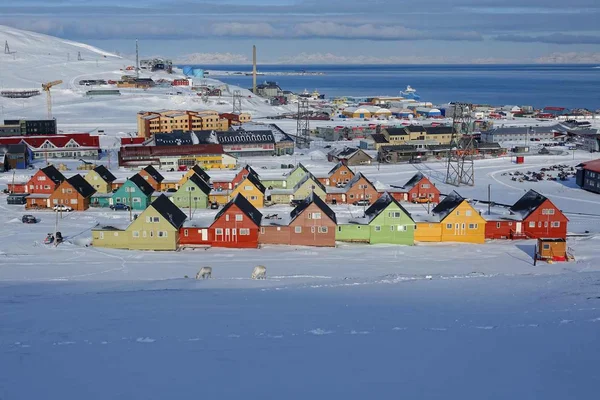
Longyearbyen tap water banned as thawing permafrost leaches heavy metals into reservoir
Norway's Arctic town of Longyearbyen has kept a full-population advisory against drinking tap water since September 2025, and a SINTEF study on permafrost thaw is not due until 2027.
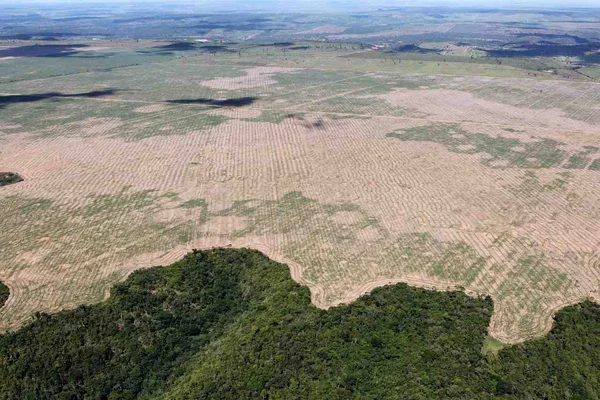
Brazil Amazon deforestation hits record low of 3,335 km2 days before pivotal runoff vote
Brazil's space agency INPE says Amazon clearance fell to 3,335 square kilometers in the year to July, the smallest tally since 1988, with a presidential runoff set to decide whether the policy survives.
Comments (0)
Log in or sign up to leave a comment.
No comments yet. Be the first to share your thoughts.