NASA and SpaceX have set a new target date for the Crew-13 astronaut launch to the International Space Station after replacing a leaking oxidizer valve on the Dragon spacecraft. The mission is now scheduled for 11:10 a.m. EDT on Thursday, October 1, 2026, from Space Launch Complex 40 at Cape Canaveral Space Force Station in Florida. This comes after the original September 12 date was scrubbed due to an oxidizer leak detected on August 29 in the Dragon's propulsion system. The repair was completed, and NASA announced on September 22 that the earliest opportunity is October 1. The four-person crew is in quarantine at NASA's Johnson Space Center in Houston and will travel to NASA Kennedy on Saturday, September 26.
The crew includes NASA astronauts Jessica Watkins as spacecraft commander and Luke Delaney as pilot, along with Canadian Space Agency astronaut Joshua Kutryk and Roscosmos cosmonaut Sergey Teteryatnikov as mission specialists. Once launched, they will ride a Falcon 9 rocket to low Earth orbit and dock with the ISS about nine hours later, around 8 p.m. EDT, at the forward-facing port of the Harmony module. For an October 1 launch, docking is planned for about 8 p.m. EDT, less than nine hours after liftoff. The backup launch opportunity is October 2 at 10:47 a.m. EDT.
The delay has extended the stay of the current Crew-12 astronauts aboard the station. Crew-12, which launched in February 2026, includes NASA's Jessica Meir (commander), Jack Hathaway (pilot), ESA's Sophie Adenot, and Roscosmos cosmonaut Andrey Fedyaev. They will remain on the ISS until Crew-13 arrives and completes a brief handoff. Crew-13 will become part of Expedition 75, conducting scientific research and station maintenance for about seven months. This mission marks the 13th operational crew rotation flight by SpaceX under NASA's Commercial Crew Program.
The oxidizer valve issue was a reminder of the technical challenges of human spaceflight, but NASA and SpaceX have moved forward with prelaunch activities, including intensive reviews to confirm the crew, station, and vehicle readiness. The leak was detected on August 29, 2026, and the valve was successfully replaced on September 16, 2026. The crew entered quarantine on September 17, 2026. Now, with a firm October 1 target, the teams are focused on final preparations for liftoff.
Key Facts
NASA announced on September 22, 2026, that the Crew-13 mission is targeting 11:10 a.m. EDT on Thursday, October 1, as the earliest launch opportunity. The launch will take place from Space Launch Complex 40 at Cape Canaveral Space Force Station in Florida. The original launch date was September 12, 2026, but it was delayed after an oxidizer leak was detected in the Dragon spacecraft's propulsion system on August 29, 2026. AirPro News reported on September 22, 2026, that the faulty valve was successfully replaced and the issue resolved on September 16, 2026.
The crew consists of four astronauts: NASA's Jessica Watkins (spacecraft commander) and Luke Delaney (pilot), CSA's Joshua Kutryk, and Roscosmos's Sergey Teteryatnikov, both mission specialists. Space.com reported on September 22, 2026, that the quartet will live and work on the ISS for about seven months. They entered quarantine on September 17, 2026, at Johnson Space Center in Houston and will travel to NASA Kennedy on September 26. For an October 1 launch, they will arrive at the ISS less than nine hours later, with docking planned for about 8 p.m. EDT to the forward-facing port of the Harmony module.
SpaceX reported on September 22, 2026, that the new launch window will allow for completion of prelaunch activities, readiness reviews, and coordination of space station operations. The company noted that the leak detected earlier had been addressed. The mission will see Crew-13 relieve the four astronauts of Crew-12, who have been aboard the station since mid-February 2026. Crew-12 includes NASA's Jessica Meir and Jack Hathaway, ESA's Sophie Adenot, and cosmonaut Andrey Fedyaev.
Central Florida Public Media reported on September 23, 2026, that the Crew-12 astronauts' stay has been extended due to the delay. In a post on X, SpaceX announced the new window. Jessica Meir, speaking to media from the station on Wednesday, said she looks forward to returning to Earth but it is bittersweet. She mentioned looking forward to seeing her three-and-a-half-year-old daughter. Once Crew-13 arrives, Crew-12 will depart after a brief handoff, splashing down off the coast of California.
The mission will conduct scientific experiments including studies on stem cell growth, fluid shifts in the human body, and plant habitats. Crew-13 will live and work on the ISS for about seven months as part of Expedition 75. The launch is the 13th operational crew rotation mission flown by SpaceX under NASA's Commercial Crew Program. A backup launch opportunity is available on October 2 at 10:47 a.m. EDT. The mission will also deliver supplies and equipment to the station, though specific cargo details were not provided.
Analysis
The oxidizer valve leak that forced the delay from September 12 to October 1 highlights the inherent risks and complexities of human spaceflight. While such technical issues are not uncommon, the fact that NASA and SpaceX were able to identify and replace the valve, then set a new target within weeks, demonstrates the maturity of the Commercial Crew Program. The bigger picture here is that NASA's reliance on commercial partners for crew transportation has introduced both efficiencies and new challenges, as private companies must balance safety, schedule, and cost. The rapid recovery from this setback shows that the partnership can handle unexpected problems, but it also raises questions about the redundancy of critical systems and the thoroughness of preflight testing.
The delay also underscores the interdependence of space station operations. Crew-12's extended stay means additional time in microgravity for its members, which has both physical and psychological effects. Jessica Meir's comments about missing her daughter while also cherishing the weightlessness and views illustrate the human dimension of these missions. The coordination required to manage crew rotations, cargo deliveries, and scientific research aboard the ISS is immense, and any slip in one mission cascades through the schedule. This interdependence means that a single technical fault can affect not only the launch but also the return of the previous crew and the timeline for future missions.
The replacement of the oxidizer valve itself is a critical fix. Oxidizer is essential for the Dragon's propulsion system, used for orbital adjustments and docking maneuvers. A leak could have led to a catastrophic failure if not addressed. The successful repair and the subsequent readiness reviews show that the safety culture at NASA and SpaceX is functioning. However, the incident may prompt further scrutiny of quality control in the supply chain for commercial crew vehicles. It also highlights the need for robust abort and contingency plans, which are a hallmark of the Commercial Crew Program.
Looking at the broader context, Crew-13's launch will mark another milestone in the ongoing presence of humans in low Earth orbit. With Expedition 75, the station continues to serve as a laboratory for research that benefits life on Earth and prepares for future missions to the Moon and Mars. The international partnership, involving NASA, SpaceX, CSA, and Roscosmos, remains a model of cooperation even amid geopolitical tensions. The mission's science objectives, from stem cell growth to plant habitats, are directly relevant to long-duration spaceflight. What this really means is that the success of Crew-13 is not just about reaching the station, but about sustaining the broader endeavor of human space exploration.
Why It Matters
The successful launch of Crew-13 is crucial for maintaining a continuous human presence on the International Space Station. The station has been continuously occupied since November 2000, and crew rotations are essential to keep it operational. A prolonged delay could impact scientific experiments and maintenance tasks. The overlap between Crew-12 and Crew-13 allows for a smooth handover of responsibilities, ensuring that ongoing research is not disrupted. The station relies on a steady cadence of crew and cargo missions, and any interruption can have ripple effects on the research community and international partners.
The mission also demonstrates the resilience of the commercial crew model. SpaceX's ability to diagnose and fix a propulsion issue while maintaining a tight launch schedule reinforces its role as a key partner for NASA. For the Canadian Space Agency, Joshua Kutryk's flight represents continued international collaboration and provides opportunities for Canadian science and technology. Roscosmos's participation highlights the enduring partnership in space exploration despite political differences. The commercial crew program has reduced NASA's dependence on Russian Soyuz spacecraft for crew transportation, but international cooperation remains vital for the station's operation.
Furthermore, the research conducted during Expedition 75, such as studies on stem cell growth and fluid shifts, has direct implications for human health on Earth and in space. Understanding how the body adapts to microgravity is vital for future long-duration missions. The plant habitat studies could contribute to sustainable food production in space, a key requirement for missions to the Moon and Mars. Thus, Crew-13 is not just a routine crew rotation but a step forward in space science and exploration. The data gathered will inform the design of life support systems and countermeasures for astronauts on longer journeys.
Next Up
In the coming days, NASA and SpaceX will complete a series of prelaunch activities and intensive reviews to confirm the crew, the space station, and the Dragon spacecraft and Falcon 9 rocket are ready for liftoff. The Crew-13 astronauts will travel from Houston to NASA Kennedy on September 26. The launch is targeted for 11:10 a.m. EDT on October 1, with a backup opportunity on October 2 at 10:47 a.m. EDT. If all goes as planned, Crew-13 will dock at the ISS about nine hours later. The mission will then begin a roughly seven-month stay aboard the orbiting laboratory.
After docking, the crew will join Expedition 75 and begin their scientific work. They will conduct experiments and station maintenance. Crew-12 will depart after a brief handoff, splashing down off the coast of California. The successful completion of this mission will set the stage for future crew rotations and continued research aboard the orbiting laboratory. NASA and SpaceX will also continue to evaluate the performance of the Dragon spacecraft and Falcon 9 rocket, ensuring reliability for upcoming missions.
Related Articles

Albania Becomes 73rd Artemis Accords Signatory as NASA Led Framework Expands
The Balkan nation signs at a Washington ceremony, extending a 2020 lunar cooperation framework to 73 countries weeks before a gathering of signatories in Turkiye.
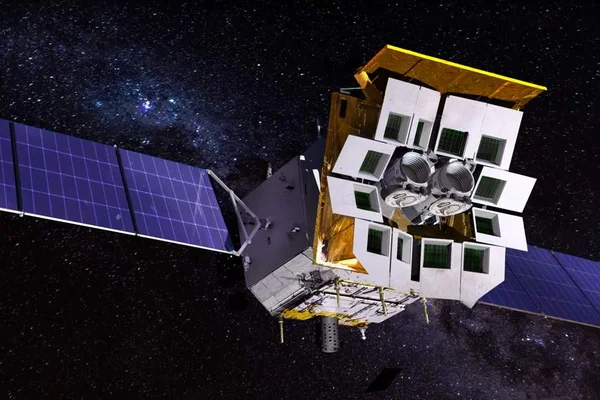
China Einstein Probe and LHAASO trace 42 light year X-ray tail from pulsar PSR J1740+1000
Astronomers using China's Einstein Probe satellite and the LHAASO observatory have traced a 42 light-year X-ray trail from a middle-aged pulsar, the longest such tail ever seen.
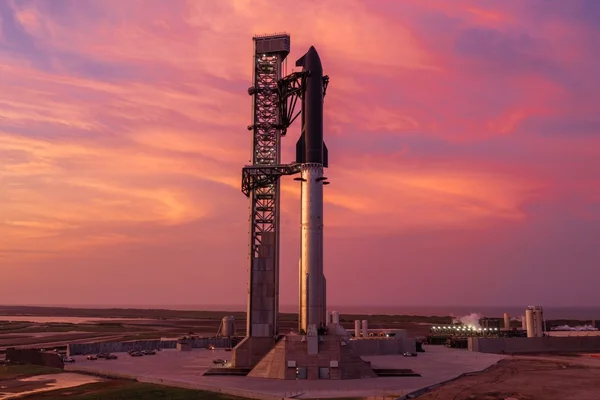
NASA awards SpaceX $946 million for three more crewed Crew Dragon flights to the ISS
The modified Commercial Crew contract adds Crew-15, Crew-16 and Crew-17 to SpaceX's manifest, pushing the company's total to 17 missions and $5.92 billion through 2030.
Comments (0)
Log in or sign up to leave a comment.
No comments yet. Be the first to share your thoughts.