The two-day International Space Summit opened in Paris on September 9 with delegations from more than 120 countries, after SpaceX, Blue Origin, Stoke Space and Starcloud withdrew from the event under reported pressure from the White House, a sequence that Politico and The Next Web documented in the days before the gathering. The summit, which runs through September 10, was conceived by French President Emmanuel Macron in June 2025 as a forum where Europe could set a collective course on the contested resources of the modern space economy. With the largest American launch providers staying away and Chinese officials expected in the audience, the Paris agenda is tilting sharply toward European priorities, including the proposed EU Space Act, a more favorable allocation of satellite radio frequencies for operators such as the IRIS2 constellation, and common rules on orbital debris.
Key Facts
Politico reported on September 3 that SpaceX, Blue Origin, Stoke Space and Starcloud notified French authorities on Thursday, September 3, that they were canceling their participation in the two-day summit. The Next Web reported on September 5 that Chinese officials were expected to attend alongside delegations from about 120 invited countries, with the program stretching across September 9 and September 10.
Politico reported on September 3 that a French government official said it is hard not to draw a connection between the withdrawals and rumors of United States pressure, while insisting that other American companies will still take part. Politico reported on September 4 that the Elysée palace downplayed the absences and confirmed that Amazon's satellite business, Amazon Leo, will be represented at the summit by a vice president.
Politico reported on September 4 that Washington has lobbied against the EU Space Act, legislation proposed by the European Commission in June 2025. The Next Web reported on September 5 that a Franco-German push to allocate more satellite radio frequencies to European companies, including those behind the IRIS2 constellation, cuts against the commercial interests of Starlink, the satellite internet service operated by SpaceX.
Politico reported on September 6 that European Commission President Ursula von der Leyen is set to deliver her first speech devoted solely to space policy, as the Commission prepares to unveil its European Space Shield action plan. Politico reported on September 4 that the expected outcomes of the summit include declarations on sharing scientific space data, the allocation of radio satellite frequencies, and space debris management, although it is not yet clear which parties will sign those declarations.
Politico reported on September 4 that a satellite company chief executive described orbit and spectrum as the two essential issues at stake, calling both limited resources where SpaceX has adopted a policy of complete dominance. Ars Technica reported on September 4 that Macron first announced his space summit plan in June 2025 and that France's envoys include astronaut Thomas Pesquet and entrepreneur Helene Huby.
Politico reported on September 6 that the summit arrives days after German startup Isar Aerospace reached orbit on the night of September 5 from Norway, becoming the first privately developed rocket to reach orbit from continental Europe. That mission carried five small satellites on a 28-meter rocket, giving European officials a fresh data point in their argument that the continent can build its own access to space.
Analysis
The absence of the four American companies does not leave Paris without United States representation, and the decision by Amazon Leo to send a vice president suggests that American corporate interest in the conversation has not vanished entirely. The bigger picture here is that the reported White House lobbying reflects a structural fight rather than a scheduling dispute. Europe wants to write rules for access to orbit and spectrum, while the American companies that dominate both resources see any new regime as a direct threat to businesses built on expansion and first-mover advantage.
What this really means is that the success of the summit will be measured less by the number of flags in the room and more by whether Europe can turn shared frustration into binding rules. The EU Space Act, proposed in June 2025, is the natural vehicle for that ambition, but its fate depends on whether France and Germany can hold their position against pressure from Washington while preserving a transatlantic relationship that still matters for defense and technology cooperation. The reported pullback of SpaceX, Blue Origin, Stoke Space and Starcloud may even strengthen the hand of European regulators, because it hands Macron a clear narrative of external interference to rally around.
The timing of the Isar Aerospace orbital success sharpens the point. When Macron floated the summit in June 2025, Europe had no independent, privately developed route to orbit from the continent. Now it has one, and the five small satellites lofted on a 28-meter rocket from Norway on the night of September 5 give European officials something they previously lacked when arguing for reserved spectrum and orbital slots: proof that European industry can deliver. That does not mean the continent is close to matching the scale of Starlink, but it changes the terms of the debate from dependence to choice.
Why It Matters
The stakes in Paris are not abstract. Orbit and spectrum are finite resources, and the rules written now will shape the commercial space industry for decades. More than 120 countries sent delegations to Paris, which means the conversation about who gets to use the most valuable orbital positions and frequencies is no longer confined to a handful of space powers. For most of those countries, the summit is a rare chance to influence standards for data sharing and debris management before the low Earth orbit economy is locked in by the operators that already work there.
The EU Space Act sits at the center of that fight. Washington's reported lobbying against the legislation, and the parallel Franco-German effort to reserve more satellite radio frequencies for European operators such as IRIS2, are both reactions to the same underlying anxiety: that a single company has accumulated overwhelming power over the two resources every other actor needs. The presence of Chinese officials adds another layer, since any European declaration on spectrum and orbit will be read in Beijing and Washington as a signal about whose rules the continent intends to follow.
The absence of the biggest American names also changes the psychology of the meeting. Declarations on sharing scientific space data and managing space debris are easier to draft when the dominant operator is not in the room to object, but they are also harder to enforce. With no clear answer yet on who will sign the expected documents, the summit risks producing statements that are broad on principle and thin on commitment. That tension is the real story of the two days: the same governments that want ambitious European rules must also decide how far they are willing to confront the companies, and the ally, that built the current system.
Next Up
The most closely watched moment of the two days will be the speech by European Commission President Ursula von der Leyen, her first devoted entirely to space policy. It is expected to set the tone for the European Space Shield action plan that the Commission is preparing to unveil, which could give the summit's declarations a concrete institutional follow-up rather than leaving them as aspirations.
By the time the summit closes on September 10, the open questions will be which parties sign the expected declarations and whether those documents carry any real weight. Delegates will also be watching for signs of movement on the Franco-German frequency push and for any signal about whether the four absent American companies will re-engage through quieter channels. For Europe, the summit is less a destination than a test of whether it can convert a moment of external pressure into a durable space policy of its own. The answers will not arrive in a single closing statement, but the direction chosen in Paris will carry into every future negotiation over spectrum, orbit and access to space.
Related Articles
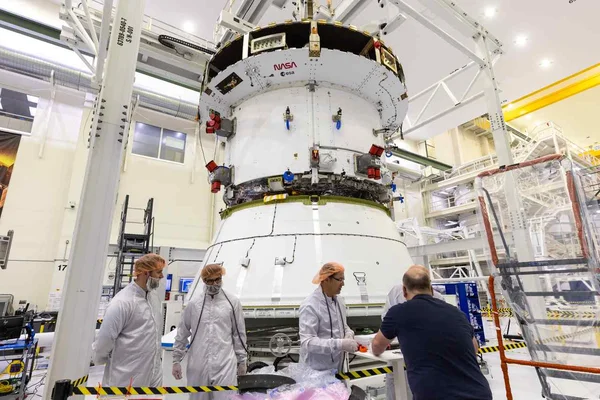
NASA holds Artemis III to summer 2027 as safety panel questions Artemis IV lander plan
NASA's October 23 update keeps four astronauts on a summer 2027 low Earth orbit rehearsal, while its safety advisers want the Artemis IV landing plan reconsidered over refueling risk.
Russian Satellite Kosmos 2612 Stalks ICEYE-X36 to Within 500 Metres in Low Earth Orbit
LeoLabs tracking data shows a Russian military spacecraft held station within roughly 500 metres of a US-registered radar satellite for several days before withdrawing.
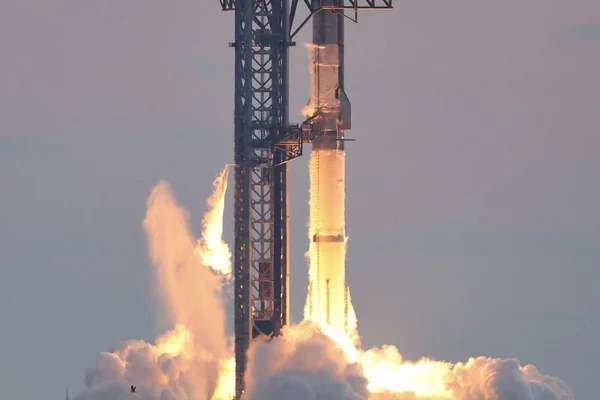
SpaceX to Attempt First Double Starship Tower Catch on Flight 15
Elon Musk says Flight 15 in November will try to recover both Super Heavy and the Ship upper stage, a first for an orbital rocket and a test of SpaceX's reusability strategy.
Comments (0)
Log in or sign up to leave a comment.
No comments yet. Be the first to share your thoughts.