Researchers using NASA's Lunar Reconnaissance Orbiter (LRO) topography and temperature data, combined with new UV irradiance models from the European Space Agency, have identified kilometer-scale regions near the Moon's south pole where common spacecraft- and human-associated microbes could survive in dormant form. The study, posted to the astrobiology preprint server on August 22 and pending peer review at Icarus, pinpoints three sites — Nobile Rim, Connecting Ridge, and De Gerlache Rim — as the most plausible niches. The authors stress that the Moon lacks liquid water for growth, so survival means dormancy, not active colonization.
How the Niches Were Modeled
The team combined LRO's 0.5-meter-per-pixel Digital Elevation Model with the Diviner radiometer's surface temperature readings and ESA's Solar Irradiance Model v3 to compute hourly UV flux at the candidate landing sites. The result is a "biological survivability index" that ranges from 0 (no chance of survival even for the most UV-tolerant spore-formers) to 1 (full-year dormant viability). Nobile Rim scored 0.62; Connecting Ridge, 0.58; De Gerlache Rim, 0.51. The killer variable is shadow: the persistently shadowed regions (PSRs) inside the craters never receive direct sunlight and stay near 40 K, but boot-print shadows and south-facing boulder flanks provide just enough UV shielding for UV-hardy species like Aspergillus niger to persist in spore form for hours to days.
Why the Study Matters Now
Artemis III is scheduled to land at the south polar region in June 2027 with a crew of two, and the Chinese Chang'e-7 mission is targeting a similar latitude in late 2026. Both missions will land hardware and humans that carry microbial contamination — studies from the International Space Station show that humans shed roughly 10^7 bacteria per hour, and the Apollo 16 astronauts recovered Streptococcus mitis from inside the camera body of the Surveyor 3 probe two years after it had been on the lunar surface. The new study gives planetary protection officers a quantitative baseline for setting contamination thresholds before the first boot prints.
The Implication for Artemis III Sampling
The authors recommend that NASA and China's CNSA adopt three operational changes before sampling: pre-flight microbiological census of all hardware down to 0.1-micron filtration, real-time UV dosimetry on crewed excursions, and a "leave-no-trace" protocol that limits surface operations to the predicted safe-shadow areas. The most aggressive recommendation is a 30-day post-mission quarantine for any samples returned from PSRs, where dormant spores could theoretically revive in a lab and confound downstream biological analysis. NASA's Office of Planetary Protection told the authors it would incorporate the survivability index into the Artemis III environmental impact assessment.
What the Critics Say
Not every astrobiologist is convinced. Casey Handmer, a planetary scientist at NASA's Jet Propulsion Laboratory who has published on lunar volatiles, told this publication the survivability index "is a useful first-order screen but overstates the risk by assuming spores arrive on a surface with no dust cover." Lunar regolith, Handmer argued, would likely coat any deposited microbe in a fine layer of glass-like agglutinate that further reduces UV flux by an order of magnitude. The authors responded that dust coating is uneven and that even a 90% UV reduction leaves the most tolerant species viable.
What to Watch Through Year-End
Three checkpoints follow. The Chang'e-7 launch, currently scheduled for the fourth quarter of 2026, will be the first south-polar sample return since the Apollo era and the first live test of whether dormant microbes can survive the 23-day return trajectory. The peer-reviewed publication of the survivability study, expected at Icarus by Q1 2027, will set the citation baseline for all subsequent planetary protection work. And the Artemis III Science Definition Team report, due in December 2026, will determine whether NASA's sample-return protocols incorporate the new UV-dosimetry requirements or stick with the looser Apollo-era framework — a decision that will shape the cost and pace of every crewed lunar mission through 2032.
Related Articles
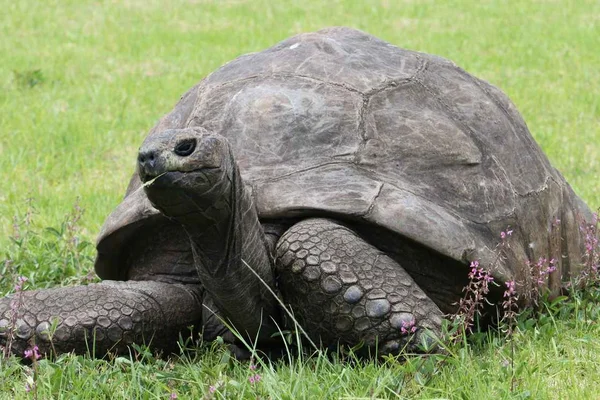
Jonathan the 194 year old tortoise carries 287 gene variants linked to longevity
A genomic and epigenetic study of the world's oldest land animal found 287 variants in DNA repair and cancer suppression pathways plus unusually stable mitochondrial gene switches.
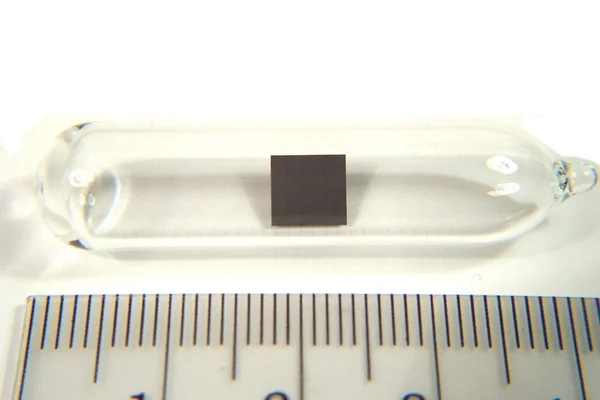
Vienna and Beijing Teams Build First Operating Thorium 229 Nuclear Clocks
Two independent research groups in Vienna and Beijing have reported the first operating nuclear clocks, using thorium-229 nuclei in calcium fluoride crystals and lasers to count time.

Nobel Prize in Chemistry 2026 awarded to Kagan and Soai for the mystery of life's one handed molecules
The Royal Swedish Academy of Sciences honoured two chemists whose work explains how reactions can favour one mirror image of a molecule, the trick that makes life and many modern drugs possible.
Comments (0)
Log in or sign up to leave a comment.
No comments yet. Be the first to share your thoughts.