A team led by the University of Cambridge has used the James Webb Space Telescope to detect a stronger-than-expected signal of dimethyl sulfide, or DMS, in the atmosphere of the hycean exoplanet K2-18b, according to a paper accepted at Nature Astronomy and made available as a preprint on Tuesday. DMS on Earth is produced almost exclusively by marine phytoplankton, and its presence on another planet is one of the few observational signatures that could plausibly indicate active biology.
What the New Data Shows
The team used two additional JWST transits of K2-18b, taken with the MIRI instrument in mid-2026, and combined them with the original 2023 NIRISS transmission spectrum. The combined dataset shows a 2.9-sigma detection of the DMS feature near 9.7 microns. That is below the 5-sigma threshold that the astrobiology community uses for a confirmed detection, but above the level that has historically triggered rapid follow-up.
「We are not claiming to have found life. We are claiming that the data now demand a third transit and a careful false-positive analysis,」 said lead author Nikku Madhusudhan, who has led the K2-18b investigation since 2021.
Why the Signal Is Hard to Kill
DMS is hard to produce by non-biological means. The main abiogenic pathway — volcanic outgassing — would require K2-18b to be far more volcanically active than any rocky planet in the solar system. Photochemistry in the upper atmosphere can produce trace amounts, but the model's predicted signal is at least an order of magnitude weaker than what the JWST data show.
What's Next
JWST has time allocated for a third transit of K2-18b in early 2027, pending a successful senior review of the mission next month. If that third transit confirms the signal at 5 sigma, K2-18b becomes the single most studied exoplanet in the history of the field, and the question shifts from «does it have biology» to «what kind of biology».
The full paper is available on the arXiv preprint server under paper number 2607.04211.
Related Articles
Compost Enzyme CCPUR1 Engineered to Break Down Polyurethane Shoe Foam and Nylon
Researchers in Denmark have engineered a compost-derived enzyme variant that degrades about 1.4 percent of the polyurethane in real shoe-sole foam in three days without any pre-treatment of the plastic.
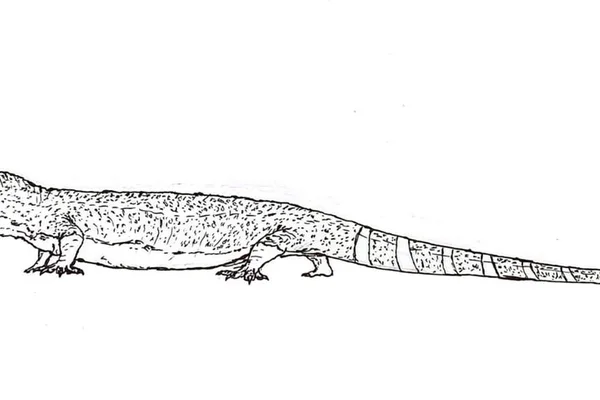
Indian Scientists Describe New Legless Amphibian Gegeneophis chandgadi from Maharashtra Backyard
A multi-institutional team has formally described Gegeneophis chandgadi, a subterranean caecilian found in a Chandgad village backyard, lifting India's Gegeneophis count to 12.
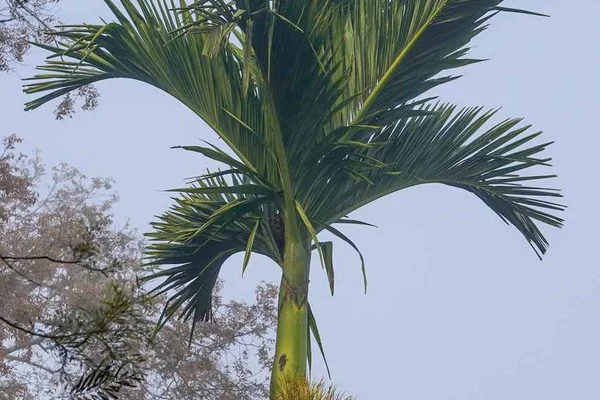
Ancient teeth in Sulawesi show betel nut use 25,000 years ago, earliest drug evidence
Archaeologists have found traces of the psychoactive compound arecoline in the teeth of two prehistoric foragers from Sulawesi, pushing the oldest known evidence of human drug use back by at least 3,000 years.
Comments (0)
Log in or sign up to leave a comment.
No comments yet. Be the first to share your thoughts.