AI inference startup Groq closed a $350 million funding round on August 18 at a $3.5 billion post-money valuation, roughly half the company's September 2025 mark, according to Tech Funding News. The round was led by investment firm Disruptive with planned participation from NVIDIA, and values the company's pivot from chip sales to a 「neocloud」 inference service at a meaningful discount to the $5.5 billion+ valuations cited in 2025 secondary-market trades.
What's New in the Story
The interesting data point in this round is the valuation step-down. Groq, founded by Jonathan Ross, was last valued north of $5.5 billion in late-2025 secondary trades and was widely reported to be in negotiations with Saudi and Asian sovereigns at higher marks through early 2026. Landing at $3.5 billion from a strategic lead tells investors something about how the inference market has repriced: the chips Groq shipped in 2023–2024 generated headlines on latency but ran into the same hyperscaler capex headwinds that hit every other custom-silicon startup once the frontier-model training cycle plateaued.
The Pivot to Cloud
Groq's official pitch has shifted from selling LPU silicon to running a hosted inference cloud — 「the premier neocloud for fast inference,」 per the company's August 18 announcement. The strategic logic is straightforward: gross margins on hosted tokens are higher than on hardware, the customer relationship is recurring rather than transactional, and Groq no longer has to win against NVIDIA's H100 and Blackwell installed base at hyperscalers who already have access to chips they didn't have to fund. NVIDIA participating in the round, rather than competing with Groq head-on, suggests an emerging framework in which NVIDIA backs specialized inference providers that complement — rather than threaten — its core accelerator business.
Why NVIDIA Wants This on the Cap Table
NVIDIA's involvement matters beyond the dollar amount. Groq's LPU is one of the few non-NVIDIA silicon designs that has run production inference at sub-100-microsecond token latencies, and the company has a meaningful book of low-latency enterprise customers in search, real-time bidding, and conversational AI. For NVIDIA, exposure to a Groq-style inference provider at the cloud layer is a hedge against the same hyperscalers — Google TPU, AWS Trainium and Inferentia, Microsoft Maia — that are increasingly building their own inference paths around non-NVIDIA silicon. NVIDIA's playbook of 「buy into the alternative」 rather than compete with it head-on is now visible across the inference stack.
What the Round Says About AI Infrastructure Pricing
The repricing cuts both ways. Groq raised at half its prior secondary-market mark, but it raised — and at a moment when most late-stage AI infrastructure startups are fighting for any allocation at flat or down rounds. The round is also one of the largest AI-infrastructure checks of August 2026, alongside EliseAI's $300 million raise at a $3.7 billion target valuation reported the same day by Andreessen Horowitz and Bessemer. Together, the two rounds signal that AI infrastructure capital is concentrating around a handful of independent compute and inference providers, while valuation discipline is back: the 2024–2025 「just put money in」 regime is over.
Related Articles
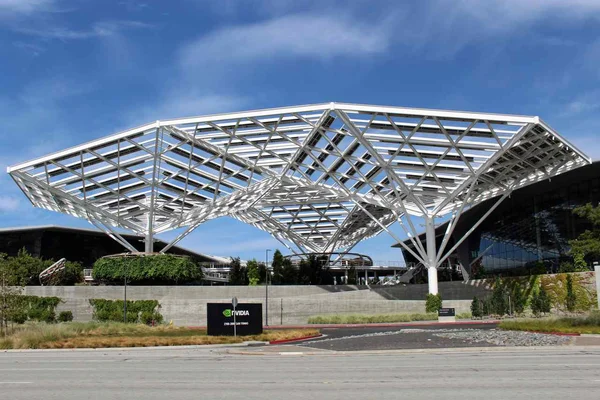
PaleBlueDot AI raises $200 million Series C at $3.2 billion valuation to scale GPU compute
The Palo Alto GPU cloud startup, founded in 2024, says it has signed more than $5 billion in customer contracts and will use the fresh capital to add compute capacity for frontier labs.
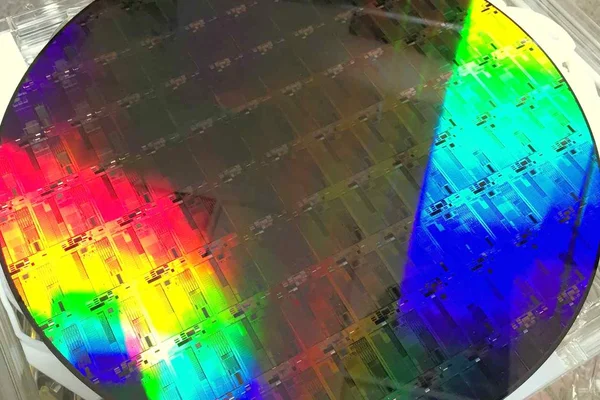
Volantis raises $88 million Series A to attack the AI memory wall with light
Volantis, a San Francisco chip startup founded in 2022, has now raised $97 million in total to commercialize an inference system that links compute chips to memory with lasers instead of copper wiring.
Simple Energy raises Rs 1,750 crore in all-equity Series C round led by Velumani family office
Simple Energy's all-equity Series C of Rs 1,750 crore, led by the Dr Arokiaswamy Velumani Family Office, pushes total capital past Rs 2,530 crore and funds a new factory and wider retail reach.
Comments (0)
Log in or sign up to leave a comment.
No comments yet. Be the first to share your thoughts.