Figure, the humanoid-robotics company led by Brett Adcock, has signed a multi-year compute partnership with the UK-based AI-cloud provider Nscale under which it will commit $3.5 billion for access to up to 100,000 NVIDIA Vera Rubin GPUs, with the potential to scale the deal beyond $6 billion. Data Center Dynamics reported on September 4 that Nscale will also make a strategic investment in Figure, becoming a shareholder and the company's preferred compute provider, cementing a relationship that gives the robot maker one of the largest dedicated AI training allocations in the industry.
The compute will be used to train Helix, Figure's AI model for humanoid robots, which the company has been scaling alongside an internal data-collection effort it calls Index. Figure says the Index pipeline ingests roughly 35 minutes of uploaded video per second, a torrent of real-world robot footage that requires enormous compute to turn into learned behavior. The deal is a bet that the bottleneck in humanoid robotics is no longer the hardware on two legs but the intelligence that drives it, and that whoever trains the best robot brains on the most compute will win the market.
The partnership also marks a shift in how the AI industry is financing itself. Instead of buying GPUs outright or renting capacity from the three big clouds, Figure is effectively pre-paying a specialist provider for a dedicated allocation, a model that is becoming common among frontier AI labs but is still rare for a hardware company. Nscale, for its part, is using contracts like this one to fund a buildout that includes a data center at the same Barstow, Texas site where it is deploying AI infrastructure for Microsoft.
Key Facts
The headline number is the initial commitment. Data Center Dynamics reported on September 4 that Figure's compute commitment starts at $3.5 billion and is structured to scale beyond $6 billion, with first deployments targeted for the second half of 2027. The hardware involved is up to 100,000 NVIDIA Vera Rubin GPUs, the next-generation accelerator platform that NVIDIA has positioned as the workhorse for training and inference at the largest scale.
The site is Barstow, Texas. Nscale is building its capacity at a data center it leases from Ionic Digital, a Bitcoin miner, with 234 megawatts of available power, and it is separately deploying AI infrastructure for Microsoft at the same location. Figure's compute will run alongside that Microsoft work, and eWeek reported on September 4 that the co-location reflects how quickly former cryptocurrency mining sites have been converted into AI data centers because of their existing power and cooling infrastructure.
The deal has an equity component that goes beyond a customer-supplier relationship. Nscale is making a strategic investment in Figure and becoming a shareholder, according to the September 4 reports, and it is being named Figure's preferred compute provider. The two companies said the compute will be used to train Helix, Figure's AI model for humanoids, which is fed by the Index data pipeline that Figure says ingests about 35 minutes of uploaded video per second from real-world robot operation.
The context for Figure's spending power is its fundraising history. Data Center Dynamics reported on September 4 that Figure has raised roughly $2 billion to date, including a Series C in September 2025 that valued it at $39 billion post-money, and the Nscale commitment shows how that capital is being directed toward compute rather than manufacturing capacity. Nscale, meanwhile, is nearing a US initial public offering that reports say could raise about $3 billion, and the Figure contract is a marquee reference customer for that listing.
Analysis
What this really means is that the humanoid-robot race has become a compute race, and Figure is signaling that it intends to spend like a frontier AI lab, not a hardware startup. A $3.5 billion compute commitment, scaling past $6 billion, is an extraordinary number for a company that has not yet deployed robots at commercial scale, and it tells you exactly where Adcock believes the value is being created. The hardware, the actuators, the hands and the batteries, are becoming commodities; the differentiator is the model that turns sensor data into fluent, reliable physical behavior, and models are trained with compute.
The bigger picture here is that Figure is making a wager on the scaling laws of physical AI. The same logic that drove OpenAI and Anthropic to spend billions on training clusters assumes that more compute and more data produce qualitatively better capabilities, and Figure is extending that assumption to robotics. The Index pipeline's 35 minutes of uploaded video per second is the data side of the equation, and the 100,000 Vera Rubin GPUs are the compute side. If the scaling thesis holds, Figure could emerge with a model that generalizes across tasks in a way its competitors, who are training on far smaller clusters, cannot match.
The skeptics should note the risks. Figure has raised about $2 billion and is now committing $3.5 billion that will presumably be paid over several years, a structure that requires either massive future fundraising or a belief that the compute will generate revenue before the bills come due. The robots also do not yet exist at the scale the compute implies, and there is a real question of whether the data pipeline can produce enough high-quality demonstration data to keep 100,000 GPUs busy. The Nscale equity stake hedges some of that risk by aligning the two companies, but it does not change the fundamental bet that physical AI will follow the same curve as digital AI.
Why It Matters
For the robotics industry, the deal resets the competitive bar. Figure's rivals, including Tesla's Optimus program, Agility Robotics, Unitree and 1X, are all training their own models, but few have dedicated allocations of this size, and the gap between Figure's compute budget and everyone else's is now measured in billions of dollars. If the strategy works, it will be hard for competitors to catch up without matching that spending, and the humanoid market could consolidate around whoever can raise the most capital for training.
For the broader AI infrastructure market, the contract is validation of the specialist-cloud model. Nscale is competing with the hyperscalers by offering dedicated, high-density clusters with flexible terms, and a $3.5 billion anchor customer is the kind of proof that investors and other customers look for. For NVIDIA, the deal is another confirmation that Vera Rubin, its next platform, already has committed demand from non-traditional buyers, and it strengthens the case that the AI buildout is still in its early innings. For energy markets, the Barstow site's 234 megawatts is a reminder that the real constraint on AI is power, and that former industrial and mining sites are becoming the data centers of the AI era.
Next Up
The first milestone is the second half of 2027, when Nscale's Vera Rubin capacity is expected to come online and Figure's training runs are scheduled to begin in earnest. Watch for Figure to announce the fundraising it will need to fund a commitment of this size, and for details on how the compute will be split between training Helix and running inference for deployed robots. Nscale's IPO is the other event to track, since the Figure contract will be a centerpiece of its pitch to public-market investors, and the success of that listing will determine how much more capacity the company can build.
Related Articles
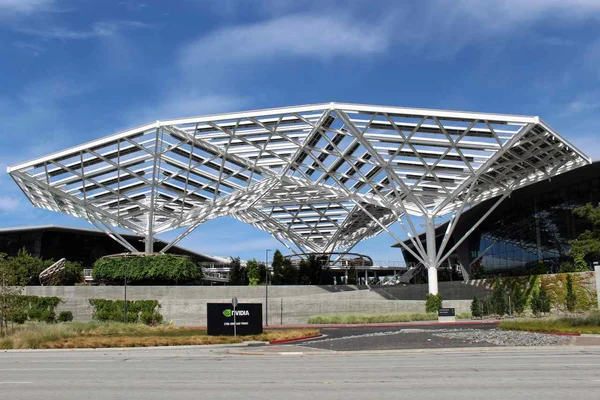
Agile Robots and Nvidia launch Agile ONE SN humanoid with plan for up to 2,000 units
Munich based Agile Robots introduced a 1.4 metre research humanoid preconfigured with Nvidia Isaac GR00T and Jetson Thor, aiming to start production by the end of 2026.
Eka Robotics raises 150 million dollars at a 1.45 billion valuation to scale force first AI
Eka Robotics closed a 150 million dollar Series A led by Andreessen Horowitz and F-Prime at a 1.45 billion dollar valuation, betting that force feedback beats vision alone.
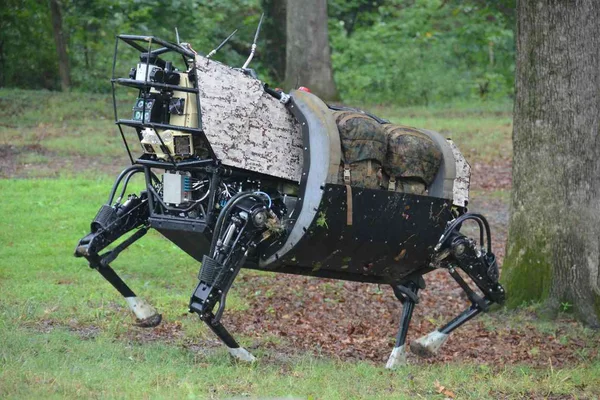
Hyundai commits to 50,000 robot deployments as Boston Dynamics scales Atlas
Boston Dynamics CFO Amanda McMaster said Hyundai has committed to roughly 50,000 robot deployments across Hyundai Motor and Kia plants, doubling an earlier Atlas target.
Comments (0)
Log in or sign up to leave a comment.
No comments yet. Be the first to share your thoughts.