Four senior United States Food and Drug Administration officials said on September 2, 2026, that foreign clinical data which cannot be inspected will no longer be accepted to support marketing applications, a policy shift triggered by three deaths, including two children, in Chinese gene-editing trials that drew congressional scrutiny. The statement, published on the agency's FDA Voices page, was signed by the acting directors of two of the agency's three product centers and the heads of two more, an unusual display of cross-center unanimity that signals the policy applies across drugs, biologics and devices. It lands at the intersection of two of the most sensitive debates in global medicine, the ethics of gene editing in children and the growing dependence of drug developers on clinical data generated in countries where the FDA cannot always verify what happened at the bedside.
The immediate catalyst was a set of investigator-initiated trials in China using gene-editing technologies that left three participants dead. The FDA officials did not name the trials in the statement, but the congressional pressure that preceded it made the context explicit, with the deaths reported to include two children, one with a rare neurodevelopmental disease and one with Duchenne muscular dystrophy, and one adult who received an in-body CAR-T therapy. Those cases, detailed in coverage from The BioIntel in September 2026, raised questions not just about the safety of the interventions but about whether the data from such trials, generated outside the reach of routine FDA inspection, could ever be trustworthy enough to underpin a product approval in the United States.
Key Facts
The policy itself is a firm red line. In the September 2 FDA Voices statement, the four officials wrote that foreign clinical data that cannot be inspected will not be accepted to support marketing applications, a formulation that closes a loophole that some sponsors had used to build approval packages around overseas trials the agency could not meaningfully audit. The officials are Michael Davis, acting director of the Center for Drug Evaluation and Research, Karim Mikhail, acting director of the Center for Biologics Evaluation and Research, Michelle Tarver, director of the Center for Devices and Radiological Health, and R. Angelo de Claro, director of the Oncology Center of Excellence, which covers the four product areas that review gene-editing therapies, so the statement carries the weight of every center that would touch such an application.
The congressional pressure that preceded the statement was direct and bipartisan in its target. The BioIntel reported in September 2026 that Representatives John Moolenaar and Ben Cline sent a letter to the FDA on August 20, 2026, pressing the agency on the three deaths in Chinese gene-editing trials and demanding answers about how the agency would treat data from trials it could not inspect. The letter reflected a broader concern in Congress that the globalization of clinical research had outrun the FDA's inspection capacity, and the September 2 statement reads as both a policy announcement and a reply to that letter, giving the members the firm commitment they had requested.
The trend the policy addresses has been building for two decades. Clinical trial registries show China's share of global clinical trials rose from under 8 percent in 2010 to overtake the United States by 2020, according to figures cited in the September coverage, making China the largest single location for clinical research in the world. That shift was driven by the country's large patient populations, fast enrollment and lower costs, but it also created a class of data that US regulators could only partially verify, because FDA inspectors cannot routinely audit trial sites in China the way they audit sites in the United States and Europe. The new policy is an attempt to draw a boundary around that data, with the September 2 statement signaling that sponsors can no longer assume unverifiable foreign data will be accepted simply because the trials were registered and conducted in good faith.
Analysis
What this really means is that the FDA has concluded that the integrity of its approval process depends on the inspectability of the data underneath it, and that no amount of statistical rigor can substitute for the agency's own eyes on trial sites. The statement's focus on inspectability, rather than on country of origin or on specific scientific findings, is the telling detail, because it converts an ethical question about gene editing into an evidentiary question about oversight. A trial in China that the FDA can inspect remains eligible; a trial it cannot inspect, no matter how well conducted, is now presumptively ineligible. That framing protects the agency from the charge of discriminating against any country while drawing the bright line that the deaths in unverifiable Chinese trials had shown to be necessary.
The bigger picture here is that the policy is a warning shot to the global pharmaceutical industry about the geography of evidence. For two decades, drug developers have treated the world's clinical trial infrastructure as a single global pool, enrolling US patients and Chinese patients and Polish patients into the same programs and expecting regulators to treat the pooled data as seamless. The FDA's new stance introduces a new variable into that calculus, the inspectability of each site, and it will push sponsors to weigh whether the cost savings of enrolling in countries with limited FDA inspection reach are worth the risk that a regulator will later reject the data. For China specifically, the policy raises the stakes on the country's own regulatory capacity, because the better and more transparent China's own inspection system becomes, the more likely the FDA is to find ways to trust data generated there.
The timing amplifies the significance, because the policy lands as the United States government is simultaneously moving to accelerate clinical research through the HHS Operation TrialBlazer initiative launched in June 2026, which aims to speed the translation of discoveries into trials and approvals. The FDA is being asked to make US clinical research faster and more efficient at the same moment it is drawing a harder line around foreign data, and the two goals pull in tension, because restricting the use of unverifiable foreign data could slow the very programs that Operation TrialBlazer is meant to accelerate. The resolution of that tension will likely be a push to rebuild domestic and reliably inspectable trial capacity, which is the policy outcome the four FDA officials may well intend, even if they cannot say so directly.
Why It Matters
For patients in gene-editing trials, the policy is a blunt reminder that the FDA will hold overseas data to the same inspectability standard it applies at home, which should raise confidence that any approved therapy rests on verifiable evidence while also acknowledging that some promising overseas research may never make it into US approval packages. For the pharmaceutical and biotechnology industry, the shift changes the calculus of global trial design, making site inspectability a first-order consideration alongside cost, speed and patient access. For China's clinical research enterprise, the policy creates a powerful incentive to strengthen regulatory transparency and inspection cooperation, because the alternative is that Chinese-generated data becomes permanently second-class in the world's largest drug market. And for the broader global health system, the FDA's stance raises a difficult question that no single agency can answer, if the United States will not accept unverifiable foreign data, and if other regulators follow suit, what happens to the patients and innovations that depend on the very trials that data came from?
Next Up
In the coming weeks, watch for the FDA to publish implementing guidance that defines what constitutes inspectability in practice, since the September 2 statement announces a principle and the details of how sponsors can demonstrate inspectability will determine the policy's real-world bite. Watch also for the congressional response, because Representatives Moolenaar and Cline are likely to evaluate whether the FDA's statement satisfies the demands in their August 20 letter or whether they will press for legislation codifying the standard. The most important long-term signal will be the fate of the gene-editing approval applications already in the pipeline whose data came from Chinese trials, because how the FDA applies its new policy to pending applications will show whether the statement is a genuine turning point or a largely symbolic response to congressional pressure.
Related Articles
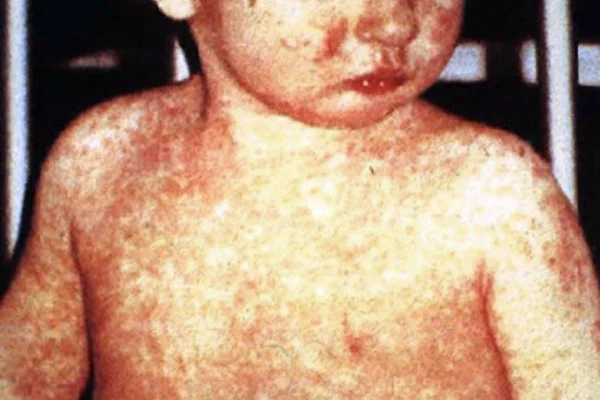
Bangladesh measles outbreak becomes world's worst as deaths pass 1,200
Health officials in Dhaka now count 1,201 measles deaths and 214,551 suspected cases, a toll that has turned a vaccine success story into a global warning about immunity gaps.

FDA Approves Roche's Enspryng as First At-Home Subcutaneous Treatment for Thyroid Eye Disease
Roche's IL-6R inhibitor becomes the first thyroid eye disease therapy that adults in the United States can inject at home, after regulators reviewed the filing on a priority basis.

PAHO alert: human New World screwworm cases in the Americas jump 62 percent in 2026
PAHO/WHO counted 1,355 human myiasis cases and five deaths across six countries through September 2026, and urged health, animal and environmental agencies to act together.
Comments (0)
Log in or sign up to leave a comment.
No comments yet. Be the first to share your thoughts.